20 Lashes: Funny Wordplay Puns That Will Make You Blink Twice

Some jokes need a setup. Others just need one word wearing two different hats. 20 lashes puns work because the word “lashes” can instantly send your brain in two directions: dramatic old-fashioned punishment or perfectly styled eyelashes ready for a selfie.
That little language trick is what makes the phrase funny. Your mind expects one meaning, then the joke quietly switches lanes and leaves you blinking at the punchline. Good wordplay has always worked this way — it takes something familiar and gives it an unexpected twist.
The phrase “20 lashes” sounds serious at first. It feels like something from a pirate movie where a captain is dramatically pointing at a shipmate who made a terrible mistake. But add mascara, beauty products, or a bad makeup decision, and suddenly the same words become much lighter.
That is the magic of puns. They do not need complicated setups or long explanations. A single double meaning can turn an ordinary phrase into a joke worth sharing.
If you enjoy clever language, you’ll probably also enjoy exploring other funny word meanings and internet phrases through our guide to understanding slang and word meanings like POS.
In this article, we’re looking at why “20 lashes” works so well, how the joke structure creates surprise, and the funniest ways this phrase can be twisted into clean, shareable humor.
Why “20 Lashes” Became a Classic Wordplay Joke
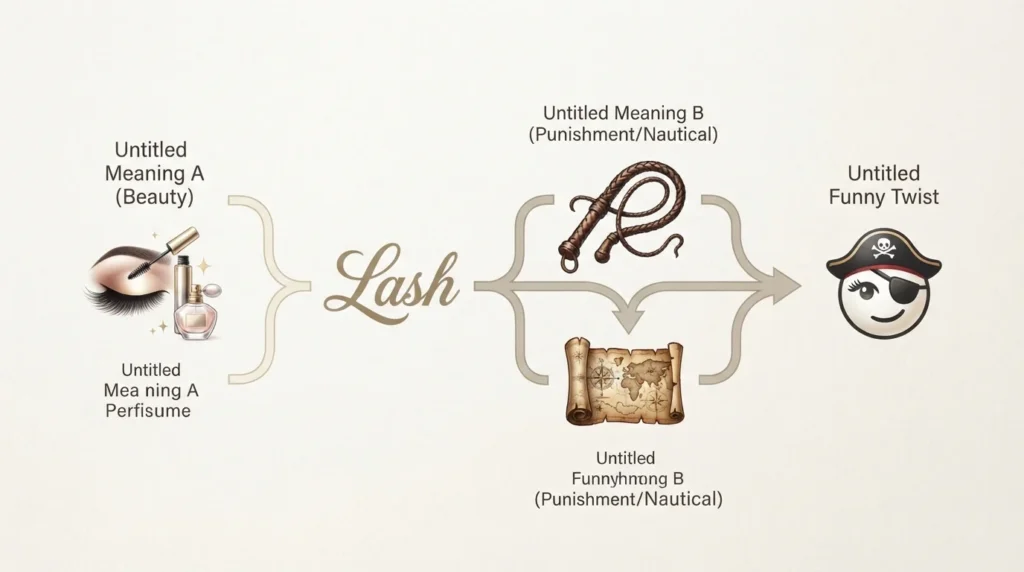
“20 lashes” became a memorable joke phrase because it combines two completely different ideas in one simple expression. The word “lash” can describe an eyelash or a strike with a whip, creating a natural setup for unexpected humor.
That contrast is exactly what makes strong wordplay work. The reader’s brain starts building one picture, then the punchline paints another.
Imagine hearing:
“Someone told me I was getting 20 lashes…”
Your first thought might involve trouble, punishment, or an old pirate adventure. Then the joke reveals the person was simply talking about applying extra layers of mascara.
The humor comes from the tiny moment of confusion before the meaning changes.
This style of comedy is called a double meaning. It appears everywhere — from movie titles and advertisements to everyday conversations. Writers love it because it rewards people who notice language details.
The word “lash” is especially useful for jokes because it already lives in two very different worlds.
One side belongs to beauty:
- Eyelashes
- Mascara
- Makeup
- Beauty routines
The other belongs to history and dramatic storytelling:
- Whips
- Punishment
- Pirates
- Old adventure tales
Put those worlds together, and you have the perfect recipe for a silly little language collision.
A great pun does not need to be complicated. Sometimes the funniest jokes happen when a word simply refuses to stay in one category.
And honestly, that’s very on-brand for puns. They’re the troublemakers of the language world — always crossing boundaries and making dictionaries nervous.
The best part? “20 lashes” can fit different humor styles. It can become a cheesy dad joke, a beauty caption, a pirate joke, or a completely ridiculous one-liner.
That flexibility is why this phrase keeps working. It has just enough drama to create curiosity and just enough silliness to make people smile.
The Double Meaning Behind the Word “Lash”
The word “lash” is a perfect example of how English loves giving one word multiple jobs. A lash can refer to the hair that frames the eye, but it can also describe a strike or blow.
This kind of word flexibility creates endless opportunities for jokes. According to the definition of “lash,” the word has developed different meanings over time, making it a natural playground for word lovers. Oxford Learner’s Dictionaries definition of lash
The funny part is not the word itself. The funny part is the mental picture changing halfway through.
A person hearing “I need 20 lashes” might imagine someone facing punishment. A beauty enthusiast might imagine someone applying mascara until their eyelashes reach dramatic movie-star levels.
Same phrase. Completely different story.
That is why puns are so satisfying. They make readers participate. The joke is not just delivered — the reader’s brain helps build it.
Why Eye Humor Always Gets a Reaction
Eye jokes have always had an advantage because everyone understands eyes. They are universal, expressive, and easy to imagine.
We blink when we are surprised. We roll our eyes when something is annoying. We bat our eyelashes when trying to look charming. Our eyes are already part of everyday expressions, so jokes about them feel instantly familiar.
That makes eye-related humor easy to share.
A joke about a complicated topic might need explanation. A joke about eyelashes usually needs nothing more than a quick mental picture.
The best “20 lashes” jokes lean into that visual humor. They take something people see every day — mascara, beauty routines, dramatic looks — and add an unexpected twist.
After all, a good pun is basically a tiny surprise package. You open it expecting one thing and find something completely different inside.
And sometimes, that surprise is only one word away.
The Best 20 Lashes Puns That Deserve a Second Look
The best puns do not announce themselves. They sneak in, create a little confusion, and then land with a smile. That is why “20 lashes” is such a fun phrase to play with — it already sounds dramatic, but the joke can quickly turn into something completely harmless.
Instead of imagining a courtroom, a pirate ship, or an angry captain, these jokes take the phrase somewhere much sillier. A person might be in trouble… or they might simply be trying to perfect their mascara routine before a night out.
That unexpected switch is where the fun lives.
Below are different styles of “20 lashes” humor, from beauty-inspired jokes to classic dad-style wordplay. Some are clever, some are wonderfully corny, and a few are exactly the kind of joke someone would proudly tell at a family dinner while everyone pretends not to laugh.
Eyelash and Beauty-Themed Puns
Beauty humor works perfectly with the phrase “20 lashes” because eyelashes already have their own dramatic world. People spend time curling them, lengthening them, coloring them, and making them stand out.
So when the phrase sounds like a punishment but turns out to be about makeup, the joke creates an instant surprise.
Here are some lash-inspired laughs:
1. I was sentenced to 20 lashes…
Luckily, it was just my mascara making a dramatic statement.
2. My eyelashes asked for 20 lashes of mascara.
Apparently, they were going through their “more is more” phase.
3. I tried to count my lashes, but they kept blinking away from responsibility.
4. My mascara promised 20 lashes of volume.
It really knew how to make a bold statement.
5. My beauty routine takes so long because my lashes have their own personality.
6. I told my eyelashes they looked amazing.
They gave me a little blink of approval.
The reason these jokes work is that they treat eyelashes like they have feelings, opinions, and tiny dramatic moments. Giving human qualities to everyday objects is a classic comedy trick because it turns something ordinary into a character.
A mascara wand becomes a personal trainer. Eyelashes become celebrities. A mirror becomes an honest friend who sometimes says things you do not want to hear.
That playful exaggeration is what makes beauty puns so shareable.
Pirate-Style 20 Lashes Jokes
Few things pair with “20 lashes” better than pirate humor.
Pirates already come with dramatic voices, treasure hunts, old ships, and exaggerated threats. The phrase sounds like something a pirate captain would shout before walking away with a dramatic cape swirl.
But adding silly wordplay makes the situation much lighter.
7. The pirate got 20 lashes because he couldn’t stop talking about his eye makeup.
8. The pirate asked for 20 lashes, but the beauty store misunderstood the assignment.
9. The captain yelled, “Prepare the 20 lashes!”
The crew showed up with mascara and a mirror.
10. The pirate’s favorite beauty product?
Aye-liner.
11. The pirate didn’t fear punishment.
He feared running out of waterproof mascara during a sea adventure.
12. The pirate said his eyelashes were his greatest treasure.
Everyone agreed they were quite a “lash” of brilliance.
Pirate jokes work because the language is already exaggerated. Nobody expects a real pirate conversation to be normal, which gives comedians room to be ridiculous.
A pirate saying “20 lashes” sounds serious. A pirate discussing mascara sounds wonderfully wrong. That contrast creates the laugh.
It is the same reason people enjoy jokes where serious characters deal with completely ordinary problems. A superhero worrying about laundry or a detective losing their glasses feels funny because the situation does not match the character.
The bigger the contrast, the bigger the smile.
Dad-Style One-Liners About Lashes
Dad humor has a special talent for taking a simple phrase and stretching it just far enough to become funny.
These jokes are not trying to be complicated. They rely on clean wordplay, obvious twists, and the confidence to deliver a joke that makes people groan before they laugh.
That is their charm.
13. My eyelashes are lazy.
They only work when they feel like blinking.
14. I bought expensive mascara because my lashes needed a raise.
15. My eyelashes broke up with my mascara.
They said the relationship was too clumpy.
16. I asked my lashes to behave.
They gave me a dramatic eye roll.
17. My eyelashes joined a gym.
They wanted better curl strength.
18. I told my lashes a joke.
They blinked because they needed a second to process it.
Dad jokes succeed because they are easy to understand and easy to repeat. They do not require a comedy stage. They work in text messages, birthday cards, captions, and random conversations where someone suddenly decides everyone needs a pun.
And honestly, that confidence is half the joke.
A person who proudly says, “My eyelashes joined a gym because they wanted better curl strength,” is not looking for applause. They are looking for that perfect combination of laughter and a dramatic eye roll.
That is the dad joke victory.

Clever 20 Lashes Jokes With Unexpected Twists
Some jokes work because the punchline arrives exactly where you expect it. Others work because they take a sharp turn and leave you wondering how the conversation got there.
“20 lashes” belongs to the second group.
The phrase sounds like the beginning of a serious story, but the funniest versions flip the meaning completely. A person expecting a dramatic punishment suddenly finds themselves discussing mascara, beauty routines, or something completely unrelated.
That little surprise is the engine behind great wordplay. The joke is not just the ending — it is the journey your brain takes before it gets there.
Number-based wordplay has a funny way of making ordinary figures memorable. Just like 120 degrees can turn into a surprising joke idea, “20 lashes” proves that even simple numbers can create clever humor.
Here are some clever twists that prove one tiny phrase can create plenty of laughs.
Short One-Liners for Quick Laughs
Short jokes are perfect for captions, texts, and those moments when you need a laugh without a long setup.
The best one-liners are like tiny fireworks. They do not last long, but they make enough noise to get attention.
Here are some quick “20 lashes” jokes with a little wordplay sparkle:
19. I asked for 20 lashes, but my mascara said, “Let’s start with one coat and build confidence.”
20. My eyelashes wanted 20 lashes of attention.
Honestly, they were already dramatic enough.
21. I got 20 lashes today.
My mascara really understood the assignment.
22. My lashes are so long they need their own zip code.
23. I told my eyelashes to stop showing off.
They just blinked at my criticism.
24. My mascara and my lashes had an argument.
Things got a little clumpy.
25. I was worried about getting 20 lashes.
Turns out my beauty routine was just being ambitious.
26. My eyelashes do not wake up naturally.
They need a little encouragement and a tiny brush.
These jokes work because they keep the original dramatic feeling of the phrase while replacing the serious meaning with something everyday and harmless.
That contrast creates a mini story in the reader’s head.
Q&A Jokes With a Lash Twist
Question-and-answer jokes have survived for generations because they create a simple rhythm: curiosity first, surprise second.
The question makes your brain search for an answer. The punchline arrives and changes the direction completely.
Here are some fresh lash-themed Q&A jokes:
Why did the mascara get promoted?
Because it knew how to handle every lash situation.
Why did the eyelashes go to therapy?
They were tired of carrying everyone’s emotional baggage above the eyes.
Why did the pirate bring mascara on his ship?
Because he wanted his sea-sick selfies to have better definition.
Why did the eyelash refuse to argue?
It did not want to blink first.
Why did the beauty expert avoid counting lashes?
Because the numbers kept getting too dramatic.
Why did the mascara break up with the eyelash curler?
It felt like the relationship was too twisted.
The fun part about Q&A humor is that the setup can sound completely reasonable. The reader starts solving the question seriously, then the answer arrives from a completely different direction.
That surprise is what makes the joke memorable.
When a Pun Goes Too Far (Which Is Usually the Point)
There is a special type of humor where the joke becomes funny because it refuses to stop.
A normal person might hear a phrase like “20 lashes” and make one joke. A true pun enthusiast sees twenty different possibilities and starts connecting eyelashes, pirates, makeup, blinking, and anything else remotely related.
That is the beautiful chaos of wordplay.
Sometimes the joke is not clever because it is complicated. It is clever because someone was willing to take a tiny idea and stretch it into something ridiculous.
For example:
“My eyelashes were sentenced to 20 lashes. Their crime? Looking too good without permission.”
Is it logical? Not really.
Is it dramatic? Absolutely.
Does it make you picture a courtroom where eyelashes are defending themselves? Unfortunately, yes.
That is why silly humor works. It creates a world where normal rules do not apply.
The best puns are not trying to convince you they are serious. They are inviting you to enjoy the absurdity.
And sometimes the biggest laugh comes from a joke that knows it is a little ridiculous.
A Quick Look at Why These Jokes Work
| Joke Style | The Trick Behind It | Why People Enjoy It |
|---|---|---|
| Double meaning | One phrase has two interpretations | Creates surprise |
| Q&A humor | Builds curiosity before the punchline | Easy to follow |
| One-liners | Delivers a quick twist | Perfect for sharing |
| Absurd humor | Makes ordinary things ridiculous | Creates memorable images |
A phrase like “20 lashes” succeeds because it has built-in contrast. It sounds intense but can become completely silly in seconds.
That is the sweet spot where memorable humor lives.
Funny Ways to Use 20 Lashes Humor
A good pun does not have to stay inside a joke collection. The best ones escape into everyday conversations, captions, text messages, and those random moments when someone needs a little extra silliness.
“20 lashes” humor works especially well because it creates curiosity. Someone sees the phrase and expects a dramatic story, then discovers it is actually about mascara, beauty, or a completely ridiculous situation.
That small surprise makes it perfect for sharing.
Whether you are writing a funny caption, sending a message to a friend, or trying to make a group chat slightly more chaotic, this type of wordplay adds personality without needing a long explanation.
Social Media Caption Ideas
Short captions need to do a lot of work. They have to grab attention quickly, create a reaction, and make people want to comment or share.
A good pun caption does exactly that because it feels like a tiny inside joke.
Here are some “20 lashes” inspired caption ideas:
- “Serving looks and possibly facing 20 lashes.”
- “My lashes understood the assignment. No punishment required.”
- “Twenty lashes later, and my mascara still wants more drama.”
- “My eyelashes came prepared for their close-up.”
- “Warning: excessive lash behavior ahead.”
- “I came, I saw, I conquered… with 20 layers of mascara.”
- “My lashes are guilty of being too fabulous.”
- “No regrets. Just dramatic lashes.”
The trick with funny captions is keeping them natural. The best ones do not feel like someone searched for a joke. They feel like something a witty friend would casually post.
That is why short wordplay often performs well online. People can understand it instantly, and it gives them a reason to react.
A follower might not comment on a regular beauty photo, but a clever caption can turn a simple picture into a conversation.
When to Drop a Pun Instead of a Normal Joke
Not every moment needs a carefully prepared punchline. Sometimes a quick pun works better because it matches the situation.
Wordplay shines in casual moments where people already understand the context.
For example:
At a beauty appointment:
A dramatic comment about “20 lashes” fits naturally because everyone is already talking about makeup.
In a group chat:
A short pun can break the silence without requiring everyone to stop and read a full joke.
On social media:
A clever caption can add personality to a photo or post.
With family and friends:
A corny pun can create the perfect eye-roll moment that secretly means everyone enjoyed it.
The secret is timing.
A pun that appears naturally feels funny. A pun forced into every conversation starts feeling like someone brought a joke book to dinner.
The best humor feels effortless.
Why Small Wordplay Creates Big Reactions
People often remember jokes that make them pause for half a second.
That pause is where the magic happens.
When someone hears “20 lashes,” their brain quickly chooses a meaning. Then the joke introduces another possibility, and suddenly the first interpretation feels funny.
This is why wordplay has lasted for centuries. Language itself becomes part of the comedy.
Puns, double meanings, and playful phrases turn ordinary words into little puzzles. The reader solves the puzzle and gets the reward of the laugh.
A phrase like “20 lashes” proves that humor does not always need a complicated story. Sometimes the funniest idea is hiding inside a single word waiting for someone to notice it.
And if that word happens to involve eyelashes, pirates, and a little unnecessary drama?
Even better.
Final Takeaway: The Beauty of a Good Pun
The charm of “20 lashes” is not just the joke itself. It is the way one phrase can create completely different pictures in your mind.
One second you imagine an old pirate adventure. The next, you are thinking about mascara, beauty routines, and dramatic selfies.
That is the power of wordplay.
Great puns take familiar language and make it feel fresh again. They remind us that even everyday words can surprise us when we look at them from a different angle.
So the next time someone mentions “20 lashes,” do not be too quick to imagine trouble.
It might just be a very serious beauty appointment.

Conclusion
The funniest phrases are often the simplest ones. “20 lashes” works because it takes an ordinary word and gives it a completely unexpected second life.
At first glance, it sounds serious. It feels like something from an old pirate story or a dramatic historical scene. Then the meaning shifts, and suddenly we are talking about eyelashes, mascara, beauty routines, and silly situations.
That switch is what makes wordplay so enjoyable.
A strong pun does not need a complicated setup or a long explanation. It just needs the right combination of familiarity and surprise. The word “lash” already carries multiple meanings, so comedians can play with the contrast between danger and beauty, seriousness and silliness.
That is why jokes like these continue to work. They are easy to understand, easy to share, and easy to adapt into captions, conversations, and everyday humor.
Whether you enjoy dad jokes, clever one-liners, or ridiculous word twists, “20 lashes” proves that language itself can be funny.
Sometimes the best jokes are not hidden in complicated stories.
Sometimes they are sitting right there in one little word, waiting for someone to look twice.
Frequently Asked Questions
What does “20 lashes” mean?
“20 lashes” traditionally refers to a punishment involving twenty strikes with a whip. In wordplay and jokes, the phrase is often used because “lashes” also means eyelashes, creating a funny double meaning.
Why is “20 lashes” considered a pun?
“20 lashes” is considered a pun because it uses the multiple meanings of the word “lashes.” One meaning refers to punishment, while another refers to eyelashes. The humor comes from switching between these two interpretations.
What makes lash jokes funny?
Lash jokes work because they combine everyday topics with unexpected meanings. People understand eyelashes, makeup, and beauty routines, but they also recognize the dramatic sound of the word “lashes.” That contrast creates the surprise behind the joke.
Are eyelash puns good for captions?
Yes, eyelash puns work well for social media captions because they are short, visual, and easy to understand. They can add personality to beauty posts, selfies, fashion content, or funny updates.
What type of humor is “20 lashes” humor?
“20 lashes” humor falls into several categories, including puns, wordplay, double meanings, dad humor, and clean jokes. It relies on language tricks rather than complicated storytelling.
Why do people enjoy double-meaning jokes?
People enjoy double-meaning jokes because they create a small mental surprise. The brain first interprets a phrase one way, then discovers another meaning. That unexpected shift often creates the laugh.
Can “20 lashes” jokes be used for family-friendly humor?
Yes. Since the joke focuses on wordplay rather than offensive topics, “20 lashes” jokes can easily be adapted into clean humor suitable for families, classrooms, and casual conversations.
References
- Oxford Learner’s Dictionaries — Definition and meanings of “lash”
- Merriam-Webster — Word meanings and usage examples
- Cambridge Dictionary — Language and expression references
- Encyclopaedia Britannica — Historical context of punishment terminology
- Oxford English Dictionary — Word origins and historical usage