Food Jokes for Kids: 100+ Funny Food Puns & Giggles
Food has a funny way of bringing people together. A slice of pizza at a party, a cookie after school, or a bowl of popcorn during movie night can create happy memories — and apparently, it can create jokes too. Food jokes for kids work so well because children already know these foods, making the punchlines easy to understand and fun to repeat.
A banana can “slip up,” a donut can have a “hole” lot of personality, and a taco can always find a way to “shell-ebrate.” These silly connections are exactly what make food humor so enjoyable for young joke lovers.
If your child loves sharing laughs at the dinner table, in the classroom, or with friends, this collection brings together playful puns, silly questions, and kid-friendly jokes featuring favorite foods like pizza, cookies, tacos, fruit, ice cream, and snacks.
For even more laughs beyond the kitchen, check out our collection of funny jokes for kids that are perfect for sharing with family and friends.
From classic dad-style humor to fresh wordplay, food jokes help kids practice creativity while having a good laugh. After all, the best jokes don’t need fancy ingredients — sometimes all they need is a little imagination and a hungry audience.
So grab a snack, prepare your best giggle, and let’s serve up some jokes that are guaranteed to add extra flavor to your day.
Why Food Jokes Are a Favorite for Kids
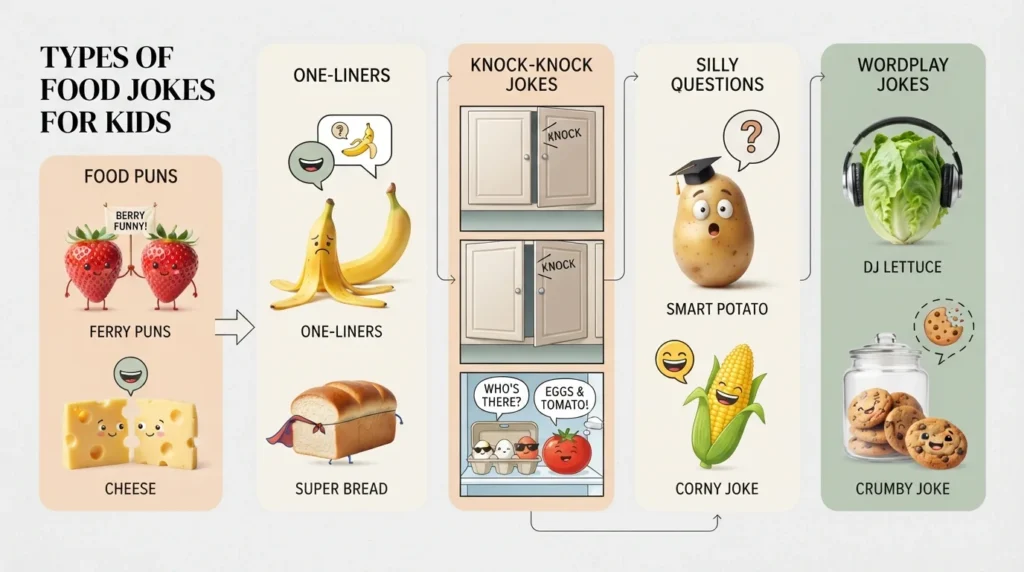
Food jokes are popular with kids because they turn everyday things into something surprising and funny. A child may eat an apple every day, but hearing an apple tell a joke suddenly makes that ordinary fruit feel like a silly character with a personality.
Food humor is easy for children to connect with because it uses familiar ideas. Kids already know what a pizza, banana, donut, or cookie looks like, so their brains can quickly understand the joke. The surprise comes from giving those foods a funny twist.
This type of humor also introduces children to puns and wordplay. A simple joke about cheese “getting grated” or a potato being “a-peel-ing” teaches kids that words can have more than one meaning. It’s comedy and a tiny language lesson hiding inside a snack.
According to Merriam-Webster, a pun is a humorous use of a word that has multiple meanings or sounds similar to another word. That playful connection is why food puns have remained a favorite style of humor for generations.
Food jokes are also perfect for sharing. Kids can remember short punchlines, tell them to siblings, add them to lunchbox notes, or make their friends laugh during a break.
Kids who enjoy different types of playful humor can also explore our collection of funny animal jokes for kids featuring silly characters and family-friendly laughs to discover another easy way to enjoy wordplay.
The best part? Food humor is naturally family-friendly. There’s no need for complicated jokes or grown-up topics. Sometimes a silly taco, a dramatic cookie, or a confused chicken nugget is all it takes to create a big laugh.
Best Food Jokes for Kids to Share Anywhere
Food jokes are the perfect kind of humor for kids because they are easy to remember and fun to tell. A great joke doesn’t need a stage, a microphone, or a perfect audience. It can happen at the breakfast table, during lunch, at school, or while waiting for dinner.
The jokes below mix classic food puns, silly questions, and playful word twists. Some are the kind of jokes that make kids laugh instantly, while others create the classic “that was so silly” smile that makes everyone laugh even harder.
Pizza, Taco, and Fast Food Jokes
Pizza and tacos are two foods that already have big personalities. Maybe it’s because pizza always comes in slices and tacos are built like tiny crunchy pockets of happiness. Either way, they make excellent joke material.
These jokes use simple wordplay that kids can easily repeat with friends.
Why did the pizza go to the party?
Because it wanted to get a little more cheesy with its friends.
What did the pizza say after a long day?
“I’m feeling a little crusty.”
Why did the taco bring a blanket?
Because it wanted to stay warm in its shell.
What did the taco say when it won the race?
“I’m nacho average runner!”
Why did the hamburger tell a joke?
Because it wanted to make everyone ketchup with laughter.
What did the french fry say to the ketchup?
“You complete me.”
Why did the hot dog sit in the shade?
Because it didn’t want to become a roast.
What did the chicken nugget say at the talent show?
“I’m ready to bring my crispy performance!”
Fast food jokes work especially well because kids already see these foods as fun treats. Turning them into characters makes the joke feel like a tiny cartoon playing in their imagination.
Banana, Fruit, and Healthy Food Jokes
Fruit jokes are some of the easiest jokes for kids because fruits often have funny names, shapes, and textures. Bananas are especially popular because their silly shape has inspired generations of jokes.
Here are some fruity laughs to brighten snack time:
Why did the banana go to the doctor?
Because it wasn’t peeling well.
What did one banana say to the other banana?
“Yellow there!”
Why did the apple stop in the middle of the road?
Because it wanted to take a bite-sized break.
What did the strawberry say after winning the race?
“I’m berry proud of myself!”
Why did the orange stop telling jokes?
Because it ran out of juice.
What did the fruit say during the talent show?
“Don’t worry, I’m ready to bring my fresh performance.”
Why was the grape always invited to parties?
Because it knew how to have a great time.
Fruit humor works because kids enjoy taking something ordinary and giving it a funny personality. A banana becomes dramatic, an apple becomes lazy, and a strawberry becomes a superstar. Suddenly, the fruit bowl feels like a comedy club.
Donut, Cookie, Candy, and Dessert Jokes
Desserts already bring smiles, so adding jokes makes them even sweeter. Kids love dessert humor because these foods are connected with happy moments like birthdays, family celebrations, and special treats after dinner.
A donut can become a little dramatic, a cookie can develop a personality, and ice cream can have a serious melting problem. These silly ideas are what make dessert jokes so fun to share.
Donut Jokes
Donuts are perfect for wordplay because their famous hole gives comedians plenty of room to create silly punchlines.
Why did the donut visit the dentist?
Because it had a hole problem.
What did the donut say when it got a compliment?
“Thanks, you’re really sweet!”
Why was the donut so calm during the storm?
Because it knew everything would turn out glazed.
What did one donut say to the other?
“Don’t worry, I’ll stick with you through the whole.”
Cookie Jokes
Cookies are small, crunchy, and always ready for a laugh. They also have plenty of funny possibilities thanks to their crumbs, chips, and delicious reputation.
Why did the cookie go to school?
Because it wanted to become a smart cookie.
What did the chocolate chip say to the cookie?
“Don’t worry, I’ll always be a part of you.”
Why did the cookie sit alone?
Because it needed some time to crumble.
What kind of cookie can tell jokes?
A smart cookie with a good sense of humor.
Candy and Ice Cream Jokes
Candy and ice cream jokes bring out the playful side of food humor. They are colorful, familiar, and easy for younger kids to understand.
Why did the ice cream truck break up with the popsicle?
Because the relationship was getting too cold.
What did the ice cream say after winning an award?
“I’m totally scooping the competition!”
Why did the candy go to school?
Because it wanted to become a little smarter.
What did the lollipop say to the candy bar?
“You’re pretty sweet!”
Why did the ice cream stay home from the party?
Because it was feeling a little melted down.
Dessert jokes are a great example of classic dad humor — simple, silly, and sometimes so predictable that the joke becomes funny because everyone sees it coming. That “I can’t believe you said that” reaction is part of the charm.
The best dessert jokes don’t need complicated punchlines. They work because kids love imagination. A talking cookie or a nervous scoop of ice cream is enough to create a funny little story.
Cheese, Potato, and Snack Jokes
Some foods are funny simply because their names create great opportunities for wordplay. Cheese, potatoes, popcorn, and other snacks are everyday favorites that can easily become joke characters.
Why did the cheese take a selfie?
Because it wanted to say, “That’s grate!”
What did the cheese say when it looked in the mirror?
“Halloumi!”
Why did the potato sit on the couch?
Because it needed to take a little couch potato break.
What did the popcorn say during the movie?
“I’m really popping off tonight!”
Why was the potato always invited to dinner?
Because it was a real comfort food.
What did the pickle say when it won the game?
“I’m kind of a big dill!”
Why did the corn tell a joke?
Because it wanted everyone to have an a-maize-ing day.
Snack jokes work well because kids encounter these foods often. A joke about popcorn during movie night or a pickle on a sandwich feels familiar, which makes the humor easier to enjoy.
Food Pun Jokes That Make Kids Groan (In a Good Way)
Some jokes are funny because they are clever. Others are funny because they are wonderfully silly. Food puns belong to the second group. They take familiar words, twist their meanings, and create those classic “that was a bad joke… but I laughed anyway” moments.
This style of humor is loved by kids and parents because it is simple, safe, and easy to remember. It also encourages children to play with language and notice how one word can have different meanings.
Here are some food puns that are ready for lunch tables, family dinners, and joke competitions.
What did the grape say when it got stepped on?
Nothing. It just let out a little wine.
Why did the mushroom get invited everywhere?
Because he was a fun-gi.
What did the bread say after winning the contest?
“I’m on a roll!”
Why did the chef become a comedian?
Because he always knew how to deliver a good roast.
What did the egg say after hearing a funny joke?
“That cracked me up!”
Why did the baker become famous?
Because everyone thought he was on a roll.
What did the lettuce say when it won the race?
“Lettuce celebrate!”
Why did the soup tell everyone a secret?
Because it couldn’t keep things bottled up.
What did the pepper say after a workout?
“I’m feeling a little hot!”
Why did the sandwich go to the gym?
Because it wanted to get a little more stacked.
Food puns are especially fun because the punchline often comes from a tiny word connection. Kids begin noticing patterns like “grate” and “great,” “roll” and “bread rolls,” or “peeling” and “feeling.” That’s what makes this type of humor a small exercise in creativity.
The best food puns are not about being perfect comedians. They are about enjoying the surprise of language. A joke that makes someone smile for even two seconds has already done its job.
Short Food One-Liners Kids Can Remember
Sometimes the funniest jokes are the shortest ones. One-liners are great for kids because they can memorize them quickly and share them anywhere — during recess, at the dinner table, or while waiting in line for ice cream.
These quick jokes are small but packed with silly energy.
I told my pizza a secret… now it’s spreading the sauce.
My cookie went missing because it was too crumby to track down.
The banana entered the race but slipped into last place.
My potato started a band because it wanted to become a mash star.
The popcorn joined the theater because it loved being around drama.
My sandwich became a detective because it wanted to solve the mystery of the missing cheese.
The donut opened a bakery because it wanted to make a hole lot of money.
The ice cream refused to argue because it didn’t want things to get heated.
The taco became a musician because it had great shell-o.
The cookie told everyone it was famous because people always wanted a bite of it.
One-liners are also perfect for kids who are still learning how jokes work. They show that humor does not always need a long story. Sometimes a clever sentence and a surprising ending are enough to create a laugh.
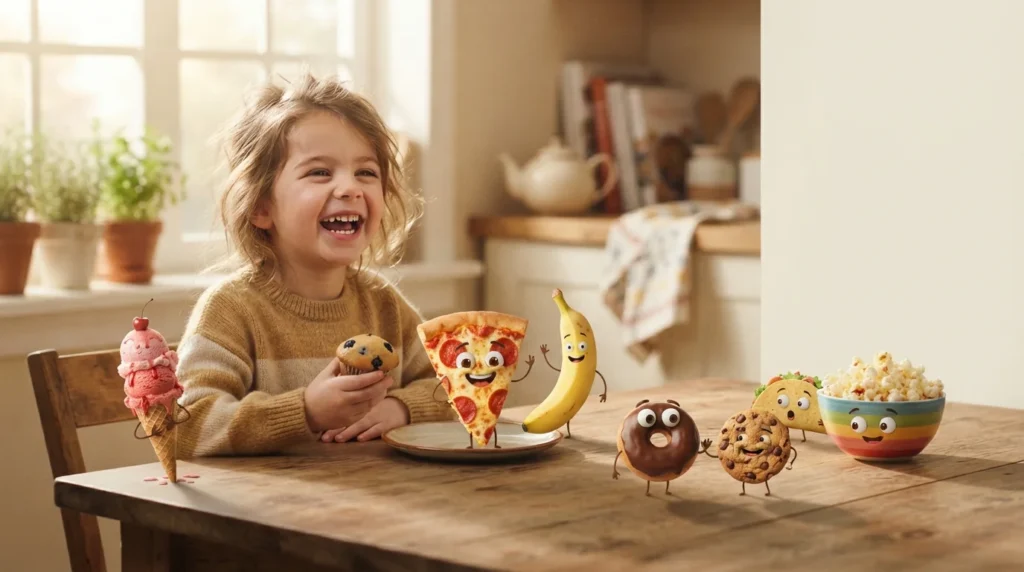
Food Knock-Knock Jokes for Family Laughs
Knock-knock jokes have been making kids laugh for generations because they are interactive. The fun is not only in the punchline — it is in the back-and-forth rhythm, the guessing, and the little performance that comes with telling the joke.
Food-themed knock-knock jokes add an extra layer of silliness because they turn everyday snacks and meals into unexpected characters. They are perfect for siblings, classrooms, family dinners, or anytime a kid wants to show off a new joke.
Here are some clean food knock-knock jokes ready for sharing.
Knock, knock.
Who’s there?
Banana.
Banana who?
Banana keep telling jokes because I’m on a roll!
Knock, knock.
Who’s there?
Lettuce.
Lettuce who?
Lettuce come in before dinner gets cold!
Knock, knock.
Who’s there?
Olive.
Olive who?
Olive these food jokes!
Knock, knock.
Who’s there?
Ice cream.
Ice cream who?
Ice cream because I’m excited to tell this joke!
Knock, knock.
Who’s there?
Peas.
Peas who?
Peas open the door. I’m hungry!
Knock, knock.
Who’s there?
Cookie.
Cookie who?
Cookie monster? No, just me looking for a snack!
Knock, knock.
Who’s there?
Donut.
Donut who?
Donut forget to laugh today!
Knock, knock.
Who’s there?
Pizza.
Pizza who?
Pizza time! I knew you’d answer.
Knock-knock jokes help kids become more confident storytellers. They learn timing, listening, and how a joke builds toward a surprise ending. Even when the punchline is simple, the act of performing it makes the experience more exciting.
Why Food Humor Works So Well for Kids
Food humor connects two things children naturally enjoy: imagination and everyday experiences. Kids see food constantly, from breakfast cereal to school lunches, so turning those familiar items into joke characters feels natural.
A talking taco, a dramatic donut, or a nervous chicken nugget creates a tiny world where anything can happen. That creative thinking is one reason jokes are such a fun way for kids to experiment with language.
Food jokes also create shared moments. A child telling a silly joke at the dinner table can turn an ordinary meal into a memory. Parents, siblings, and friends can all join in, even if the joke earns a few classic eye rolls.
This is where family humor shines. The best jokes are not always the ones with the biggest laughs. Sometimes they are the ones repeated over and over because everyone knows the punchline but still enjoys hearing it.
Food-based jokes are also a gentle way to introduce different styles of comedy, including puns, one-liners, and playful word choices. Children begin to understand that humor can come from sounds, meanings, and unexpected connections.
A kid who learns to create a joke about a potato today might be the person making everyone laugh with clever stories years later. Every funny idea starts somewhere — sometimes with a very silly snack.
How Food Humor Helps Kids Learn Wordplay
Food jokes are more than just quick laughs. They are a playful way for kids to understand how language works. When a child laughs at a cheese joke or a banana pun, they are often noticing a clever connection between words, sounds, or meanings without even realizing it.
A joke like “the cheese said that’s grate” works because the word “grate” sounds like “great.” This type of wordplay helps children recognize that language can be flexible and creative. Words are not always used in one predictable way — sometimes they can surprise us.
Puns, silly comparisons, and double meanings encourage kids to think differently. A potato is not actually a “couch potato,” and a cookie cannot really become “smart,” but pretending they can creates a fun imagination exercise.
Building Creativity Through Silly Ideas
Many great jokes start with a simple question: “What if?”
What if a taco could talk?
What if popcorn had feelings?
What if a chicken nugget went to school?
These silly ideas help children practice creative thinking. They learn to look at ordinary objects from a different angle and create new possibilities.
That same skill appears in storytelling, problem-solving, and everyday conversations. A child who enjoys making jokes is practicing how to connect ideas in unique ways.
Improving Confidence Through Sharing
Telling jokes also gives kids a chance to practice communication. Standing in front of family members and sharing a funny line teaches timing, expression, and confidence.
Even a joke that gets a small laugh can feel like a big achievement. Kids learn that sharing something creative can create a positive reaction from others.
Food jokes are especially helpful because they are familiar and low-pressure. A child does not need complicated knowledge to tell a joke about pizza, cookies, or ice cream. They can simply use things they already know.
Creating Family Connections
Humor has a special way of bringing people together. A silly joke during dinner can become a family tradition. A funny lunchbox note can brighten a child’s school day. A shared joke between siblings can become something they remember for years.
That is the magic of simple humor. A tiny punchline can create a bigger moment.
Food jokes remind kids that laughter does not have to be complicated. Sometimes the funniest ideas come from the things sitting right in front of us — even something as ordinary as a sandwich, a snack, or a piece of fruit.
From banana puns to pizza jokes, these little moments of humor help children explore creativity, connect with others, and discover the joy of making people smile.
Food Jokes for Different Moments
The best jokes are the ones that arrive at the right time. A silly food pun can make a quiet breakfast funnier, turn a boring car ride into a comedy show, or give kids something cheerful to share with friends.
Food humor works almost anywhere because everyone understands food. You don’t need special knowledge or a perfect setup. A simple joke about a cookie, taco, or apple can create an instant smile.
Lunchbox Jokes for School
A tiny joke tucked into a lunchbox can make a child’s day a little brighter. Short jokes work best because they are easy to read between bites.
Why did the sandwich bring a pencil to school?
Because it wanted to draw some attention.
What did the apple say to the student?
“Don’t worry, you’re doing a-peel-ing work!”
Why did the cookie get good grades?
Because it was one smart cookie.
Family Dinner Jokes
Dinner conversations are a perfect place for food humor. A funny question or silly pun can get everyone talking and laughing.
Why did the chicken nugget tell a story?
Because it wanted to share its crispy adventure.
What did the fork say to the spoon?
“You’re really stirring things up!”
Why was the soup always invited to dinner?
Because it was a bowl full of fun.
Party and Sleepover Jokes
Kids love sharing jokes with friends because laughter spreads quickly. Food jokes are especially popular at parties because snacks are usually already part of the fun.
Why did the popcorn bring a friend to the movie?
Because it didn’t want to be a solo snack.
What did the candy say at the birthday party?
“This place is sweet!”
Why did the donut love parties?
Because it always had a hole lot of fun.
Quick Takeaway: Why Food Jokes Stay Popular
- They use foods kids already know.
- They are easy to remember and repeat.
- They encourage creativity and wordplay.
- They bring families and friends together.
- They make everyday moments more fun.
A great joke doesn’t need complicated words or a perfect punchline. Sometimes the funniest moments come from the simplest ideas — like imagining a potato with a personality or a pizza with something funny to say.
Creative Ways to Use Food Jokes With Kids
Food jokes become even more fun when kids get to do something with them instead of just reading them. A good joke can become a game, a family activity, a classroom icebreaker, or even a little creativity challenge.
Instead of only asking kids to remember jokes, encourage them to create their own. The process of making a joke is where the real fun begins.
Make Your Own Food Pun
Creating a food pun is easier than it sounds. Kids can start with a favorite food and think about words that sound similar.
For example:
- Cheese → “grate” and “great”
- Dough → “dough” and “do”
- Roll → bread roll and moving forward
- Sweet → candy flavor and being kind
A child might turn “My cookie is smart” into “My cookie got an A because it was one smart cookie.” The joke does not need to be perfect. The goal is to experiment with ideas.
Start a Family Joke Challenge
Families can create a simple tradition where everyone shares one joke during dinner or snack time. The funniest joke does not have to win — sometimes the silliest one becomes the favorite.
Try categories like:
- Funniest fruit joke
- Best pizza pun
- Weirdest snack joke
- Most creative food character
A child who creates a joke about a dancing potato or a nervous taco is practicing imagination while having fun.
Turn Snacks Into Story Characters
Food jokes can also become mini stories. Ask kids questions like:
- What would a cookie do on vacation?
- Where would a pizza go on its day off?
- What would a pickle say if it could talk?
These questions help children combine humor with storytelling. A simple snack can become the beginning of a funny adventure.
Share Jokes, Not Just Laughs
One of the best things about kid-friendly humor is how easily it spreads. A joke learned at home can travel to school, playgrounds, and family gatherings.
A child who shares a funny line is not only making people laugh — they are learning how to connect with others. Humor creates conversations, builds confidence, and reminds kids that creativity can be simple.
The next time someone reaches for a snack, there might be a joke waiting right beside it. After all, a cookie can be more than a cookie, a taco can be more than a taco, and sometimes the funniest ideas are hiding in the kitchen.
Favorite Food Jokes Kids Can Tell Anytime
Some jokes become instant favorites because they are short, silly, and easy to remember. These are the jokes kids can keep ready for unexpected moments — during a car ride, at recess, around the dinner table, or whenever someone says, “Tell me a joke!”
The best kid-friendly humor often comes from simple ideas. A talking snack, a confused vegetable, or a food with a funny personality is enough to create a memorable laugh.
Here are more quick bites of food humor for young comedians.
Why did the tomato turn red?
Because it saw the salad dressing!
What did the pancake say after winning the race?
“I’m on a roll… or maybe a flip!”
Why did the cereal go to therapy?
Because it had too many mixed-up feelings.
What did the milk say to the cereal?
“Don’t worry, I’ll always be here to support you.”
Why did the carrot become a detective?
Because it was great at getting to the root of problems.
What did the watermelon say at the picnic?
“Life is sweet when you have good friends.”
Why did the cupcake bring a ladder?
Because it wanted to reach the top tier.
What did the cracker say after telling a joke?
“I hope that didn’t fall flat!”
Why was the burger so good at telling stories?
Because it always had great layers.
What did the blueberry say during the race?
“I’m feeling berry confident!”
Funny Food Questions Kids Love Asking
Some jokes work because they create a little mystery before the punchline. Question-and-answer jokes are great for kids because they invite the listener to guess before the funny ending arrives.
What kind of room has no doors but still has snacks?
A mushroom!
Why don’t eggs tell secrets?
Because they might crack up.
What food can run but never walk?
A noodle!
Why did the chef bring a camera?
Because they wanted to capture a great recipe.
What did the grape say after finishing homework?
“I’m ready to relax and unwind!”
Why did the apple join the gym?
Because it wanted to become a stronger fruit.
These jokes are simple, but that is exactly why they work. Kids do not need complicated setups or clever references. They enjoy the surprise, the imagination, and the chance to make someone else smile.
Food humor also creates a shared language between generations. A parent might remember a classic joke from childhood, while a child creates a brand-new version using their favorite snack. The joke changes, but the laughter stays the same.
From silly vegetables to dramatic desserts, food gives kids endless possibilities for creativity. Every meal, snack, and treat can become the beginning of a funny story.
Food Jokes That Never Get Old
The funniest jokes are often the ones people keep telling again and again. They may be simple, a little silly, or even predictable — but that is exactly what makes them special. A good food joke does not need to be complicated. It just needs a clever idea, a surprising twist, and someone ready to laugh.
Food gives kids endless inspiration because it is part of everyday life. Breakfast, snacks, school lunches, and family meals all become opportunities for creativity. A piece of fruit can become a character, a dessert can have an attitude, and a simple sandwich can become the star of a joke.
Here are a few more favorites to keep the laughter going.
Why did the cookie go to the doctor?
Because it was feeling a little crumby.
What did the potato say after a long day?
“I’m totally mashed.”
Why did the orange bring a suitcase?
Because it was ready for a big juice-ney.
What did the cheese say when it won the game?
“I’m feeling grate!”
Why did the popcorn sit near the window?
Because it wanted a better view of the movie.
What did the taco say when someone complimented it?
“You’re making me feel shell-shocked!”
Why did the candy bar go to school?
Because it wanted to become a little sweeter.
What did the strawberry say after telling a joke?
“I hope that was berry funny.”
Why did the hot dog become a musician?
Because it had the perfect rhythm and buns.
What did the ice cream say during a tough challenge?
“I’m going to keep my cool.”
Why Food Jokes Will Always Make Kids Smile
Food jokes have stayed popular because they combine three things kids naturally love: imagination, familiarity, and fun.
A joke about a rocket or a superhero might require extra background knowledge, but a joke about a cookie or a banana is instantly understandable. Kids already know these foods, so their brains can quickly imagine the funny situation.
These jokes also encourage children to play with language. They learn that words can have surprises hidden inside them. A “smart cookie” is not just a dessert, a “hot dog” is not just a meal, and a “couch potato” is not actually a vegetable sitting on furniture.
That playful thinking is what makes humor such a creative activity.
Food jokes are also perfect for sharing. They can brighten a friend’s day, make a sibling laugh, or turn a normal family moment into a memory. Sometimes the simplest joke becomes the one everyone remembers.
Whether it is a cheesy pun, a silly one-liner, or a goofy knock-knock joke, food humor proves that laughter can come from the most ordinary places.
So the next time you see a banana, pizza slice, cookie, or bowl of popcorn, remember: there might be a joke hiding there too. You just have to find it.
Conclusion
Food jokes prove that laughter can come from the simplest things. A banana, a cookie, a taco, or even a potato can become the star of a funny story with just a little imagination.
For kids, food humor is more than a quick laugh. It helps them explore wordplay, build confidence, and create fun moments with family and friends. A silly pun shared at dinner or a joke written in a lunchbox can turn an ordinary day into something memorable.
The best jokes are not always the most complicated ones. Sometimes the funniest ideas are the ones that make everyone smile because they are familiar, playful, and easy to share.
So keep the snacks nearby and the jokes ready. There is always another funny food idea waiting to be discovered.
Frequently Asked Questions
What are some easy food jokes for kids?
Easy food jokes for kids usually involve familiar foods like pizza, bananas, cookies, tacos, and ice cream. Simple puns and question-and-answer jokes work best because children can understand and remember them quickly.
Why do kids like food jokes so much?
Kids enjoy food jokes because they connect humor with things they already know. Everyday foods become funny characters, which makes jokes easier to imagine and share.
What are the best foods for making jokes?
Foods with funny names, shapes, or meanings often make the best jokes. Popular choices include bananas, donuts, cheese, pizza, tacos, cookies, popcorn, and potatoes.
Are food jokes good for children’s learning?
Yes. Food jokes can help children practice language skills, creativity, and word recognition. Puns and wordplay encourage kids to notice different meanings and sounds in words.
What type of humor works best for younger kids?
Younger children often enjoy clean humor, silly situations, animal jokes, food puns, knock-knock jokes, and short one-liners because they are easy to understand and repeat.
Can kids create their own food jokes?
Absolutely. Kids can create jokes by choosing a favorite food, thinking of words that sound similar, and imagining funny situations. Many great jokes start with a simple “what if?” idea.
Where can kids share food jokes?
Kids can share food jokes at home, school, parties, family gatherings, or even write them in lunchbox notes. They are a fun way to connect with others.
References
- Merriam-Webster — Pun and wordplay definitions
- Cambridge Dictionary — Idioms and expressions
- Encyclopaedia Britannica — Food and cultural references
- Oxford Reference — Language and humor concepts