Seasonal Jokes for Kids: Spring, Summer & More

Some jokes belong to a season. Spring has puddles, summer has melting ice cream, fall has leaves that somehow end up everywhere, and winter has snow that looks beautiful until someone has to shovel it. Seasonal jokes for kids turn those familiar moments into quick laughs using puns, wordplay, silly questions, and kid-friendly one-liners.
The best part is that seasonal humor does not need a complicated setup. Kids already know what it feels like to get caught in spring rain, sweat through a summer afternoon, rake a mountain of leaves, or put on three layers just to step outside. That shared experience gives the punchline somewhere to land.
This collection moves through the year one laugh at a time, starting with spring and its famously unpredictable weather, taking a detour through spring break and summer vacation, then crunching through fall leaves before arriving at snowy, chilly winter jokes. There are also rainy-day laughs for those afternoons when the forecast cancels outdoor plans.
If you enjoy clean, easy-to-share humor, you can also browse our collection of jokes for kids for more family-friendly laughs.
So grab your imaginary joke notebook. We have four seasons to cover, and at least a few of them are going to be pun-derful.
Spring Jokes for Kids
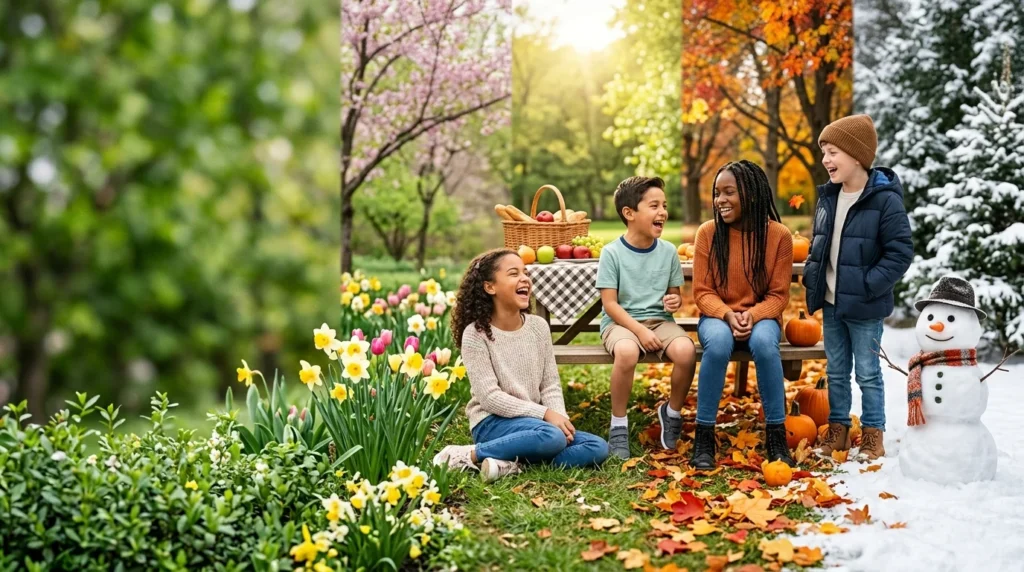
Spring has a funny way of arriving with two completely different personalities. One minute, the sun is shining and flowers are popping up. The next, everyone is standing under an umbrella wondering if the sky has personal issues.
That makes spring perfect for kid-friendly humor. There are flowers to talk about, gardens to grow, puddles to jump in, and enough rain to keep every umbrella busy. Even the word “spring” gives joke writers plenty to work with.
Here are some fresh spring laughs to brighten a cloudy day:
- Why did the flower get promoted?
Because it was outstanding in its field. - What did the tree say when spring arrived?
“Leaf me alone. I’m still waking up.” - Why was the gardener so good at school?
They knew how to grow their knowledge. - What happens when you tell a joke in a garden?
It gets a lot of laughs in the flower bed. - Why did the bee get invited to every spring party?
Because it always brought a little buzz. - What did one raindrop say to the other?
“Two’s company. Clouds are a crowd.” - Why did the frog love spring?
It was finally time to hop back into action. - What is a flower’s favorite kind of music?
Anything with a good beat that makes it bloom. - Why did the seed stay home from school?
It needed a little time to grow. - What did the puddle say after spring break?
“I’m back, and I’m still making a splash.”
Spring humor works because the jokes connect ordinary things kids can actually see and do. A flower, a muddy shoe, or a sudden rain shower becomes much funnier when you give it a ridiculous personality.
For a quick reference on how the word spring can carry different meanings, you can check the Merriam-Webster definition of “spring”.
And when the rain refuses to leave, that is when spring’s next comedy act begins: the rainy-day joke.
Springtime and Rainy-Day Jokes
Rain is spring’s way of reminding everyone who forgot an umbrella that weather forecasts exist for a reason. But for kids, a rainy afternoon can also mean puddle jumping, soggy sneakers, indoor games, and plenty of material for jokes.
These rainy-day jokes lean into the little annoyances and funny moments that happen when sunshine takes the day off.
- Why did the rain bring an umbrella to school?
It wanted to stay under cover. - What did the puddle say to the kid wearing boots?
“Come on in. The water’s fine!” - Why did the cloud get sent to the principal’s office?
It kept raining on everyone’s parade. - What do you call a wet dinosaur?
A dino-soaked. - Why did the umbrella get promoted?
It was great at covering things. - What did the raindrop say when it landed on the window?
“I’ll see you on the other side.” - Why did the kid bring a towel to the backyard?
They heard the forecast called for a little wipeout. - What is a raindrop’s favorite kind of music?
Anything with a good drip. - Why was the rain so good at hide-and-seek?
It always knew how to disappear behind a cloud. - What did the muddy shoe say after a rainy walk?
“I’ve been through a lot.”
Rainy days also create some of the easiest jokes for kids to remember because the ingredients are right outside the window. A puddle, cloud, raincoat, or pair of wet socks can become the entire setup.
And sometimes the funniest joke is simply noticing what everyone else is thinking. If your shoes make a squishing sound after walking through a puddle, congratulations: you now have your own sound effects.
Spring Break Jokes
Spring break has everything a kid could want: no regular school routine, extra time outside, trips, snacks, and at least one adult saying, “Did anyone pack the sunscreen?”
It is also perfect joke material. Spring break can mean a family road trip, a beach day, a staycation, or simply sleeping later than usual. No matter the plan, the funniest moments usually come from the little things.
- Why did the suitcase get invited on spring break?
Because it was ready to carry the vacation. - What did the backpack say when school ended for the week?
“I’m taking some time to unpack myself.” - Why did the sunglasses love spring break?
They finally got to see things in a brighter light. - What did the beach say to the vacationer?
“Long time, no sea.” - Why did the kid bring a pencil to the beach?
For drawing some serious sand-agrams. - What did the ocean say when everyone arrived?
Nothing. It just waved. - Why did the family take so many snacks on the road trip?
They wanted to be prepared for any snackcident. - What did the car say during spring break?
“I’m tired of being driven to the same conclusions.” - Why was the map so popular on vacation?
It always knew where the conversation was going. - What did the suitcase say after the trip?
“That was quite a load of fun.”
Quick Spring Break One-Liners
Sometimes a vacation joke works best when it does not need a whole setup. These quick lines are easy to drop into a family group chat, lunch note, road-trip conversation, or caption.
- My spring break plans are fully booked: snack, nap, repeat.
- I asked my suitcase if it was ready. It said, “I’m packed with excitement.”
- The beach is my favorite place to make waves without getting in trouble.
- Road trips are fun until the car asks, “Are we there yet?”
- I wanted a relaxing vacation, but my family packed enthusiasm.
- Spring break is basically a school holiday wearing sunglasses.
- My vacation diet is simple: I sea food, and I eat it.
- I packed light, but somehow my snacks packed heavy.
- The best part of a road trip? The snacks have their own itinerary.
Spring break humor works especially well because it does not require an elaborate vacation. A backyard picnic can be a spring break. So can a movie marathon, a trip to the park, or a family drive with the windows down.
And if the break involves a beach, remember the golden rule of vacation jokes: never trust the ocean to keep a straight face.
Summer Jokes for Kids
Summer makes ordinary things feel like adventures. A sprinkler becomes a water park, a freezer full of popsicles becomes a treasure chest, and a trip to the pool can turn into an entire afternoon.
That gives summer humor plenty of material. These jokes mix sunny wordplay, swimming silliness, vacation humor, and the kind of heat that makes an ice cube nervous.
- Why did the sun go to school?
It wanted to become a little brighter. - What did the ocean say to the beach?
Nothing. It just waved. - Why did the ice cream truck break down?
It had a rocky road. - What do you call a dog at the beach?
A hot dog. - Why did the watermelon have a great summer?
It was having a really sweet time. - What did the lifeguard say to the swimmer who kept telling jokes?
“Stop fooling around and keep your punchlines afloat.” - Why did the popsicle go to the doctor?
It was feeling a little frozen up. - What is a summer camp counselor’s favorite kind of story?
One with a happy camp-ending. - Why did the flip-flop go to the beach?
It wanted to put its best foot forward. - What did the sunscreen say to the skin?
“I’ve got you covered.”
Summer jokes work particularly well because kids already have a mental picture for almost every setup. They know the feeling of stepping onto hot pavement, racing toward the pool, chasing an ice cream truck, or trying to stay cool when the air seems to have forgotten how to move.
Funny Summer One-Liners
Short jokes are handy when the whole punchline needs to fit into one sentence. They also work nicely for camp notes, texts, party signs, or a quick laugh while everyone is waiting for the ice cream to melt.
- Summer is the season when my alarm clock takes a vacation, too.
- I tried to argue with the sun, but it had a brighter point.
- My swimsuit and I have one rule: stay cool.
- I wanted to make a summer salad, but the lettuce needed a vacation.
- The pool and I have a very deep relationship.
- I told my fan a joke. It blew me away.
- Sunscreen is just lotion with a very serious job.
- My ice cream disappeared so quickly, I think it went on vacation.
- The best summer exercise is running toward the ice cream truck.
- I asked the thermometer how it was doing. It said things were heating up.
The best summer humor is often simple because summer itself does most of the setup. Give kids sunshine, water, snacks, and a little free time, and the joke practically writes itself.
Of course, eventually the leaves start falling, school supplies appear in stores, and everyone realizes summer cannot last forever. That brings us to the season where the ground becomes one giant pile of punchlines.
Fall and Autumn Jokes
Fall has a very specific soundtrack: crunchy leaves under your shoes, chilly wind through the trees, and someone asking where their favorite sweater went. It is also the season when trees apparently decide that dropping thousands of leaves on the lawn is a reasonable hobby.
That makes autumn perfect for playful jokes. There are pumpkins to carve, apples to pick, leaves to rake, and enough seasonal vocabulary to keep the puns falling.
- Why did the leaf go to school?
It wanted to turn over a new leaf. - What did the tree say when autumn arrived?
“Things are looking a little different around here.” - Why did the pumpkin sit by itself?
It needed some time to squash its feelings. - What is a tree’s favorite season?
Fall, because it gets to let loose. - Why did the apple stop rolling?
It had reached the core of the problem. - What did one autumn leaf say to another?
“I’m falling for you.” - Why was the scarecrow so good at school?
It was outstanding in its field. - What did the sweater say when fall arrived?
“I’m ready to wrap things up.” - Why did the pumpkin become a comedian?
It had a great squash sense of humor. - What did the tree say after losing all its leaves?
“I’m feeling a little bare.”
Fall One-Liners for Kids
Fall is also perfect for quick one-liners because the season has so many instantly recognizable sights. These are short enough for lunch notes, classroom laughs, or a family group chat.
- I’m falling for fall, and I have no plans to leaf.
- My favorite fall activity is watching my yard become a leaf collection.
- Autumn is proof that trees know how to change their style.
- I wanted to rake the leaves, but they kept scattering the evidence.
- Pumpkins are terrible at keeping secrets. They always get squashed.
- Fall is sweater weather with a side of crunchy sound effects.
- I asked a leaf how it felt about autumn. It said, “I’m falling apart.”
- Apple picking is the only time getting to the core is considered a good thing.
- My pumpkin carving skills are a little hollow.
- The trees are dropping leaves again. Apparently, they are clearing their browser history.
Fall humor gets especially fun when it mixes nature with everyday kid experiences. A leaf can act like a student. A pumpkin can have an attitude. A sweater can complain about being left in the closet all summer.
And for families who enjoy seasonal celebrations, the jokes can easily stretch from autumn into the holiday season. If that is your next stop, our collection of holiday jokes for kids keeps the family-friendly laughs going.
But once the leaves are gone and the temperature drops, the joke material gets even colder. Literally.
Winter Jokes for Kids
Winter has a talent for turning ordinary activities into cold-weather adventures. Walking outside becomes a battle with frozen fingers, a snow day becomes an unofficial holiday, and getting dressed can require enough layers to make a kid look like a very small marshmallow.
That makes winter jokes easy to understand and fun to share. These jokes play with snow, ice, chilly weather, snowmen, winter clothes, and the strange things people do when the temperature drops.
- Why did the snowman look through the carrots?
He was picking out his nose. - What did the snow say to the sidewalk?
“I’ve got you covered.” - Why did the snowman check the weather report?
He wanted to know if things were going to get a little warmer. - What do snowmen eat for breakfast?
Frosted Flakes. - Why did the mitten feel lonely?
It had lost touch with its other half. - What did the scarf say to the coat?
“You keep me wrapped up.” - Why was the snowman so calm?
Nothing could make him lose his cool. - What is winter’s favorite type of math?
Snow-traction. - Why did the ice skate get invited to the party?
It knew how to glide into a good time. - What did the snowman say when someone asked if he was cold?
“I’m just chilling.”
Funny Winter One-Liners
Winter one-liners are perfect for snow days, classroom laughs, family texts, or anyone standing near a window wondering why the forecast looks personally offended.
- I like winter, but only from inside the house.
- Snow days are proof that weather can cancel homework.
- My fingers went outside and immediately asked to come back.
- Winter fashion is mostly about putting on another layer.
- I tried to catch snowflakes, but they kept falling for me.
- The cold weather and I need some space.
- I told the snow to stay away. It gave me the cold shoulder.
- Winter is the season of slippery decisions.
- My coat has more layers than my favorite cake.
- I built a snowman, but he was a little flaky.
Winter jokes are especially memorable when they turn familiar cold-weather experiences into wordplay. Kids do not need to know anything complicated to understand why a snowman might “lose his cool” or why a mitten feels lonely without its partner.
Snow also creates its own playground for humor. A single snowball can become a joke about throwing, rolling, melting, or getting completely out of control. And when the temperature drops too far for outdoor fun, there is always one more option: making jokes from inside where the heating is working.
Snow Jokes and Cold Weather Laughs
Snow has a way of making the world look magical while also making everyone spend ten minutes searching for a missing glove. For kids, a snowy day means snowball fights, snow forts, sledding, and the very important job of deciding who makes the biggest snowman.
Cold weather also creates some of the easiest jokes to remember because the ideas are familiar. A snowflake can have a personality, an ice cube can have an attitude, and a snowman can suddenly become the funniest character in the neighborhood.
- Why did the snowman bring a broom outside?
He wanted to sweep up some snow business. - What do you call a snowman in the summer?
A puddle. - Why did the ice cube avoid the sun?
It did not want to melt under pressure. - What did the snowflake say when it landed?
“I finally made my point.” - Why was the snowball so confident?
It knew it was on a roll. - What did one icicle say to another?
“You’re looking sharp today.” - Why did the penguin bring a suitcase to the snowstorm?
It was ready for a cool trip. - What did the kid say after building the world’s tallest snowman?
“I really raised the bar.” - Why did the snow fort win the contest?
It had a solid foundation. - What is a snowman’s favorite snack?
Ice cream, because it likes things cool.
Cold Weather One-Liners
Sometimes the funniest winter jokes are the ones that sound like something a kid would actually say while waiting for school to close because of snow.
- I love snow, but my boots disagree.
- My snowman has a great personality. He is very cool.
- I wanted to make a snow angel, but the snow was already booked.
- Cold weather is just the sky telling us to wear more clothes.
- My gloves and I have a close relationship. We are always attached.
- Snowball fights are the only battles where everyone hopes the ground wins.
- Ice is just water showing off its frozen style.
- My snowman told me a joke, but it was a little frosty.
- I tried to catch a snowflake, but it slipped through my fingers.
- Winter mornings are nature’s way of testing the snooze button.
Snow jokes work because they combine imagination with everyday experiences. Kids already understand that snow melts, ice is slippery, and cold weather requires extra layers. The joke simply adds a silly twist.
The best seasonal humor does the same thing all year: it takes something ordinary and gives it a funny personality. A raindrop, a leaf, a popsicle, or a snowflake becomes much more entertaining when it gets a voice.
Rainy Day Jokes for Kids
A rainy day does not have to mean a boring day. When the clouds move in, kids find new ways to have fun: building blanket forts, playing games indoors, watching the drops race down windows, and creating jokes about the weather outside.
Rainy days are perfect for humor because everyone knows the little challenges that come with them. Wet socks, forgotten umbrellas, muddy shoes, and canceled outdoor plans are all everyday moments waiting for a funny twist.
- Why did the rain cloud get invited everywhere?
Because it always brought a little atmosphere. - What did the umbrella say when it opened?
“I’ve got you covered.” - Why did the kid bring a ladder outside during a storm?
They wanted to reach the high notes of the weather. - What did the raindrop say before falling from the sky?
“This is going to be a splash.” - Why did the boots love rainy days?
They finally got to make a splash at work. - What did the window say to the rain?
“Stop tapping. I’m trying to relax.” - Why did the puddle win the race?
It knew how to make a quick splash. - What is a rainy day’s favorite game?
Hide and soak. - Why did the cloud bring a pillow?
It was ready for a little drizzle. - What did the raincoat say to the kid?
“Don’t worry, I’m on your side.”
Indoor Rainy Day One-Liners
When the weather keeps everyone inside, short jokes can turn a slow afternoon into a comedy break.
- Rainy days are just clouds practicing their water tricks.
- My umbrella is the only thing that enjoys being opened at the wrong time.
- I wanted to jump in puddles, but my socks filed a complaint.
- Rain is just the sky taking a very long shower.
- My boots love rainy weather because they finally get attention.
- The forecast said “chance of rain.” I think it meant “guaranteed puddles.”
- I asked the cloud for a joke, but it gave me a drizzle.
- A rainy day is nature’s way of saying, “Try an indoor adventure.”
- My window has watched more rain races than any sports channel.
- I like rainy days, but my laundry does not.
Rainy-day humor is a reminder that jokes do not need a special event to work. Sometimes the funniest moments come from small inconveniences that everyone recognizes.
A little rain can change plans, but it can also create new memories. After all, some of the best family laughs happen when everyone is stuck inside together.
Why Seasonal Jokes Work So Well for Kids
The best kids’ jokes usually start with something familiar. A child does not need to understand a complicated reference to laugh at a snowman losing his cool, a flower getting a little too confident, or an ice cream cone having a rough day in the sun.
Seasonal humor works because it follows the rhythm of everyday life. Kids experience different sights, sounds, and activities as the year changes, and jokes help them look at those moments from a playful angle.
A good seasonal joke often uses simple wordplay, silly comparisons, or a surprising twist. A leaf can become a character. A cloud can have feelings. A snowflake can suddenly have an opinion. That small change in perspective is what creates the laugh.
Seasonal jokes are also useful beyond entertainment. Parents can use them in lunch notes, teachers can add them to classroom activities, and kids can share them with friends during holidays, vacations, or school breaks.
What Makes a Great Seasonal Joke?
A memorable kid-friendly joke usually has three ingredients:
1. A familiar idea
The setup should involve something kids already know, like rain, sunshine, snow, school, or favorite foods.
2. A simple twist
The punchline works best when the surprise is easy to understand and quick to remember.
3. A little imagination
The funniest seasonal jokes often give ordinary things unusual personalities. A talking pumpkin or a dramatic snowflake can turn a normal day into a funny story.
Seasonal humor also helps families create traditions. A joke shared every spring, a funny winter saying during snow days, or a silly summer line before a road trip can become a small moment everyone remembers.
The calendar changes every few months, but one thing stays the same: kids will always find a way to laugh at the weather, the seasons, and the funny little moments in between.
Conclusion
Every season brings its own kind of fun, and every season brings new chances to laugh. From rainy spring afternoons and sunny summer adventures to crunchy fall leaves and snowy winter days, the little moments kids experience throughout the year are full of joke possibilities.
The best seasonal jokes for kids do more than create a quick laugh. They turn everyday things into stories. A puddle becomes a character, a pumpkin gets a personality, and a snowman suddenly has an opinion about the weather. That simple imagination is what makes kid-friendly humor so memorable.
These jokes are perfect for sharing at home, in classrooms, on road trips, during vacations, or whenever someone needs a little extra sunshine. After all, laughter does not need perfect weather. Sometimes the funniest moments happen when plans change, the rain starts falling, or everyone is stuck inside together.
So keep the jokes ready for every season. The flowers will bloom, the leaves will fall, the snow will melt, and the laughs can keep coming all year long.
Frequently Asked Questions
What are seasonal jokes for kids?
Seasonal jokes for kids are clean jokes inspired by different times of the year, including spring, summer, fall, and winter. They usually use familiar themes like weather, holidays, outdoor activities, food, and seasonal traditions to create simple laughs.
What are some good spring jokes for kids?
Good spring jokes for kids often include flowers, rain, gardens, bees, puddles, and warmer weather. Spring humor works well because children can connect the jokes with things they see happening around them, such as blooming plants and rainy days.
What are some funny summer jokes for kids?
Funny summer jokes often focus on swimming, ice cream, sunshine, beaches, vacations, and hot weather. These jokes are popular because kids already have strong memories connected to summer activities and outdoor fun.
Why do kids enjoy seasonal jokes?
Kids enjoy seasonal jokes because they are easy to understand and connect with real experiences. A joke about snow, rain, leaves, or sunshine feels more personal because children recognize those things from their own lives.
What are some good winter jokes for kids?
Good winter jokes for kids often involve snowmen, snowflakes, ice, cold weather, and winter clothing. Simple wordplay makes these jokes easy to remember and share during snow days or colder months.
Can seasonal jokes be used in classrooms?
Yes. Seasonal jokes work well in classrooms because they encourage reading, creativity, and social interaction. Teachers can use them as warm-up activities, writing prompts, or quick brain breaks.
Are seasonal jokes appropriate for all ages?
Most clean seasonal jokes are suitable for children, families, and classrooms. The best jokes use simple wordplay, imagination, and everyday experiences without relying on complicated references or inappropriate humor.
References
- Merriam-Webster
- Cambridge Dictionary
- Encyclopaedia Britannica
- Oxford Reference