Fat Jokes to Make Someone Cry (From Laughing)

Some people search for fat jokes to make someone cry because they want the most savage roast imaginable. But the best jokes don’t leave someone reaching for tissues—they leave them wiping away tears from laughing too hard. That’s a much better ending for everyone.
If you’re after clever roasts, goofy one-liners, and over-the-top exaggeration, you’re in the right place. This collection leans into playful humor, ridiculous situations, and creative wordplay instead of cheap insults. After all, comedy lands best when everyone can laugh, even the person who’s being roasted.
If you’re looking for an even bigger collection of classic roast humor, check out our Fat Jokes pillar article for dozens of joke styles, from clean dad jokes to playful one-liners, all organized in one place.
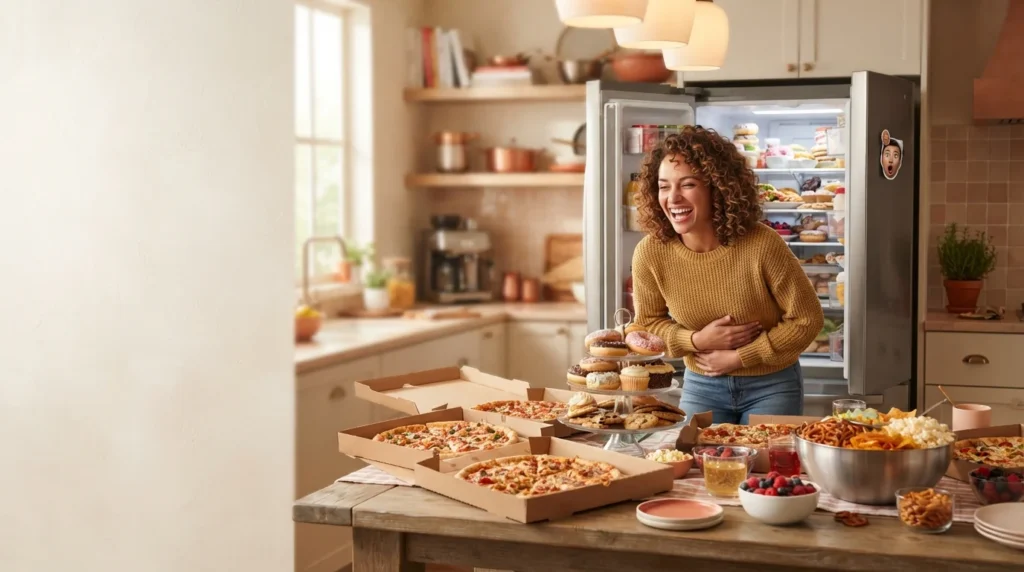
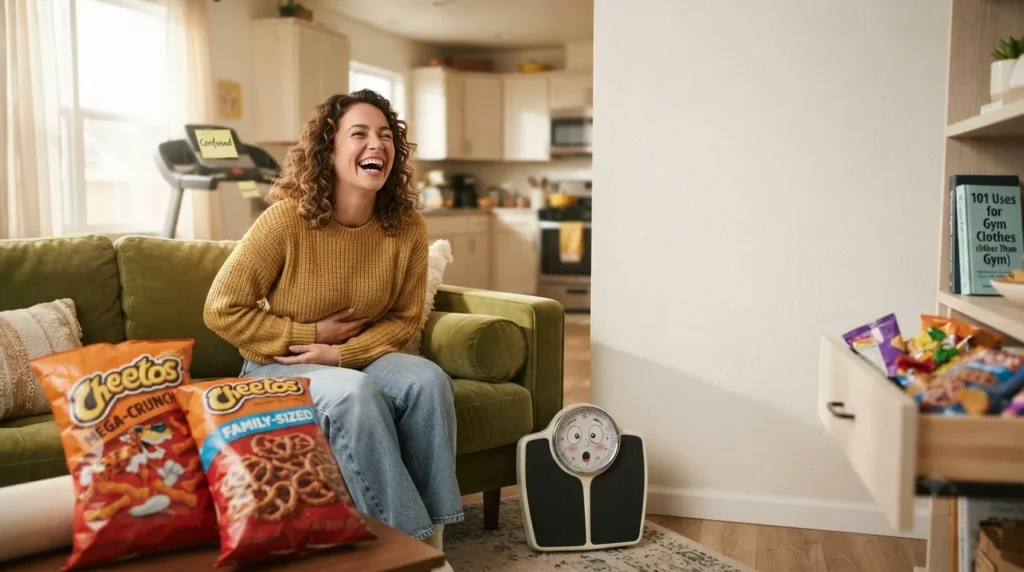
The funniest fat jokes don’t rely on repeating the same old punchlines you’ve seen a hundred times. They work because they surprise you. One joke might compare someone’s snack drawer to a grocery store. Another might imagine a treadmill filing for overtime. The image is so absurd that it’s hard not to smile.
Roast humor has always been built on exaggeration. Nobody actually believes someone ordered the entire menu or caused the bathroom scale to display “To Be Continued.” That’s exactly why the joke works. The farther the exaggeration stretches from reality, the more obvious it becomes that it’s comedy—not a statement of fact.
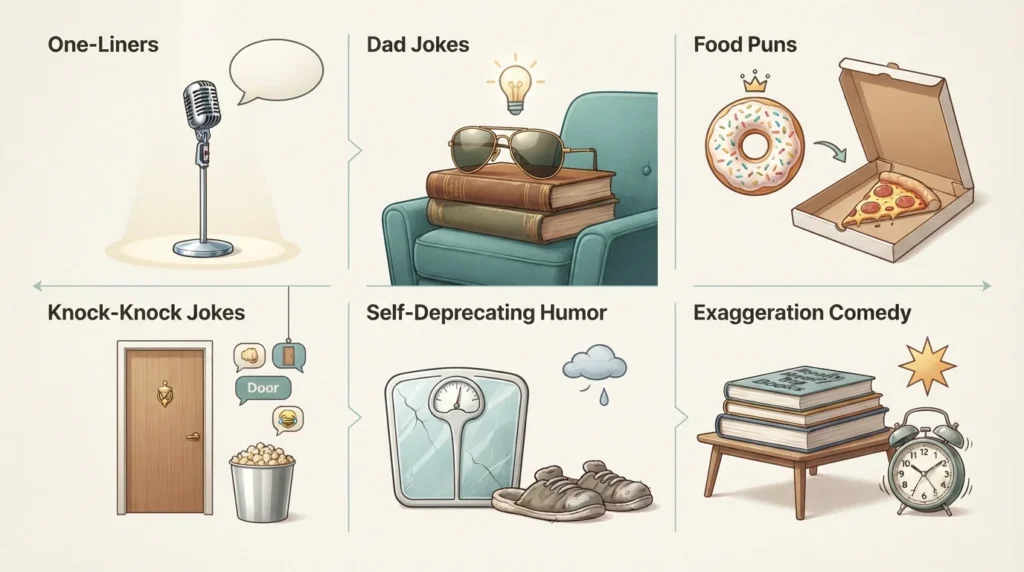
Throughout this article, you’ll find a mix of witty one-liners, food-themed jokes, playful dad jokes, knock-knock jokes, self-deprecating humor, and classic roast-style punchlines. Some are delightfully corny, some are surprisingly clever, and many have been freshly reworked to avoid feeling like another recycled internet joke list.
So grab a snack—just maybe not enough to make the refrigerator start charging rent—and let’s see which joke makes you cry… from laughing.
What Makes a Fat Joke Funny Instead of Mean?
The best fat jokes to make someone cry don’t aim to hurt someone’s feelings—they aim to make everyone in the room laugh. The secret is simple: the joke should target an exaggerated situation, not a real person’s worth. When the humor is obviously over the top, it feels playful instead of personal.
Think about the difference between these two approaches. Saying someone “ate the whole restaurant” is clearly impossible, so your brain recognizes it as cartoon-level exaggeration. Saying something meant to embarrass someone about their appearance, on the other hand, isn’t really a joke at all. Good comedy creates a shared laugh. Mean comments usually create an awkward silence.
That’s why professional comedians often rely on techniques like hyperbole, misdirection, and wordplay. The punchline isn’t funny because it’s true—it’s funny because it’s so wildly untrue that nobody could take it seriously.
Here are a few examples that show the difference:
Playful exaggeration
- “Your grocery cart has its own loyalty rewards program.”
- “The buffet puts your picture on the wall with the caption, ‘Welcome back, legend.'”
- “The refrigerator heard you coming and switched to airplane mode.”
- “Your snack drawer has business hours.”
- “The kitchen timer applauds whenever you walk in.”
Notice how every joke focuses on impossible or ridiculous situations instead of making a personal attack.
Another trick is using everyday objects as the punchline. A couch asking for vacation days. A pizza delivery app sending holiday cards. A vending machine recognizing your face before your phone does. These little twists paint funny mental pictures that make jokes memorable.
Roast humor also works best between people who already know each other. Friends understand the difference between playful teasing and genuine criticism because trust already exists. The same joke can feel hilarious in one group and completely miss the mark in another. Context matters just as much as the punchline.
If you’re looking for more classic roast-style laughs, our Funny Fat Jokes collection explores even more clever one-liners, playful exaggerations, and shareable punchlines that pair perfectly with this guide.
Fat Jokes to Make Someone Cry From Laughing
The funniest roast jokes work because they create ridiculous mental images. Instead of repeating tired internet punchlines, these jokes lean on exaggeration, wordplay, and unexpected twists. They’re the kind of lines you can imagine friends trading back and forth until someone laughs so hard they forget who won the roast.
Remember, the goal is laughter—not hurt feelings. The more absurd the joke, the funnier it usually becomes.
Clever One-Liners
- You don’t need a cheat day—you’ve got a loyalty program.
- Your shadow called and asked for a larger parking space.
- The snack cupboard just added you to its family plan.
- Your grocery receipt came with a thank-you letter.
- Even your smartwatch asks, “Still eating?”
- You don’t count calories. Calories count you.
- The buffet keeps your table reserved year-round.
- Your fridge doesn’t have leftovers—it has survivors.
- You treat “family size” like a personal challenge.
- The elevator sighs before the doors even close.
- Your kitchen has a speed limit.
- You don’t browse menus—you negotiate with them.
- Your lunch break has an opening act and an encore.
- The pizza delivery driver knows your birthday.
- Even your microwave asks for a coffee break.
- Your cereal bowl qualifies as a swimming pool.
- The cookie jar installed a revolving door.
- Your fork deserves overtime pay.
- You don’t snack between meals—your meals snack between snacks.
- The scale greeted you with, “Long time, no see.”
Food-Themed Fat Jokes
Food jokes are comedy comfort food. Everyone understands the universal struggle of walking into the kitchen “just to grab water” and somehow leaving with three snacks and dessert.
- The refrigerator started charging admission.
- Your pantry has its own zip code.
- You opened a bag of chips, and it saluted.
- The buffet called you its MVP.
- The pizza asked if it should just move in.
- Even the leftovers don’t expect to survive the night.
- The grocery store sends you birthday cards.
- Your air fryer filed for retirement.
- The donut shop calls you by your first name.
- Your toaster applauds every morning.
- You said “light snack” and accidentally cooked Thanksgiving dinner.
- The cookie jar installed fingerprint security—and still couldn’t stop you.
- Your spoon requested hazard pay.
- The popcorn popped out of respect.
- The ice cream melted out of nervousness.
- Your sandwich introduced itself before you took a bite.
- The vending machine keeps exact change ready just for you.
- Your blender thinks weekends are mandatory overtime.
- Even the ketchup asked for a day off.
- The chef looked at your order and whispered, “Challenge accepted.”
Savage Roast Jokes
These are intentionally over-the-top. The fun comes from how impossible they are—not from pretending they’re true.
- You don’t enter the buffet. The buffet enters witness protection.
- GPS doesn’t say, “You have arrived.” It says, “Good luck.”
- Your couch has a union representative.
- Your sneakers keep requesting early retirement.
- The treadmill saw you coming and updated its life insurance.
- Even your reflection asked for a wider angle.
- Your backpack says it’s carrying emotional weight now.
- The restaurant menu automatically expands when you sit down.
- Your chair deserves employee-of-the-month.
- The Wi-Fi slows down because it thinks you’re downloading another pizza.
- The drive-thru worker says, “The usual?” before you roll down the window.
- Your fork has biceps.
- Your lunchbox comes with chapters instead of compartments.
- The picnic table stretched before you arrived.
- Your grocery cart asks for power steering.
- Even the napkins prepare for overtime.
- The bakery waves when you drive by.
- Your kitchen smoke detector claps instead of beeping.
- The fridge light stays on because it knows you’ll be back in a minute.
- Your appetite should honestly have its own documentary.
These jokes prove that the biggest laughs usually come from the biggest exaggerations. Nobody believes them—and that’s exactly why they work. The next section takes a different approach by turning the jokes inward with self-deprecating humor, where you’re the first one laughing at yourself before anyone else gets the chance.
Self-Deprecating Fat Jokes
Self-deprecating humor can be one of the safest ways to enjoy roast comedy because you’re the one telling the joke. It shows confidence, keeps the mood light, and often gets a bigger laugh because you’re inviting everyone—including yourself—to enjoy the absurdity.
The trick is to laugh at funny situations rather than tear yourself down. A clever exaggeration is memorable. A harsh insult usually isn’t.
Here are some self-deprecating fat jokes that keep things playful.
- I joined a gym. The vending machine remembered my name before the trainer did.
- My diet is going great. I only visit the fridge emotionally now.
- I don’t have a sweet tooth—I have an entire dessert department.
- My jeans and I are currently in a long-distance relationship.
- I told myself one cookie. The cookie invited all its friends.
- My grocery cart deserves its own parking spot.
- I opened the fridge for inspiration. It delivered.
- My smartwatch keeps congratulating me for walking… to the kitchen.
- I meal prep. The meals just never make it to tomorrow.
- I burn calories deciding what to order.
- My favorite exercise is carrying all the grocery bags in one trip. That’s strength training.
- I don’t skip breakfast. Breakfast skips ahead to lunch.
- The salad looked amazing. I admired it while eating pizza.
- My kitchen knows more about me than my therapist.
- My snacks have snacks.
- I don’t believe in midnight snacks. Around here, they’re called “late dinners.”
- My air fryer works harder than I do.
- Every recipe says “serves four.” I see that as a suggestion.
- My fridge light is basically my nightlight.
- I bought smaller plates. The servings somehow got bigger.
Why Self-Roasts Usually Get Bigger Laughs
There’s something instantly relatable about laughing at yourself. Almost everyone has promised to “eat healthier on Monday,” only to find themselves standing in front of the refrigerator five minutes later wondering if cheese counts as a hobby.
Self-roast jokes work because they exaggerate experiences many people recognize. Instead of pointing fingers, they invite everyone into the joke. That’s why they’re popular in stand-up comedy, group chats, and family dinners—they make people nod, smile, and think, “Yep… I’ve done that.”
The funniest self-deprecating jokes don’t pretend to be true. They take ordinary moments—ordering takeout, reaching for a snack, avoiding the gym—and stretch them into ridiculous stories. That’s where the laugh lives.
Key Takeaway
Self-deprecating humor works best when it comes from confidence, not criticism. Laugh at the situation, exaggerate the story, and keep the punchline light enough that everyone can enjoy it.
Mean Fat Jokes
Mean fat jokes are a classic type of roast humor that uses exaggeration, sarcasm, and clever punchlines to create laughs. These jokes are usually written in a playful roast style, where the goal is to make the joke sound dramatic and ridiculous rather than genuinely hurtful.
The funniest mean fat jokes often rely on impossible situations, creative comparisons, and over-the-top descriptions. Whether you’re looking for savage jokes, funny insults, or roast-style comedy, these jokes deliver a mix of exaggeration and humor.
Examples of mean fat jokes include:
- Yo mama so fat, when she goes camping, bears hide their food.
- You’re not overweight, you’re just easier to find on Google Maps.
- You don’t need a fitness tracker; your fridge already knows your daily steps.
- You’re so big, your shadow has its own zip code.
- When you step on a scale, it asks for your phone number before giving the results.
- You don’t need a costume for Halloween; people already think you’re a giant pumpkin.
Mean fat jokes are most popular in roast battles, comedy conversations, and among friends who enjoy exaggerated humor. The key to a good roast is creativity—the punchline matters more than the insult itself.
Fat Jokes Roast
Fat jokes roast humor is all about delivering funny, exaggerated comebacks with a clever twist. Unlike regular jokes, roast-style humor focuses on playful teasing, dramatic comparisons, and unexpected punchlines that make people laugh.
A good fat jokes roast combines sarcasm and creativity to create memorable jokes. These types of jokes are commonly used during roast competitions, friendly arguments, and comedy performances where people exchange funny insults.
Here are some roast-style fat jokes:
- You’re not fat, you’re just a limited edition with extra features.
- Your stomach doesn’t need a table; it already has enough space.
- Your mirror doesn’t show your reflection; it shows your entire family tree.
- You don’t walk into a room, you make an entrance with your own weather system.
- Your belt doesn’t hold your pants up; it holds your confidence together.
- Your diet plan is just a list of foods you haven’t tried yet.
A fat jokes roast is funniest when it focuses on clever wordplay and silly exaggeration. The best roast jokes are meant for entertainment, where everyone understands the humor and enjoys the playful back-and-forth.
Fat Dad Jokes
Dad jokes have survived for one simple reason: they are proudly ridiculous. They don’t need a complicated setup or a shocking punchline. A good dad joke walks into the room wearing a goofy smile, makes everyone groan, and somehow gets a laugh anyway.
When it comes to fat jokes, dad humor works best with harmless exaggeration, silly wordplay, and everyday situations. These jokes are less about roasting someone and more about creating those classic “that was terrible… tell me another one” moments.
Here are some clean, corny fat dad jokes that belong at family gatherings, BBQs, and group chats.
- I tried to lose weight by eating only vegetables. Turns out my favorite vegetable was a pizza with extra toppings.
- My scale and I have a healthy relationship. We just don’t talk anymore.
- I asked my fridge if it was hungry. It said, “Finally, someone understands me.”
- My diet starts tomorrow. Tomorrow has been very busy for the last five years.
- I bought a treadmill, but it just sits there collecting dust. At least we’re both staying still.
- My salad and I broke up. It said I was only using it for decoration.
- I told my stomach we were eating less. It laughed so hard it needed a snack.
- My fridge isn’t full. It’s just emotionally supported.
- I don’t have a food problem. I have a food opportunity.
- My favorite workout is lifting the fork from the plate to my mouth.
- I asked my gym membership where it was. It said, “You tell me.”
- My kitchen timer doesn’t count down anymore. It just warns me.
- My cookies and I have a strong bond. Mostly because they disappear together.
- I tried a juice cleanse. The juice got tired before I did.
- My refrigerator and I have a great friendship. It always opens up to me.
- I started a new diet where I only eat foods I can pronounce. Goodbye, quinoa.
- My fitness tracker congratulated me for standing up. The standards are low, but I’ll take it.
- My favorite kind of running is running out of snacks.
- I asked my pants if they wanted to stretch. They said, “We already are.”
- My cooking is so good, even my diet plans take a cheat day.
The Charm of Corny Humor
The reason dad jokes keep making a comeback is because they don’t take themselves seriously. They create a tiny moment of shared silliness where everyone knows the joke is intentionally cheesy.
A great dad joke is like a funny song you pretend to hate but somehow know all the words to. The punchline might make you roll your eyes first, but the smile usually follows right behind.
This style of humor also works well because it stays focused on situations everyone recognizes: food cravings, lazy weekends, failed diets, and the eternal battle between the couch and motivation.
Fat Knock-Knock Jokes
Knock-knock jokes are the comfort food of comedy. They are simple, predictable, and somehow still funny when the punchline arrives. Their charm comes from the rhythm—the setup builds anticipation, and the silly ending delivers the laugh.
For roast-style humor, knock-knock jokes work best when they stay playful. The funniest ones create a ridiculous scene where the joke feels more like a cartoon than a criticism.
Here are some original knock-knock jokes with a little extra silliness.
Knock, Knock!
Knock, knock.
Who’s there?
Olive.
Olive who?
Olive eating, but I saved you a slice.
Knock, knock.
Who’s there?
Snack.
Snack who?
Snack attack. The pantry called for backup.
Knock, knock.
Who’s there?
Taco.
Taco who?
Taco ’bout a person who never says no to dessert.
Knock, knock.
Who’s there?
Pizza.
Pizza who?
Pizza the reason the delivery driver knows your street by heart.
Knock, knock.
Who’s there?
Cookie.
Cookie who?
Cookie monster called. He wants your snack strategy.
Knock, knock.
Who’s there?
Fork.
Fork who?
Fork-get the diet plan. We’re ordering dinner.
Knock, knock.
Who’s there?
Cereal.
Cereal who?
Cereal-ously, how many bowls did you have?
Knock, knock.
Who’s there?
Ice cream.
Ice cream who?
Ice cream because I saw the calorie count.
Knock, knock.
Who’s there?
Bacon.
Bacon who?
Bacon me crazy with all these snack options.
Knock, knock.
Who’s there?
Dough.
Dough who?
Doughn’t ask how many donuts I bought.
Why Knock-Knock Jokes Still Work
There is a reason this format has lasted for generations. The structure creates a tiny comedy game between two people. The listener knows a punchline is coming, but the fun comes from guessing where the joke will go.
According to Merriam-Webster, humor often depends on surprise and unexpected connections. That explains why simple formats like knock-knock jokes, puns, and wordplay remain popular: they turn ordinary words into something unexpected.
The best knock-knock jokes also have a little musical quality. The repeated phrases make them easy to remember, easy to share, and perfect for conversations where you need a quick laugh.
Yo Mama Fat Jokes
Yo mama jokes are one of comedy’s oldest roast formats. Their formula is simple: take an ordinary idea, exaggerate it to an impossible level, and create a ridiculous mental picture. The funniest versions don’t feel like personal attacks—they feel like cartoon scenes where reality has been turned up to maximum volume.
Classic roast humor works because the exaggeration is so obvious that nobody takes it literally. A joke about someone needing two movie tickets because they “take up two seats” is funny because it belongs in a cartoon universe, not because it’s a serious observation.
Here are some playful yo mama fat jokes built around exaggeration and silly wordplay.
- Yo mama so big, her GPS says, “Please continue straight… and then take the scenic route.”
- Yo mama so big, her favorite app is a food delivery tracking system.
- Yo mama so big, when she steps on a scale, it says, “Please enter your password.”
- Yo mama so big, the family photo needs panoramic mode.
- Yo mama so big, her selfies need a wide-angle warning.
- Yo mama so big, her shadow has its own zip code.
- Yo mama so big, when she wears a belt, it counts as a suspension bridge.
- Yo mama so big, the couch asked if she wanted to share a lease.
- Yo mama so big, the restaurant saves her table as a landmark.
- Yo mama so big, her birthday cake needs a loading dock.
- Yo mama so big, her footsteps make the weather app send alerts.
- Yo mama so big, her favorite playlist is called “Songs for the Long Walk to the Kitchen.”
- Yo mama so big, the elevator sends a calendar invite before opening.
- Yo mama so big, her blanket has a customer service department.
- Yo mama so big, her chair gets a trophy after every meal.
- Yo mama so big, the family dog uses her as a sofa.
- Yo mama so big, her hoodie has a zip code.
- Yo mama so big, her grocery list comes with chapters.
- Yo mama so big, the pizza delivery driver brings a map.
- Yo mama so big, her smartwatch says, “Let’s start with a smaller goal.”
Why Exaggeration Makes Roast Jokes Funny
The magic behind this style of humor is imagination. A good roast joke creates a scene that is impossible but easy to picture. Your brain instantly creates a funny image, and that mental picture is where the laugh happens.
Comedians have used exaggeration for generations because it allows jokes to become bigger than real life. A normal situation becomes a ridiculous adventure. A simple meal becomes a legendary event. A regular object suddenly has a personality.
That same technique appears across comedy—from cartoons and sitcoms to stand-up routines and playful friend groups. The joke succeeds because the audience understands the rules: everything is intentionally over the top.
The best roast jokes also depend on timing and relationship. A joke that makes close friends laugh might not work with strangers. Great humor isn’t just about having a funny line; it’s about knowing when and where that line belongs.
When Fat Jokes Stop Being Funny
The difference between a funny roast and an uncomfortable comment usually comes down to one thing: the intention behind it. Great comedy creates a shared laugh. A bad joke leaves someone feeling like the punchline instead of part of the joke.
The strongest roast humor uses creativity, exaggeration, and imagination. It turns ordinary situations into ridiculous stories. A joke about a refrigerator needing a break or a treadmill asking for retirement works because the object becomes the target of the joke. The humor comes from the silly idea, not from trying to make someone feel small.
Context matters too. Friends who regularly joke with each other often understand their own boundaries. A playful roast between close friends can become a memorable moment because everyone knows there is respect underneath the teasing.
But humor changes when the goal becomes embarrassing someone. A joke stops being entertaining when it focuses on personal insecurity, ignores someone’s feelings, or is used to make one person uncomfortable while everyone else laughs.
A simple rule helps: laugh with people, not at them.
The Best Roasts Have Creativity Behind Them
The funniest comedians rarely rely on the easiest joke. They build a world around the punchline.
Instead of saying:
“Someone eats a lot.”
A creative comedian might imagine:
“The refrigerator installed a security system because it knew midnight snacks were coming.”
The second version works because it creates a funny picture. It gives the audience something to imagine. It transforms a basic observation into a mini story.
This is why wordplay, puns, and exaggerated scenarios remain popular in comedy. They allow jokes to feel playful instead of predictable.
Know Your Audience Before You Roast
Every group has a different sense of humor. Some friends enjoy savage jokes. Others prefer clean dad humor. Some people love sarcastic one-liners, while others prefer silly puns.
Before sharing a roast, think about the relationship you have with the person. A joke that makes your best friend laugh might not get the same reaction from a coworker or someone you barely know.
Good comedians understand their audience. Good friends do too.
At the end of the day, the best fat jokes to make someone cry are the ones that create happy tears. The punchline should be remembered because everyone laughed—not because someone felt uncomfortable.
Conclusion
The best fat jokes to make someone cry are the ones that leave everyone laughing, not the ones that leave someone feeling uncomfortable. Great roast humor is built on creativity, exaggeration, and timing. A funny punchline can turn an everyday moment into a ridiculous story that people remember and share.
From clever one-liners and food puns to dad jokes and classic roast formats, the funniest jokes usually have one thing in common: they don’t take themselves too seriously. They create impossible situations, funny mental images, and playful moments between friends.
Comedy has always worked best when people laugh together. A good joke doesn’t need to be cruel to be memorable. Sometimes the funniest punchline is simply a silly idea taken way too far—a refrigerator demanding rent, a treadmill requesting retirement, or a snack drawer becoming a full-time employee.
So the next time you’re looking for a roast, remember the golden rule of humor: make the joke bigger, not meaner. The best laughs come from imagination, not insults.
Frequently Asked Questions
What are fat jokes to make someone cry?
Fat jokes to make someone cry are usually exaggerated roast jokes designed to make someone laugh so hard they tear up. The funniest examples rely on silly situations, wordplay, and impossible scenarios rather than personal attacks.
Are fat jokes considered offensive?
Fat jokes can be offensive when they are meant to embarrass or insult someone. However, playful roast humor between friends often works because everyone understands the joke is exaggerated and based on trust.
How do you make a fat joke funny?
A funny fat joke usually uses exaggeration, surprise, and creativity. Turning everyday situations into ridiculous scenes—like a fridge having a personal relationship with someone—often creates better comedy than simple insults.
What makes roast jokes funny?
Roast jokes are funny because they exaggerate a trait or situation to an unrealistic level. The audience laughs because they recognize the joke is playful and impossible rather than a serious statement.
Are self-deprecating jokes better than roasting others?
Self-deprecating jokes can work well because the person telling the joke is including themselves in the humor. They often feel more relatable because they focus on shared experiences and funny situations.
Can fat jokes be family friendly?
Yes. Family-friendly fat jokes usually avoid personal attacks and focus on harmless exaggeration, food puns, silly scenarios, and classic dad-style humor.
Why do exaggeration jokes work so well?
Exaggeration works because the human brain enjoys surprise. When a normal situation becomes wildly unrealistic, the contrast creates a funny mental picture that makes the punchline stronger.
References
- Merriam-Webster — Humor and word meanings
- Cambridge Dictionary — Expressions and language usage
- Encyclopaedia Britannica — Comedy and humor history
- Oxford Reference — Comedy terminology and concepts
- Oxford English Dictionary — Word origins and language development
- American Comedy History Resources