Angle Jokes and Puns That Are Surprisingly Sharp

Math has a reputation for being serious, but geometry has always had a playful side. After all, when a shape has a “right” attitude, an “acute” personality, or an “obtuse” way of thinking, it is practically begging for a joke. Angle jokes turn ordinary math terms into clever wordplay that works for students, teachers, parents, and anyone who enjoys a good dad joke.
Angles are especially fun because many geometry words already have everyday meanings. A person can be acute in their observations, obtuse in an argument, or right about a situation. That overlap between mathematics and regular conversation creates endless opportunities for clean humor.
If you enjoy classic family-friendly laughs, you already know why dad jokes never really disappear. They are simple, predictable, and somehow still funny even when everyone sees the punchline coming. A well-timed math pun has that same charm. It may earn an eye roll first, but that little smile usually follows.
This collection brings together clever geometry humor, silly one-liners, and original twists on angle-related wordplay. From acute angles with sharp personalities to obtuse angles that take the long way around, these jokes prove that even numbers and shapes can have a sense of humor.
For more classic family laughs beyond geometry, explore our collection of dad jokes and clean jokes for every occasion. Now, let’s find the right angle for some laughs.
Why Angle Jokes Always Find the Right Point
Angle jokes work because geometry is full of words that already have personality. Terms like acute, right, and obtuse do more than describe shapes — they also describe people, opinions, and everyday situations. That double meaning gives math humor an easy path from the classroom to the comedy corner.
A good pun takes something familiar and gives it a tiny twist. Angle humor does exactly that. The word “acute” can describe a narrow angle, but it can also describe someone who is clever or quick-thinking. “Right” can mean a 90-degree angle, but it can also mean correct. “Obtuse” might describe a wide angle, or it might describe someone who is missing an obvious point.
That is why geometry jokes often feel surprisingly natural. They are not forcing random words together — they are using language that already has multiple layers. The best puns simply reveal a connection people did not notice before.
There is also a nostalgic reason angle jokes work so well. Many people first meet these terms in school while learning about triangles, shapes, and measurements. Years later, hearing those same words used in a joke brings back memories of classrooms, homework, and teachers trying to make math more enjoyable.
Math humor is a form of wordplay where knowledge becomes part of the punchline. It rewards people who understand the reference while still being simple enough for everyone else to enjoy. A person does not need to love geometry to appreciate a joke about someone taking the wrong angle on a problem.
Even dictionary definitions can show how everyday meanings and technical meanings overlap. The word “acute,” for example, carries both mathematical and descriptive uses, making it perfect material for clever humor. Merriam-Webster Dictionary definitions and word meanings
The secret behind great angle humor is simple: take a familiar term, look at it from a different perspective, and find the funny side hiding in plain sight. Sometimes the best jokes are all about finding the right point of view.
The Secret Behind Geometry Wordplay
Geometry wordplay works because it combines logic with surprise. The funniest angle puns usually come from words that have two meanings: one from mathematics and another from everyday life. When those meanings collide, a simple geometry term suddenly becomes a punchline.
Take the word “right.” In math, a right angle measures exactly 90 degrees. In conversation, being right means having the correct answer. That small connection creates dozens of jokes because the word already lives in two worlds.
The same thing happens with “acute.” A student might learn that an acute angle is less than 90 degrees, but outside the classroom, someone can be described as acute when they are sharp, clever, or perceptive. Suddenly, a geometry lesson sounds like a compliment.
Then there is “obtuse,” the angle that always gets a little attention in jokes. In mathematics, it simply means an angle wider than 90 degrees but less than 180 degrees. In everyday language, it describes someone who is slow to understand something. That contrast makes it perfect for playful humor.
This type of wordplay is what makes dad humor so memorable. The joke does not depend on complicated setups or clever tricks. It depends on noticing a connection that was hiding in plain sight.
Great geometry jokes also follow a classic comedy rule: the audience should understand the setup quickly. If someone has to solve a math problem before getting the joke, the punchline loses its power. The best puns are like a good angle — they come together neatly and land exactly where they should.
Whether it is a classroom joke, a science pun, or a silly one-liner shared with friends, geometry gives comedians plenty of shapes, lines, and directions to work with. Sometimes all it takes is looking at a familiar word from a slightly different angle.
Angle Jokes That Are Acute, Right, and Slightly Obtuse
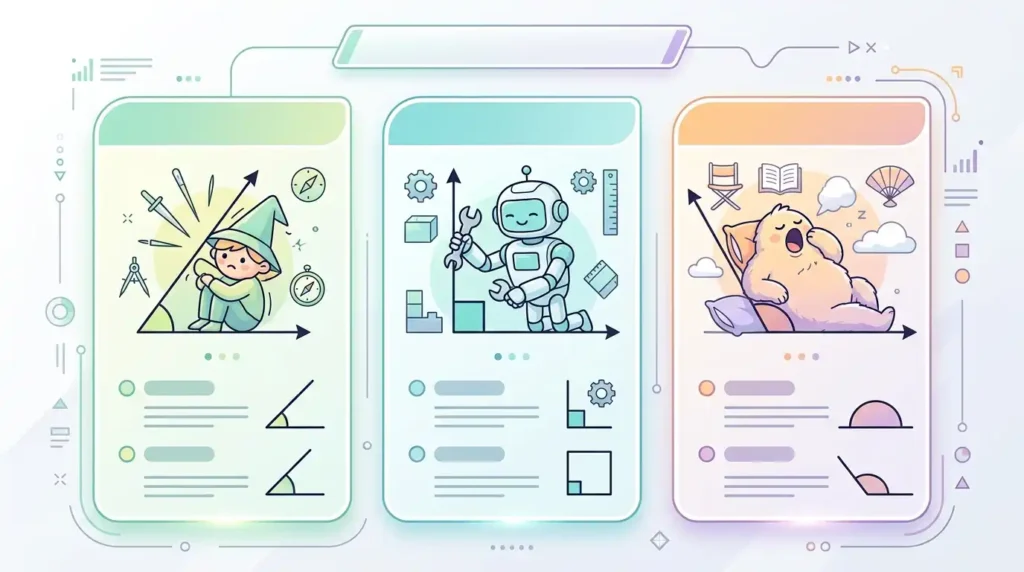
Geometry may be built on measurements and formulas, but the language of angles creates plenty of room for laughter. The three famous angle types — acute, right, and obtuse — each have their own personality. Acute jokes tend to be sharp, right-angle jokes feel perfectly timed, and obtuse jokes usually take the funniest route possible.
These clean angle jokes are designed for anyone who enjoys clever math humor without needing a calculator nearby. They work for classroom laughs, family conversations, or those moments when you want to make someone groan with a classic dad-style pun.
Acute Angle Jokes
Acute angle is small, sharp, and full of potential — which makes it a perfect character for quick jokes. The humor often comes from treating the angle like a person with a clever personality.
- Why did the acute angle win every argument?
Because it always had a sharp point. - The acute angle joined the debate team because it knew how to make a pointed statement.
- My geometry teacher said I was an acute student.
I’m pretty sure that was the best compliment I could get in math class. - The acute angle never gets lost.
It always knows how to make a sharp turn. - The acute angle walked into the room and everyone noticed.
It had a very pointed entrance.
Right Angle Jokes
Right angles are the dependable ones of geometry. They are balanced, organized, and always exactly where they should be. That reliability makes them perfect for jokes about being correct or doing things properly.
- Why was the right angle so confident?
Because it was always 90% sure. - The right angle never argues with anyone.
It knows it is correct. - I asked the right angle for advice.
It gave me a perfectly measured response. - The right angle joined the team because everyone needed someone dependable.
- The square invited the right angle to dinner because they always got along perfectly.
Obtuse Angle Jokes
Obtuse angles are the comedians of geometry. They are bigger, slower, and often connected with misunderstandings — making them ideal for playful jokes.
- Why did the obtuse angle take so long to answer the question?
It needed more time to get the point. - The obtuse angle missed the joke.
It was a little too wide of the mark. - Everyone told the obtuse angle to hurry up, but it preferred taking the long way around.
- The obtuse angle was not confused.
It was just looking at the problem from a wider perspective. - The obtuse angle joined the conversation late because it took a different route.
Each type of angle brings a different flavor of humor. Acute jokes feel clever, right-angle jokes feel satisfying, and obtuse jokes deliver that classic silly dad-joke energy. Together, they prove that geometry is not just about lines and numbers — sometimes it is also about finding the funniest point.
Angle Puns for Math Fans Who Love Wordplay
Some jokes make you laugh because of the punchline. Others make you smile because you suddenly notice a clever connection between two meanings. That is where angle puns shine. They take familiar geometry words and turn them into little moments of wordplay.
The best math puns do not need a long explanation. A simple phrase like “taking the right angle” can mean finding the correct approach or literally looking at a 90-degree angle. That small language twist is what makes the joke work.
Here are some sharp geometry-inspired puns for anyone who likes humor with a little brainpower behind it.
- I tried to become a professional angle photographer, but I could never find the right angle.
- Geometry students always stay positive because they know every problem has a solution point.
- My triangle started a music career because it had great angles.
- I wanted to tell an angle joke, but I was afraid it would not measure up.
- The geometry book was feeling emotional because it had too many unresolved issues.
- I asked my angle for advice, but it gave me a very measured response.
- The triangle broke up with the circle because it needed someone with a different perspective.
- My ruler and my protractor became friends because they were always on the same line.
- The angle refused to fight because it did not want things to get too heated.
- Geometry students are great at planning because they always think ahead by degrees.
- The triangle went to therapy because it had too many sides of the story.
- I told my friend a geometry joke, but it went over his head.
Maybe I used the wrong angle. - The protractor was promoted because it always handled situations with precision.
- Angles never get bored.
They always have another point to make. - The triangle opened a restaurant because it knew how to serve three-sided meals.
Good wordplay works because it rewards attention. The reader recognizes the familiar phrase, notices the mathematical twist, and enjoys the little surprise. That is why puns remain one of the most popular forms of clean humor.
From classroom laughs to casual conversations, geometry gives joke writers plenty of material. There are lines to cross, points to make, and plenty of angles to explore — all without getting too technical. Even a simple shape can have a surprisingly funny side.
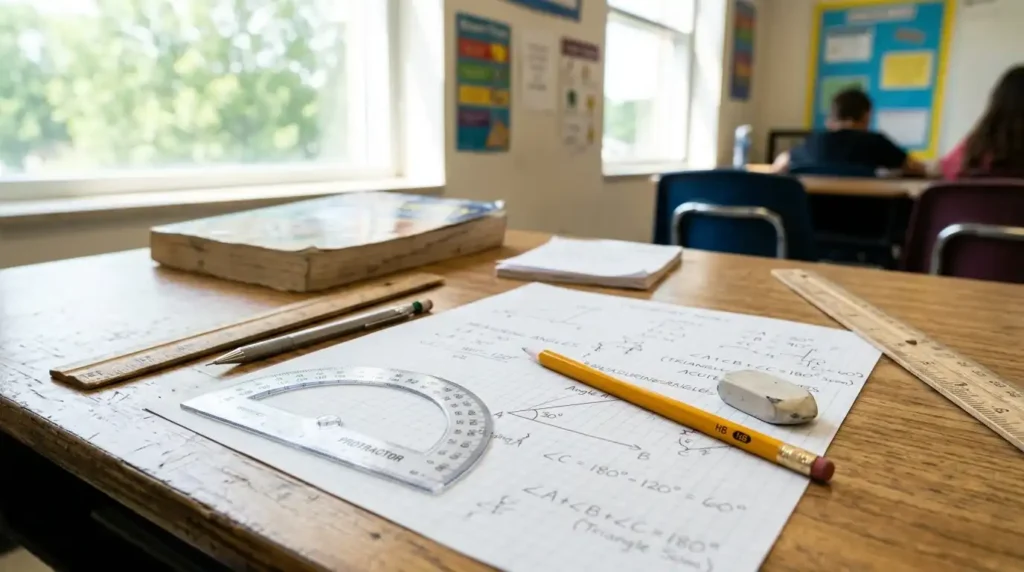
Classroom-Friendly Angle Jokes for Teachers and Students
Math classrooms are filled with formulas, diagrams, and sometimes a few tired faces staring at the clock. A well-timed joke can change the mood instantly. Classroom-friendly angle jokes make geometry more approachable by adding humor to concepts students are already learning.
Teachers often use jokes because laughter helps people remember information. A student might forget a definition after a quiz, but they may remember the joke about an angle that was “always right.” Humor creates a small mental connection, making lessons feel less intimidating.
Geometry also has an advantage over many subjects because its vocabulary naturally creates funny moments. Students can joke about points, lines, shapes, and measurements while still reinforcing the ideas behind the lesson.
Here are some clean jokes perfect for classrooms, study groups, or math-loving families:
- Why did the angle bring a pencil to class?
Because it wanted to draw a better point. - The geometry student loved homework.
Every problem gave them another angle to consider. - Why did the triangle get extra credit?
Because it always had three good points. - The protractor was the best student in class.
It always measured up. - Why did the line break up with the curve?
It needed someone more straight to the point. - The teacher asked why the angle was late.
It said, “I took the wrong turn.” - Why did the geometry class stay calm during exams?
Everyone knew how to keep things balanced. - The circle was jealous of the triangle.
It felt the triangle had too many sides people liked. - Why did the student love geometry?
Because every answer had a point.
Teachers can also use humor as a bridge between difficult ideas and everyday language. A joke about a “straightforward” solution or a “sharp” observation helps students connect abstract terms with familiar expressions.
For more science-inspired laughs, readers who enjoy educational wordplay may also like our collection of air jokes and funny air-related puns, where everyday concepts get the same playful treatment.
The best classroom jokes do not distract from learning — they make learning feel more human. A little laughter can turn a complicated angle into a memorable one.
Why Math Dad Jokes Never Go Out of Shape
Math jokes have a special kind of charm. They are not always the loudest laughs in the room, but they have staying power because they combine simplicity, cleverness, and a little bit of nostalgia. Angle jokes fit perfectly into dad humor because they rely on clean wordplay, predictable setups, and punchlines that are easy to share.
That classic dad-joke style is part of the fun. Everyone knows the joke might be coming, but the enjoyment comes from the clever connection rather than the surprise alone. A joke about an angle being “right” works because the audience already understands both meanings of the word.
Geometry also gives humor a unique advantage: it is visual. People can imagine shapes, lines, and points while hearing the joke. That mental picture makes the punchline easier to remember. A triangle with an attitude or a protractor trying to “measure up” becomes a tiny character instead of just a math tool.
The appeal of math humor also comes from its ability to bring different generations together. A student learning angles, a parent remembering school days, and a teacher looking for classroom energy can all enjoy the same joke for different reasons.
Dad humor has never needed complicated formulas. The best jokes often take an everyday idea and add one unexpected twist. That is exactly what makes geometry wordplay work so well.
A good pun is like a well-drawn shape: every part has a purpose. The setup creates the direction, the wording creates the structure, and the punchline brings everything together. When all the pieces connect, the joke lands perfectly.
Even simple topics can create endless comedy when viewed from the right perspective. Whether it is a silly classroom joke, a clever one-liner, or a pun shared with friends, math proves that humor can come from almost anywhere.
And if you enjoy more playful word connections, our collection of air conditioning puns and cool wordplay jokes offers another example of how everyday topics can become surprisingly funny.
Conclusion
Angles may belong in geometry class, but they have earned a place in the world of comedy too. From acute observations to right answers and obtuse misunderstandings, these terms prove that even mathematical language can have a funny side.
The best angle jokes work because they combine simple ideas with clever wordplay. They do not need complicated setups or advanced formulas. A single word with two meanings can create a joke that makes students smile, parents laugh, and teachers enjoy bringing a little energy into the classroom.
That is the beauty of clean humor. A good pun can teach, entertain, and create a shared moment at the same time. Whether you are a math fan, a dad-joke collector, or someone who simply enjoys a clever twist, geometry offers plenty of opportunities to find the funny point.
So the next time you see a triangle, a protractor, or a perfectly measured angle, remember that there is probably a joke hiding somewhere inside it. You just have to look at it from the right perspective.
Frequently Asked Questions
What are angle jokes?
Angle jokes are humorous jokes that use geometry terms, mathematical concepts, and wordplay related to angles. They often use terms like acute, right, and obtuse because these words also have meanings outside mathematics.
Why are angle puns funny?
Angle puns are funny because they combine two meanings of the same word. For example, “right” can describe a 90-degree angle or mean something is correct. That language connection creates a clever surprise.
What are some examples of geometry humor?
Geometry humor includes jokes about angles, triangles, circles, lines, shapes, and measurements. Common styles include math puns, classroom jokes, one-liners, and clean dad humor.
Are angle jokes suitable for classrooms?
Yes. Clean angle jokes are often used by teachers because they make math concepts more approachable and memorable. They can help students connect technical terms with everyday language.
What makes a good dad joke?
A good dad joke usually has a simple setup, an easy-to-understand punchline, and a clever word connection. The humor often comes from being predictable in a fun way.
Can angle jokes help students learn math?
Humor can make learning more enjoyable by helping students remember concepts. A funny connection between a math term and an everyday phrase can make an idea easier to recall.
What is the difference between an acute and obtuse angle?
An acute angle measures less than 90 degrees, while an obtuse angle measures more than 90 degrees but less than 180 degrees. These definitions also create opportunities for wordplay because both terms have everyday meanings.
References
- Merriam-Webster Dictionary
- Encyclopaedia Britannica
- Oxford Reference
- Cambridge Dictionary
- National Council of Teachers of Mathematics (NCTM)