
Septum Piercing 101: The Complete Guide

A septum piercing is a piercing that passes through the soft tissue just below the nasal septum—often called the “sweet spot”—rather than the thick cartilage itself. When done by an experienced professional, it’s known for its versatile look, customizable jewelry, and the option to wear it visibly or discreetly. While healing typically takes several months, good aftercare and quality jewelry can make the process much smoother.
Few piercings have transformed from niche body art into a mainstream fashion statement quite like the septum piercing. You’ll spot it everywhere—from runway models and musicians to beauty influencers and professionals who simply flip up a retainer during work hours. That flexibility is one of the biggest reasons it continues to grow in popularity.
If you’re exploring more beauty trends, aftercare advice, and body jewelry inspiration, browse our Beauty section for the latest guides and expert tips.
If you’re considering getting one, you’re probably wondering about more than just the final look. Does it actually hurt? How long does it take to heal? What jewelry should you start with? And can everyone get a septum piercing? The answers depend on your anatomy, your choice of piercer, and how well you care for the piercing during healing.
This guide brings together everything beginners should know before booking an appointment. You’ll learn how a professional piercer finds the correct placement, what to expect during the procedure, how healing progresses, which jewelry materials are safest for new piercings, and the everyday habits that help your piercing heal comfortably. Along the way, you’ll also find practical styling advice, realistic expectations, and expert-backed safety guidance so you can make an informed decision with confidence.
Whether you’re drawn to a subtle horseshoe ring or a bold statement clicker, understanding the basics first will help you enjoy your new piercing for years to come.
Septum Piercing 101: The Complete Guide to Understanding the Basics
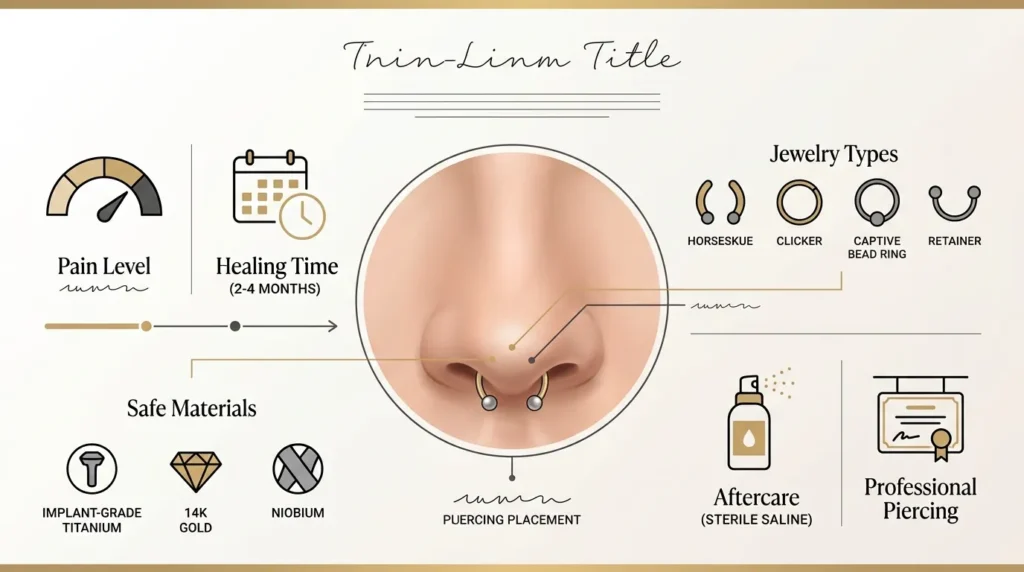
A septum piercing is a facial piercing placed through the thin strip of soft tissue beneath the nasal septum, commonly called the “sweet spot.” Contrary to a common misconception, a properly placed septum piercing usually does not pass through the thick cartilage that separates the nostrils. Finding the correct placement is one of the most important parts of the procedure, which is why experience matters when choosing a professional piercer.
The exact location of the sweet spot varies from person to person. Some people have a well-defined area that’s easy to pierce, while others have less suitable anatomy that may require slight adjustments or, in some cases, make a traditional septum piercing impractical. A reputable piercer will examine your anatomy before recommending whether the piercing is a good fit.
Once healed, a septum piercing is one of the most versatile facial piercings available. It can accommodate a variety of jewelry styles, from understated retainers that stay almost invisible to decorative clickers and statement rings that become the centerpiece of your look. Because the jewelry hangs from the center of the nose, it complements many face shapes without permanently changing your appearance.
Another reason beginners are drawn to septum piercings is their flexibility. Many jewelry designs can be flipped upward inside the nostrils, allowing the piercing to remain hidden for work, formal events, or personal preference. That versatility makes it appealing to people who want the option to switch between bold self-expression and a more understated appearance without removing the jewelry entirely.
Understanding the Septum “Sweet Spot”
The sweet spot is a thin membrane of tissue located just below the firm septal cartilage near the front of the nose. Piercing this softer area generally results in less discomfort and promotes smoother healing than piercing through cartilage.
Finding this spot isn’t something that can be judged from photos or online diagrams because every nose is different. During your appointment, a professional piercer will gently examine your septum to identify the safest placement based on your individual anatomy. If the sweet spot is very small or difficult to access, they may discuss alternative placement options or explain why another piercing might be a better choice.
Proper placement also affects how the jewelry sits after healing. A well-positioned septum piercing typically hangs evenly, feels comfortable during daily wear, and offers a wider selection of jewelry styles without unnecessary pressure on the surrounding tissue. Taking the time to choose an experienced piercer is one of the best ways to help ensure both an attractive result and a healthier healing process.
Why Septum Piercings Have Become So Popular
Septum piercings have become a lasting fashion staple because they combine versatility, individuality, and timeless appeal. They can be subtle or eye-catching, easy to personalize with different jewelry, and adaptable to changing styles. Unlike many fashion trends that come and go, a septum piercing can evolve with your personal taste simply by swapping the jewelry.
Over the past decade, the piercing has moved well beyond alternative fashion circles. Celebrities, musicians, runway models, and content creators have helped introduce septum jewelry to a wider audience, showing that it pairs just as naturally with minimalist outfits as it does with bold, edgy looks. Today, it’s common to see everything from delicate gold clickers worn with tailored blazers to ornate statement rings styled with festival-inspired fashion.
Another reason for its popularity is the sheer variety of jewelry available. A simple horseshoe ring creates a clean, understated appearance, while decorative clickers, seamless rings, and gemstone designs can dramatically change the overall aesthetic without requiring another piercing. This flexibility allows one piercing to suit different occasions, seasons, and personal styles.
For many people, a septum piercing is also a form of self-expression. Some choose it to celebrate a milestone or mark a new chapter in life, while others simply appreciate the way it complements their facial features. Unlike trends driven purely by social media, septum piercings have deep cultural roots in various communities around the world, where they have represented identity, tradition, and personal significance for centuries. Modern fashion has embraced these influences while giving wearers the freedom to interpret the style in their own way.
Practicality plays a role as well. Many pieces of septum jewelry, particularly retainers and circular barbells, can be flipped inside the nostrils when needed. This feature appeals to people whose workplace, school, or lifestyle occasionally calls for a more discreet appearance. Rather than committing to a permanently visible facial piercing, wearers have the option to reveal or conceal it depending on the situation.
Ultimately, the lasting appeal of a septum piercing comes from its balance of fashion and flexibility. It can be bold without feeling permanent, expressive without limiting future style choices, and versatile enough to grow with changing trends. That’s a combination few other facial piercings can offer.
What Happens During a Septum Piercing Appointment?
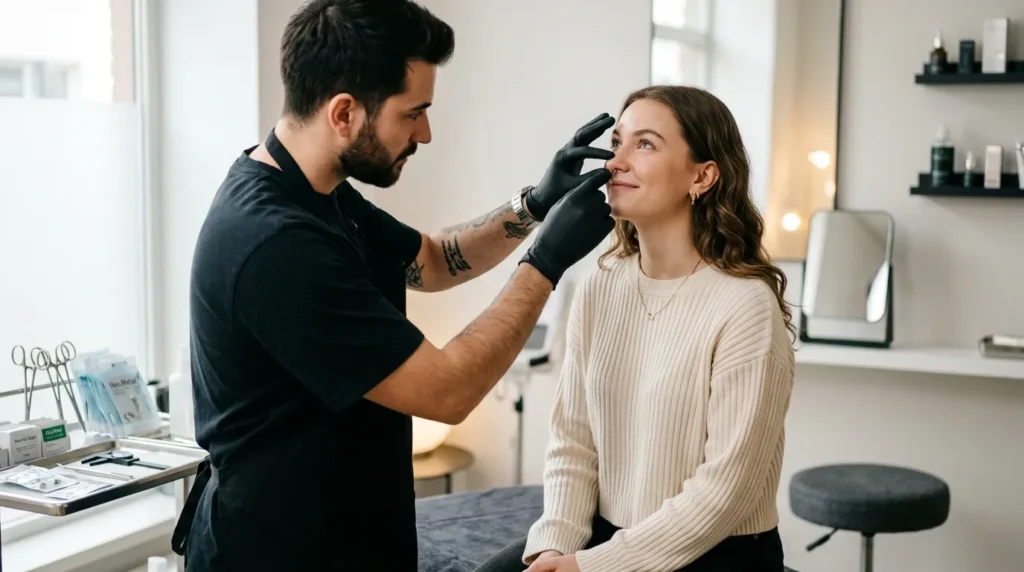
A professional septum piercing appointment is usually quick, with the piercing itself taking only a few moments. Most of the visit is spent preparing, confirming placement, and making sure the jewelry fits your anatomy correctly. Knowing what happens before, during, and immediately after the procedure can help you feel more relaxed when appointment day arrives.
Your visit typically begins with a consultation. The piercer will ask about your health history, explain the procedure, and examine your nose to determine whether your anatomy is suitable for a septum piercing. They’ll locate your sweet spot and discuss where the jewelry will sit, giving you a chance to ask questions before anything begins.
Once you’re ready, the piercing area is cleaned, and the piercer may mark the placement to ensure proper alignment. Most reputable studios use a sterile, single-use hollow needle rather than a piercing gun, as needles create a cleaner opening with less tissue trauma. The initial jewelry—often an implant-grade titanium circular barbell or horseshoe ring—is sterilized before insertion.
During the piercing, you’ll be asked to stay as still as possible while taking slow, steady breaths. Many people experience a brief pinch followed by pressure as the jewelry is inserted. It’s also common for your eyes to water automatically because of the nose’s sensitive nerve pathways. Although the sensation can be surprising, it usually lasts only a few seconds.
After the jewelry is secured, your piercer will check that it sits evenly and explain how to care for it during the healing period. You’ll receive instructions on cleaning the piercing, what activities to avoid, and what changes are considered normal in the first few weeks. This is also the ideal time to ask about follow-up appointments if you have concerns or eventually need a jewelry change.
The quality of the studio matters just as much as the procedure itself. Look for a clean, professional environment that follows strict hygiene practices, uses sterilized equipment, and takes the time to assess your anatomy instead of rushing the appointment. Studios that follow the standards promoted by the Association of Professional Piercers (APP) are generally a good place to start when researching qualified piercers.
Choosing an experienced professional may cost more than the cheapest option, but proper placement, sterile technique, and quality jewelry can make a significant difference in both your healing experience and the final appearance of your piercing.
How Much Does a Septum Piercing Hurt?
Most people describe a septum piercing as a quick, sharp pinch followed by a feeling of pressure rather than prolonged pain. When the piercing passes through the soft “sweet spot” instead of the thicker cartilage, it’s often considered less painful than many people expect. Your individual pain tolerance and anatomy play a big role, so no two experiences are exactly alike.
Pain is one of the biggest concerns for first-time clients, but the piercing itself is over in just a few seconds. You may notice your eyes watering, the urge to sneeze, or a brief tingling sensation across your nose and upper lip. These reactions are completely normal and happen because the nose contains many sensitive nerve endings.
Several factors can influence how uncomfortable the experience feels. A correctly placed piercing by an experienced professional is generally smoother than one that struggles to find the proper placement. Choosing high-quality initial jewelry, arriving well-rested, staying hydrated, and eating a light meal beforehand can also help you feel more comfortable during the appointment. Feeling anxious is natural, but steady breathing and staying relaxed can make the process easier.
It’s also helpful to distinguish between piercing pain and healing discomfort. The sharp sensation during the procedure lasts only moments, while mild tenderness, sensitivity when touching the tip of your nose, and occasional soreness during the first few weeks are all typical parts of the healing process. These sensations should gradually improve rather than become more intense.
People often compare septum piercings with other facial piercings. While everyone’s experience is different, many find a properly placed septum piercing more comfortable than cartilage piercings because it goes through softer tissue. That doesn’t mean it’s painless, but it often surprises first-timers by being quicker and less intense than they anticipated.
Myth vs. Reality
Myth: A septum piercing goes through thick cartilage, so it’s one of the most painful facial piercings.
Reality: In most cases, a professional piercer places the jewelry through the soft tissue beneath the cartilage. When positioned correctly, many people describe the pain as brief and manageable rather than severe.
If you’re especially nervous about the pain, let your piercer know before the procedure begins. An experienced professional can explain each step, answer your questions, and help you feel more at ease.
Healing Timeline and What to Expect
A septum piercing typically takes 2 to 4 months to heal, although some people may need longer depending on their anatomy, overall health, and aftercare routine. While the piercing may start feeling comfortable within a few weeks, the tissue inside the piercing channel continues healing beneath the surface. Patience is just as important as proper cleaning during this period.
The first few days are usually the most noticeable. Mild swelling, tenderness, and occasional watering of the eyes are common after the procedure. You may also feel slight sensitivity when smiling, blowing your nose, or accidentally bumping the tip of your nose. These reactions generally become less noticeable as the initial inflammation settles.
As the weeks pass, the piercing should gradually feel more comfortable. It’s normal to see small amounts of dried lymph fluid, often forming pale yellow or off-white crust around the jewelry. This is a natural part of healing and isn’t necessarily a sign of infection. Avoid picking at the crusts—instead, let them soften during your recommended cleaning routine before gently removing them if needed.
Even when the piercing looks healed from the outside, the tissue inside the channel can still be delicate. Changing jewelry too early or frequently twisting the jewelry can irritate the piercing and extend the healing process. Waiting until your piercer confirms that it’s ready for a jewelry change helps reduce unnecessary setbacks.
Healing isn’t always perfectly linear. Some days the piercing may feel completely normal, while on others it might become slightly tender after being bumped, sleeping awkwardly, or experiencing seasonal allergies. Temporary sensitivity doesn’t automatically mean something is wrong, but symptoms that continue worsening instead of improving deserve professional attention.
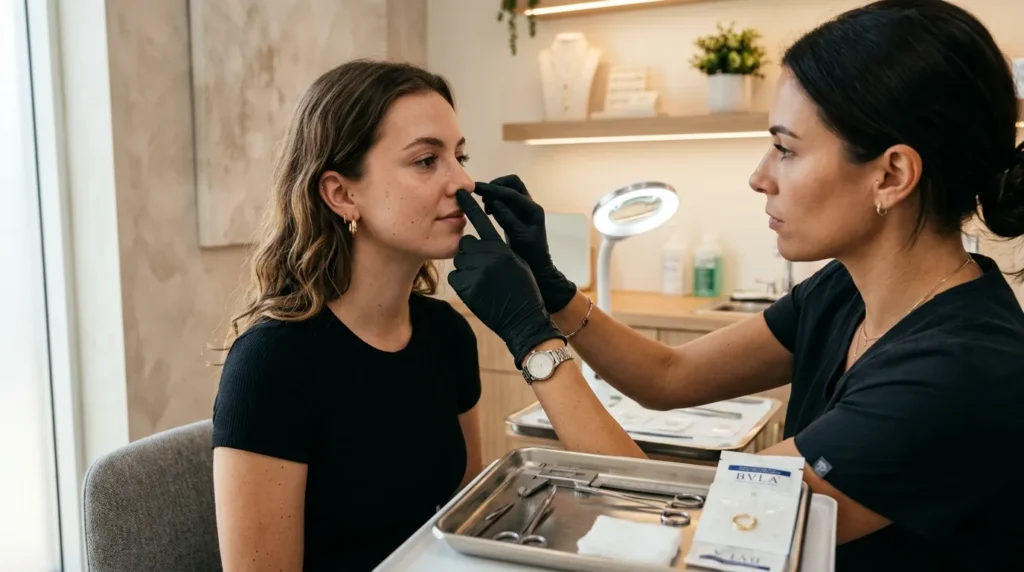
Healing Timeline at a Glance
| Healing Stage | Typical Timeframe | What You May Notice |
|---|---|---|
| Initial Recovery | First 1–2 weeks | Mild swelling, tenderness, watery eyes, light bleeding, sensitivity when touching the nose |
| Early Healing | Weeks 2–6 | Reduced soreness, occasional crusting, less swelling, piercing becomes more comfortable |
| Ongoing Healing | Months 2–4 | Tissue continues strengthening, irritation becomes less frequent, jewelry feels more natural |
| Fully Healed* | Around 2–4+ months | Piercing is generally comfortable, though healing time varies between individuals |
These timeframes are typical estimates rather than guarantees. Some piercings heal sooner, while others may take longer depending on anatomy, lifestyle, and aftercare.
Healing tends to go more smoothly when the jewelry is left alone as much as possible. Avoid unnecessary touching, rotate the jewelry only if instructed by your piercer, and follow the aftercare guidance provided by your studio. Small, consistent habits usually have a greater impact on healing than frequent cleaning or over-managing the piercing.
Choosing the Right Septum Jewelry
The best jewelry for a new septum piercing is simple, lightweight, and made from a high-quality, body-safe material. Your initial jewelry isn’t just about appearance—it also affects comfort, healing, and the likelihood of irritation. Starting with the right piece gives your piercing the best chance to heal smoothly before you experiment with different styles.
Most professional piercers recommend beginning with a circular barbell (horseshoe) or a captive bead ring. Both styles leave enough room for the natural swelling that occurs during the first stage of healing and are easy to clean around. Decorative clickers and ornate rings may look appealing, but they’re often better suited for fully healed piercings because intricate designs can trap debris and make cleaning more difficult.
Once your piercing has healed, you’ll have plenty of options to match your style. Seam rings create a clean, minimalist look, while clickers come in countless designs ranging from delicate gemstones to bold geometric patterns. Retainers are another popular choice for people who occasionally want to conceal their piercing without removing the jewelry altogether.
Comfort is just as important as appearance. Jewelry that is too tight can place pressure on the healing tissue, while pieces that are excessively heavy may move more than necessary during daily activities. A professional piercer will select an appropriate size based on your anatomy and can help you switch to different styles once healing is complete.
Best Jewelry Materials for New Piercings
The material touching your skin matters just as much as the jewelry style. High-quality metals are less likely to irritate the piercing and are commonly recommended for initial healing.
| Material | Why It’s Popular | Best For |
|---|---|---|
| Implant-grade Titanium | Lightweight, durable, and suitable for many people with metal sensitivities | Initial jewelry and long-term wear |
| Niobium | Naturally corrosion-resistant and available in several colors | Sensitive skin and healed piercings |
| Surgical Steel | Durable and widely used by professional studios, though some grades may contain nickel | People without nickel sensitivities |
| 14k Gold | Classic appearance and suitable for quality body jewelry when properly manufactured | Healed piercings and premium styles |
While many materials are available online, not all body jewelry meets professional quality standards. Purchasing jewelry from a reputable piercing studio or trusted manufacturer helps ensure the metal is designed for body piercings and finished to minimize irritation.
For more detailed guidance on selecting safe materials, jewelry styles, and proper sizing for a fresh piercing, see the Association of Professional Piercers’ Jewelry for Initial Piercings guide. It explains why factors such as material quality, gauge, and fit play an important role in healthy healing.
Understanding Gauge Sizes
Gauge refers to the thickness of the jewelry rather than its diameter. Most septum piercings are performed with 16G, although 18G and 14G are also common depending on your anatomy and your piercer’s recommendations.
A smaller gauge number means thicker jewelry. For example, 14G is thicker than 16G, while 18G is thinner. Maintaining the correct gauge helps preserve the piercing channel and ensures new jewelry fits comfortably.
If you decide to change the thickness of your jewelry in the future, it’s best to do so gradually and only after the piercing has fully healed. A professional piercer can advise whether resizing is appropriate for your anatomy and help prevent unnecessary irritation.
Septum Piercing Aftercare Basics
Good aftercare is simple and consistent. The goal is to keep the piercing clean while allowing your body to heal naturally without unnecessary irritation. Over-cleaning, constantly touching the jewelry, or trying home remedies can do more harm than good. Following the instructions provided by your piercer and keeping the routine straightforward is usually the best approach.
The Association of Professional Piercers (APP) recommends cleaning healing piercings with a sterile saline solution as directed by your piercer. During cleaning, avoid twisting or rotating the jewelry, as this can irritate the healing tissue and delay recovery. After rinsing, gently pat the area dry with a clean disposable paper product rather than a reusable cloth towel, which can harbor bacteria.
Daily habits also have a noticeable impact on healing. Wash your hands before touching the area if contact is necessary, avoid picking away dried crusts, and be mindful when changing clothes, washing your face, or blowing your nose. Even a small bump can leave the piercing feeling tender for a day or two, especially during the first month.
Certain activities are best avoided while the piercing heals. Swimming in pools, hot tubs, lakes, or oceans can expose the piercing to microorganisms that may increase the risk of irritation. Likewise, avoid applying makeup, facial creams, or skincare products directly around the piercing unless your piercer has advised they’re safe to use nearby.
It’s also worth paying attention to your overall health. Staying hydrated, eating a balanced diet, and getting enough sleep can support your body’s natural healing process. While these habits won’t speed healing overnight, they help create the conditions your body needs to recover efficiently.
Summary : Septum Aftercare Essentials
- Clean the piercing with sterile saline solution as recommended by your piercer.
- Wash your hands before touching the jewelry or surrounding skin.
- Avoid twisting, rotating, or removing the jewelry during healing.
- Keep cosmetics, skincare products, and dirty hands away from the piercing.
- Be patient—consistent care is more effective than frequent cleaning or experimenting with home remedies.
Every piercing heals at its own pace. If your aftercare routine is gentle and consistent, you’ll usually see steady progress over time without needing to constantly monitor or adjust the piercing. The less you interfere with the healing process, the more comfortable it tends to be.
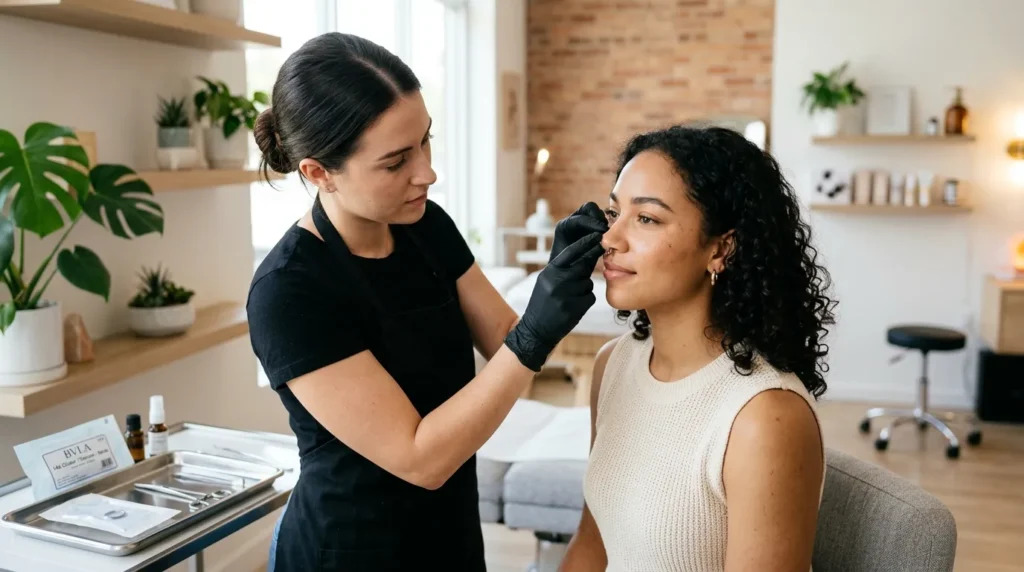
Common Problems and When to See a Professional
Some tenderness, mild swelling, and light crusting are normal while a septum piercing heals. What matters most is how the piercing changes over time. A healthy piercing should gradually become more comfortable, even if it has occasional days where it feels slightly irritated after being bumped or exposed to cold weather. Symptoms that steadily improve are generally part of the normal healing process.
Minor irritation can happen for many reasons. Accidentally catching the jewelry on clothing, changing it too early, sleeping with pressure on your nose, or touching it with unwashed hands may leave the piercing sore for a short period. In most cases, returning to your regular aftercare routine and avoiding further irritation allows the tissue to settle down naturally.
It’s important not to diagnose problems based solely on online photos or social media advice. Redness, swelling, or discharge can have different causes, and it’s not always possible to tell the difference between normal healing and a complication without a proper assessment. If you’re concerned about how your piercing looks or feels, contacting the piercer who performed the procedure is often the best first step.
There are times when professional medical advice is appropriate. If you notice increasing pain instead of gradual improvement, significant swelling that doesn’t begin to subside, persistent redness that spreads, thick yellow or green discharge with an unpleasant odor, fever, or the jewelry appearing to migrate from its original position, seek guidance from an experienced piercer or a healthcare professional. They can determine whether the symptoms are part of the healing process or require further evaluation.
Myth vs. Fact
| Myth | Fact |
|---|---|
| You should twist the jewelry every day to stop it from sticking. | Rotating the jewelry can irritate the healing tissue. Leave it in place unless your piercer advises otherwise. |
| Any redness means the piercing is infected. | Mild redness is common during early healing. What matters is whether symptoms are improving or becoming progressively worse. |
| Removing the jewelry immediately fixes every problem. | Taking jewelry out without professional advice can sometimes make certain issues more difficult to manage. Consult your piercer or a healthcare professional first if you’re concerned. |
| Home remedies work better than professional aftercare advice. | Following your piercer’s recommended aftercare routine and using appropriate cleaning methods is generally safer than experimenting with unverified remedies. |
A good piercer doesn’t disappear after your appointment. Reputable studios welcome follow-up visits, can check whether your piercing is healing normally, and can safely change your jewelry when the time is right. If something doesn’t feel right, asking an experienced professional early is far better than waiting until a small concern becomes a larger problem.
Is a Septum Piercing Right for You?
A septum piercing is a good choice for many people, but it’s not the right fit for everyone. The best candidates have suitable anatomy, realistic expectations about healing, and are prepared to commit to proper aftercare. Taking a little time to think about your lifestyle and long-term preferences before booking an appointment can help you decide with confidence.
One of the first considerations is your anatomy. Although many people have a well-defined sweet spot, some noses have a very small or difficult-to-access area that may not support a traditional septum piercing. A professional piercer can evaluate your anatomy during a consultation and explain whether the piercing can be performed safely and positioned correctly.
Your daily routine is another important factor. If your job requires frequent face coverings, protective equipment, or has strict appearance policies, consider whether you’ll need jewelry that can be concealed. Many people appreciate that a healed septum piercing can often be hidden with a retainer or flipped-up circular barbell when necessary, making it one of the more adaptable facial piercings.
It’s also worth thinking about your personal style. A septum piercing can be incredibly versatile—minimalist jewelry blends seamlessly into an understated wardrobe, while ornate clickers and decorative rings create a bold focal point. Because changing jewelry can dramatically alter its appearance, one piercing can complement a wide range of fashion aesthetics without feeling limiting.
Before making your decision, ask yourself a few practical questions:
- Am I willing to follow an aftercare routine for several months?
- Can I avoid changing the jewelry before the piercing has fully healed?
- Have I chosen an experienced, reputable piercer rather than simply the lowest price?
- Does this piercing suit both my current lifestyle and how I see myself wearing it in the future?
For many people, the answer is yes. A professionally placed septum piercing offers a unique combination of style, flexibility, and personal expression that’s difficult to match. Going into the experience with realistic expectations—and choosing quality over convenience—can make the difference between a frustrating healing journey and a piercing you’ll enjoy for years to come.
Key Takeaways
- A septum piercing is typically placed through the soft sweet spot, not the thick cartilage.
- Healing commonly takes 2–4 months, though individual timelines vary.
- Implant-grade titanium is widely considered one of the best choices for initial jewelry.
- Consistent, gentle aftercare and leaving the jewelry undisturbed support healthy healing.
- An experienced professional piercer is one of the most important factors in achieving proper placement and a positive outcome.
- With the right jewelry, a healed septum piercing can be worn as a subtle everyday accessory or a bold style statement—and can often be concealed when needed.
Conclusion
A septum piercing has earned its place as one of the most versatile facial piercings for good reason. It offers a unique balance of style, self-expression, and flexibility, allowing you to switch from a subtle everyday look to a bold statement simply by changing your jewelry. For many people, it’s a piercing that evolves with their personal style rather than limiting it.
The key to a positive experience starts long before the needle. Choosing an experienced professional, investing in quality initial jewelry, and following a consistent aftercare routine can make a significant difference in both your healing journey and your long-term results. While the process requires patience, most people find that the temporary commitment is well worth the confidence and individuality a well-healed septum piercing brings.
Whether you’re still deciding if a septum piercing is right for you or you’re ready to book an appointment, understanding the basics helps you make informed choices every step of the way. With realistic expectations and proper care, a septum piercing can become a stylish accessory you’ll enjoy for years to come.
Frequently Asked Questions
1. Does a septum piercing go through cartilage?
No—not in most cases. A professionally placed septum piercing usually passes through the thin, soft tissue beneath the nasal septum, often called the “sweet spot,” rather than the thick cartilage. Your anatomy determines the exact placement.
2. How long does a septum piercing take to heal?
Most septum piercings typically heal within 2 to 4 months, although healing times vary from person to person. Factors such as your anatomy, overall health, jewelry quality, and aftercare routine all influence the healing process.
3. Can I hide a septum piercing?
Yes. One of the biggest advantages of a septum piercing is that many jewelry styles, including retainers and circular barbells, can often be flipped inside the nostrils, allowing the piercing to remain discreet when needed.
4. What is the best jewelry for a new septum piercing?
Many professional piercers recommend simple jewelry made from implant-grade titanium because it’s lightweight, durable, and suitable for many people with metal sensitivities. Your piercer will choose the appropriate style and size based on your anatomy.
5. Can I change my septum jewelry before it heals?
It’s best to wait until the piercing has fully healed or until your piercer confirms it’s safe to change the jewelry. Replacing it too early can irritate the piercing and prolong the healing process.
6. How do I know if my septum piercing is healing normally?
Mild tenderness, light swelling, and small amounts of dried lymph fluid are common during healing. If symptoms become progressively worse instead of gradually improving—or if you develop persistent swelling, increasing pain, fever, or unusual discharge—contact your piercer or a healthcare professional for advice.
7. Can everyone get a septum piercing?
Not always. Everyone’s nasal anatomy is different, and some people have a very small or difficult-to-access sweet spot. A professional piercer can examine your anatomy during a consultation and determine whether a septum piercing is suitable for you.
References
- Association of Professional Piercers (APP). Aftercare Instructions.
- Association of Professional Piercers (APP). Picking Your Piercer.
- Association of Professional Piercers (APP). Jewelry for Initial Piercings.
- American Academy of Dermatology (AAD). How to Prevent Skin Infections and Care for Wounds.
- Mayo Clinic. Body Piercing: Risks and General Care.