Fat Jokes for Friends: Funny, Playful & Shareable Lines

Friendship has always had its own language, and sometimes that language sounds a lot like playful roasting. Fat Jokes for Friends can become part of that friendly back-and-forth when they are built around silly exaggeration, clever wordplay, and jokes that make everyone laugh together.
The best jokes between friends are rarely about being cruel. They are about knowing the person, understanding their sense of humor, and finding a funny angle that feels like an inside joke instead of an insult. A good roast can turn an ordinary conversation into the funniest moment of the day.
If you enjoy lighthearted comedy, our guide to fat jokes covers the wider world of this humor style, from classic one-liners to playful jokes that have been shared for years. This collection focuses specifically on jokes you can use with friends who appreciate a little teasing.
Weight-related humor has appeared everywhere from comedy clubs to sitcoms, including memorable moments from Friends where exaggerated characters and situations became part of the show’s comedy style. Today, audiences often look at those jokes through a different lens, but the conversation around humor keeps evolving.
So grab your group chat, your funniest friend, or the person who always starts the roast battle. These jokes are designed for laughs, clever comebacks, and those moments when everyone knows the joke is just between friends.
Funny Fat Jokes for Friends That Actually Work
The funniest friend jokes usually have one thing in common: they feel like a shared moment instead of a random insult. Fat jokes for friends work best when they use imagination, exaggeration, and unexpected punchlines rather than simply pointing out someone’s appearance.
A clever joke can turn an everyday situation into something ridiculous. Maybe someone ordered enough food for a football team, packed a snack for a five-minute trip, or somehow became the official dessert judge at every restaurant. Those little moments are where friendly comedy lives.
Here are some playful examples of roast-style humor made for friends who enjoy a good laugh:
- My friend doesn’t have a sweet tooth. He has a whole candy neighborhood.
- You don’t go to buffets. Buffets prepare for your arrival.
- Your food delivery app doesn’t suggest restaurants anymore. It sends emotional support.
- You don’t need a fitness tracker. Your snack tracker already knows everything.
- I asked my friend if he wanted a small meal. He said, “Sure,” and ordered the small section of the menu.
- You’re not late to dinner. Dinner is early for you.
- My friend’s fridge doesn’t have a light inside. It has a spotlight.
- You don’t finish leftovers. You rescue them from becoming leftovers.
The secret behind these jokes is exaggeration. Comedy has always loved taking normal situations and making them absurd. A friend who loves snacks suddenly becomes a “professional food critic.” Someone who enjoys big meals becomes the “CEO of second servings.”
That playful exaggeration creates a silly image, which is why these jokes often land better than direct comments. The humor comes from the ridiculous scenario, not from trying to make someone feel bad.
Short Fat Jokes for Group Chats
Group chats are basically modern comedy stages. One person sends a joke, someone adds a comeback, and suddenly everyone is laughing during a random Tuesday afternoon.
Short jokes work especially well because they are quick, easy to understand, and don’t need a long setup. Think of them like comedy snacks — small, but hopefully more satisfying than the snack your friend just ordered.
Try these quick lines:
- Your grocery cart looks like it’s shopping for a whole village.
- Your “light snack” needs its own instruction manual.
- You don’t eat breakfast, you attend breakfast.
- Your pizza has a loyalty card for you.
- Your stomach doesn’t growl. It sends dinner invitations.
- You don’t visit the kitchen. The kitchen checks on you.
- Your leftovers have leftovers.
- Your snack drawer has a better inventory system than most stores.
These quick jokes are perfect for friends who already understand each other’s humor. The funniest conversations usually happen when everyone knows the joke comes from a place of friendship, not judgment.
Clever Fat Jokes With Wordplay
Some jokes get better when they make your brain work for half a second before the punchline arrives. Wordplay, puns, and double meanings add a little extra flavor because the laugh comes from the surprise, not just the setup.
Friends who enjoy clever humor usually appreciate jokes that twist ordinary words into something unexpected. A good pun feels like a tiny comedy puzzle — and the best ones make people groan and laugh at the same time.
Here are some playful word-based jokes to share with friends:
- My friend started a diet called “The See Food Diet.” He sees food, and the food disappears.
- I told my friend to watch his weight. He said, “Don’t worry, I’m watching it. It keeps getting bigger.”
- My friend opened a bakery because he wanted to make some dough. He also wanted to eat some dough. The business plan was delicious.
- I asked my friend if he was cutting carbs. He said, “Yes, I cut them… and then put them on my plate.”
- My friend doesn’t count calories. He gives them attendance.
- He joined a gym to lose weight, but the vending machine kept convincing him to stay.
- My friend’s favorite workout is lifting the fork from the plate to his mouth.
- I told him his diet needed balance. So he balanced a cookie on each hand.
Wordplay works because it creates a harmless mental image. Instead of simply saying someone eats a lot, the joke transforms the idea into something exaggerated and cartoon-like.
A classic example of playful language can be found in everyday comedy. Many jokes rely on homophones, idioms, and unexpected meanings to create a surprise ending. The same techniques appear in everything from stand-up comedy to casual conversations. For more about how words develop meanings and create humor, dictionaries like Merriam-Webster’s explanation of wordplay and language use are useful resources.
The best friendship jokes often have this balance: a familiar situation, a clever twist, and a punchline that feels impossible not to repeat.
Fat Jokes in Friends (TV Show): The “Fat Monica” Humor Era
The sitcom Friends became famous for its unforgettable characters, relationships, and running jokes. One of its most talked-about comedy choices was the use of “Fat Monica,” a version of Monica Geller shown through flashbacks as a heavier teenager.
The joke was built around exaggeration. The show used oversized costumes, dramatic reactions, and Monica’s own personality changes to create comedy. For many viewers, those scenes became some of the most recognizable moments from the series.
At the same time, comedy changes as culture changes. Jokes that were common in 1990s television are often viewed differently today because audiences think more about how humor represents people and their experiences.
The reason the topic remains interesting is not just the joke itself. It shows how sitcom humor reflects the time it was created in, and how viewers continue to discuss old comedy through a modern perspective.
The “Fat Monica” storyline is a good example of how body-related humor has shifted from simple visual jokes toward more character-driven comedy. Today, many writers focus more on personality, situations, and relationships rather than making someone’s appearance the entire punchline.

Why Fat Monica Became a Famous Sitcom Joke
Part of the reason the Fat Monica storyline became so memorable was because it was not only about appearance. The jokes were connected to Monica’s personality, her confidence, her competitiveness, and the funny contrast between her past and present self.
In the show, teenage Monica was portrayed as someone who loved food, struggled with confidence, and had big dreams of becoming a different version of herself. The comedy often came from exaggerated situations, like her dramatic reactions, her determination, and the way other characters responded to her.
Sitcoms have always used exaggerated versions of characters to create laughs. A character might be overly serious, too dramatic, extremely competitive, or completely obsessed with a hobby. Monica’s flashback personality worked because it added another layer to who she was.
The conversation around these jokes has changed because audiences now expect comedy to have more depth. Many modern viewers prefer humor that comes from a character’s choices, personality, and funny situations rather than simply making someone’s body the joke.
That shift does not erase older comedy. Instead, it shows how humor keeps developing. The jokes people laughed at years ago often become part of bigger conversations about storytelling, representation, and what makes comedy age well.
How Humor Has Changed Since Friends
Comedy is always moving. What feels funny in one decade may feel different in another because audiences, writers, and culture continue to change.
Older sitcoms often relied on quick visual jokes, misunderstandings, and exaggerated character traits. Modern comedy still uses those tools, but many writers now spend more time building jokes around personality, relationships, and clever observations.
For example, a friend who loves food does not have to be funny simply because they eat a lot. The humor can come from their unusual habits:
- They bring a backup snack for their backup snack.
- They review restaurants like a professional critic.
- They know every menu item before opening the menu.
- They treat a food delivery notification like breaking news.
The difference is small but important. The joke becomes about a funny behavior rather than making someone feel like they are the joke.
Good comedy has always been about connection. The funniest jokes usually reveal something familiar about people, whether it is their habits, their personality, or the silly things everyone does when nobody is watching.
That is why friendship humor continues to work so well. A joke shared between friends is less about the target and more about the moment everyone gets to enjoy together.
Playful Fat Jokes Between Close Friends
The strongest friendship jokes come with an invisible ingredient: trust. A joke that makes two best friends laugh together can feel completely different from a random comment from someone who does not know the person.
Friendship humor often comes in many styles, from playful teasing to silly exaggeration. If you enjoy exploring more jokes in this category, our collection of fat girl jokes offers another angle on this type of lighthearted comedy.
Playful teasing has been part of friendships forever. Friends joke about each other’s habits, weird routines, favorite foods, and funny personality traits. The goal is not to find a weakness — it is to find a funny exaggeration that everyone understands.
A friend who always orders dessert becomes “the official dessert department.” Someone who loves snacks becomes “the snack manager.” Someone who always talks about food becomes “a walking restaurant review.”
That style of humor works because the joke creates a funny character version of the person. It turns an everyday habit into a silly story.
Here are some friendly roast-style jokes:
- My friend doesn’t pack snacks for trips. He packs trips for his snacks.
- You don’t have a favorite restaurant. You have a favorite food headquarters.
- Your kitchen knows your footsteps better than your family does.
- You don’t check the menu. The menu checks with you first.
- Your snack collection needs its own zip code.
- You said you were having a small bite. The bite needed a reservation.
- Your fridge isn’t full. It’s hosting a food festival.
The best friend jokes usually have a little truth hidden inside them. That tiny connection is what makes people laugh because everyone recognizes the situation.
Roast-Style Jokes for Your Best Friend
Roast humor is a special type of comedy. It works because the people involved understand the rules. A good roast is exaggerated, creative, and playful — not a personal attack.
Think of a roast like a comedy game. The funniest person is usually the one who can create the wildest imaginary scenario.
Try these roast-style lines with a friend who enjoys that kind of humor:
- You don’t need a personal chef. Your delivery apps already know your schedule.
- Your alarm clock wakes up and asks if breakfast is ready.
- You call it a cheat day. Your calendar calls it a lifestyle.
- Your couch has seen more commitment than most relationships.
- Your food order arrives with a “Welcome back” message.
- You don’t visit buffets. You negotiate peace treaties with them.
- Your favorite exercise is deciding what to eat next.
Roast jokes are funniest when they are balanced. The friend who receives the joke should be able to laugh, reply with a comeback, and continue the fun.
A great friendship roast feels like a game of tennis. One person serves a joke, the other returns a better one, and everyone watching gets entertained.
That back-and-forth is what makes friend humor memorable. The joke itself is only half the fun — the shared moment is the part people remember.
Clean Fat Jokes Everyone Can Enjoy
Clean humor has a special advantage: it can work almost anywhere. Whether it is a family gathering, a casual conversation, or a group chat with different personalities, simple jokes with silly exaggeration are usually easier for everyone to enjoy.
The trick behind clean comedy is creativity. Instead of making someone uncomfortable, the joke builds a funny picture in the listener’s mind. A person who loves food becomes a “menu expert.” Someone who enjoys big meals becomes a “professional taste tester.” The humor comes from the imaginary story.
Here are some clean jokes with a friendly twist:
- My friend doesn’t need a food diary. His fridge already remembers everything.
- He said he was starting a healthy lifestyle, so he walked to the kitchen instead of running.
- My friend joined a cooking class. The teacher asked him to bring ingredients. He brought the entire grocery store.
- He doesn’t order extra cheese. He negotiates a cheese partnership.
- My friend’s favorite vegetable is the one printed on the pizza box.
- He bought a fitness watch. It only tracks one activity: walking to the fridge.
- My friend says he loves balanced meals. He balances a burger with fries.
Clean jokes like these rely on classic comedy techniques such as exaggeration, surprise, and unexpected comparisons. They create a laugh without needing a harsh punchline.
A little imagination can turn ordinary habits into comedy. The person who always snacks becomes the “director of snack operations.” The friend who loves restaurants becomes the “mayor of the food district.”
That is why playful humor lasts. People remember funny stories and clever descriptions much longer than simple insults.
Funny Fat One-Liners and Comebacks
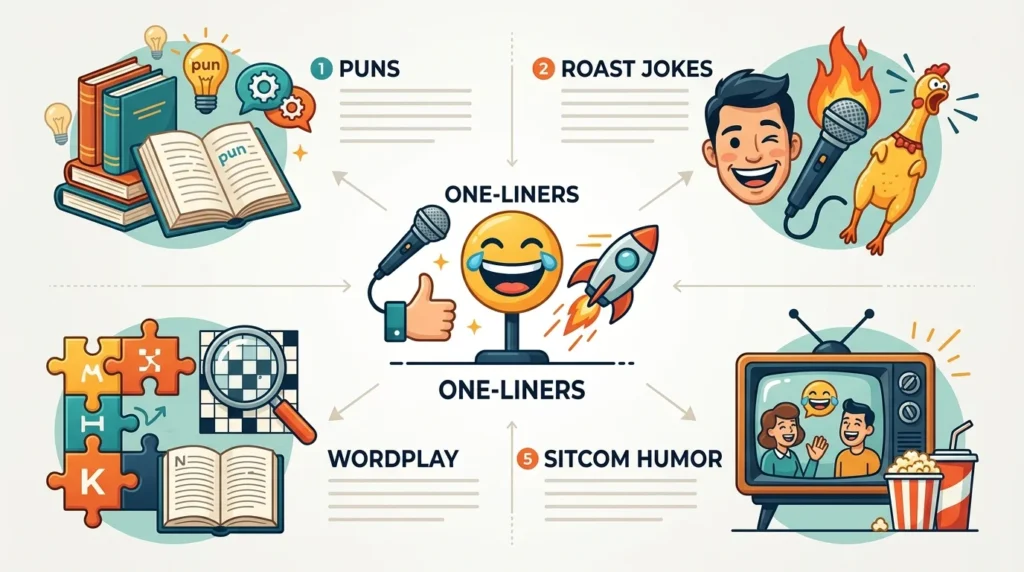
One-liners are the fast food of comedy — quick, simple, and easy to share. They work well because there is no long setup. The punchline arrives quickly, making them perfect for texts, captions, and spontaneous jokes.
The best one-liners usually combine confidence with absurdity. They are not trying too hard. They simply take a normal idea and push it somewhere unexpected.
Here are some quick comedy lines for friends:
- My diet starts tomorrow. Tomorrow has been very supportive for years.
- I’m not saying my friend loves food, but the menu has his number saved.
- My friend doesn’t look for snacks. Snacks look for him.
- He doesn’t have a midnight snack. He has a midnight appointment.
- My friend’s cooking timer is just a reminder to order something else.
- He wanted a six-pack, so he bought six packs of snacks.
- My friend says he is cutting back. He means cutting back to get another plate.
- His fridge light turns on and says, “You again?”
Short jokes like these work because they are easy to customize. Friends can add their own details, inside jokes, and funny situations to make them feel personal.
A good one-liner is not about being the loudest joke in the room. It is about creating a small moment where everyone smiles and thinks, “That sounds exactly like them.”
How to Make Fat Jokes Funny Without Making Them Mean
The difference between a funny joke and an uncomfortable joke usually comes down to one thing: the relationship behind it. Friends who know each other well can often laugh at things that would feel completely different coming from a stranger.
Good comedy creates connection. Mean humor creates distance.
When making jokes about a friend, the funniest approach is usually to focus on funny situations, habits, or exaggerated imaginary scenarios. A joke about someone loving pizza, knowing every restaurant menu, or carrying emergency snacks is often more playful than simply making someone’s body the punchline.
Think about the difference:
Playful humor:
“Your snack drawer has better organization than my entire office.”
Less effective humor:
A joke that only points out someone’s appearance without adding creativity.
The first joke creates an image. The second one leaves nowhere for the humor to go.
The Friendship Rule Behind Good Roast Humor
Every friend group has its own comedy style. Some groups enjoy sarcastic jokes, some prefer silly puns, and others love dramatic exaggeration. The best jokes match the personality of the people involved.
A few simple rules can help keep humor friendly:
- Know your audience. A joke that works with your best friend may not work with a new friend.
- Make sure everyone is laughing, not just the person telling the joke.
- Use creativity instead of repeating the same basic joke.
- Be ready to take a joke back when your friends respond.
Great roast humor is usually a two-way street. The person making the joke should be able to laugh at themselves too.
Why Friends Laugh at Exaggeration
Many classic comedy styles rely on making normal things seem ridiculous. A person who enjoys snacks becomes a “food expert.” Someone who loves restaurants becomes a “professional menu researcher.”
This technique is common in comedy because exaggeration creates surprise. It takes something familiar and pushes it into a funny, impossible situation.
That is why the best friendship jokes feel more like storytelling than insults. They create a funny version of reality where everyone gets to join the joke.
At the end of the day, the goal of friend humor is simple: create a moment people want to remember. The funniest jokes are not the ones that get the biggest reaction for a second — they are the ones friends repeat months later because they still make everyone laugh.

Conclusion
Friendship humor works because it creates shared moments. The funniest fat jokes for friends are not about making someone feel like the target — they are about clever exaggeration, silly situations, and the kind of teasing that makes everyone in the group laugh.
From quick group chat one-liners to playful roast jokes and wordplay, good comedy comes from creativity. A simple habit like loving snacks, exploring restaurants, or always ordering dessert can become a funny story with the right punchline.
Comedy has changed over time, and audiences now pay more attention to how jokes are created and who they include. The strongest humor usually focuses on personality, situations, and friendships rather than simply pointing at someone.
So whether you are joking with your best friend, adding a funny message to a group chat, or enjoying classic sitcom humor, remember the golden rule of roasting: the best joke is the one everyone can laugh at together.
FAQs
What are funny fat jokes for friends?
Funny fat jokes for friends are playful jokes that use exaggeration, silly situations, and clever wordplay to create laughs between people who understand each other’s humor. The best versions focus on funny habits and imaginary scenarios instead of being purely about appearance.
Are fat jokes from Friends (TV show) still popular?
Yes, jokes connected to the “Fat Monica” storyline from Friends remain a popular topic because the show is widely watched through streaming platforms. Many viewers now discuss those jokes differently because ideas about comedy and representation have changed over time.
How do you make a fat joke without being offensive?
A friendly joke usually works best when it comes from a place of trust and focuses on a funny situation rather than a personal insecurity. Exaggeration, puns, and silly storytelling often create better comedy than direct comments.
What are some short fat jokes for texting friends?
Short jokes work well in messages because they are quick and easy to understand. Examples include jokes about snack habits, restaurant choices, food deliveries, or exaggerated love for desserts.
Why do friends roast each other?
Friends often roast each other as a form of bonding. Playful teasing can show familiarity and create shared memories when everyone involved understands the joke and feels comfortable.
What type of humor works best between friends?
The best friendship humor depends on the group. Some friends enjoy sarcasm, while others prefer puns, dad jokes, clean humor, or silly exaggerations. The strongest jokes match the personality and comfort level of the people sharing them.
References
- Merriam-Webster — Humor and word meaning resources
- Encyclopaedia Britannica — Television comedy and cultural topics
- Oxford Reference — Language and humor concepts
- Cambridge Dictionary — Expressions and word usage