Court Puns That Will Have You Laughing in Session
Courtrooms are usually associated with serious faces, dramatic speeches, and people saying things like “objection” with impressive confidence. But behind all that legal language is a playground for wordplay. A single word like “case,” “charge,” or “sentence” can have more than one meaning, which makes it perfect for clever jokes.
That is why court puns work so well. They take the serious world of judges, lawyers, trials, and verdicts and give it a lighter twist. A good legal joke feels like a surprise witness — it walks in unexpectedly and changes the entire mood.
The funniest part? You don’t need a law degree to enjoy courtroom humor. These jokes work because everyone understands the basics: arguments happen, evidence gets presented, and someone always wants to make an appeal (sometimes for a second slice of pizza).
If you enjoy workplace-friendly humor, you’ll find plenty of clever wordplay here. For more laughs that fit office conversations, meetings, and professional settings, check out our collection of best work puns for workplace humor.
From judge jokes to lawyer one-liners, these courtroom laughs prove that even the most serious subjects can use a little comedy. After all, laughter may not win every case, but it definitely makes the trial more enjoyable.

Why Court Puns Are Surprisingly Funny
Court puns are funny because they turn serious words into unexpected jokes. Legal language is packed with terms that have everyday meanings, making it perfect for wordplay. Words like “case,” “appeal,” “charge,” and “sentence” already exist outside the courtroom, so comedians can twist them into surprising punchlines.
Think about it: a lawyer can argue a case, but a person can also make a “case” for eating dessert before dinner. A judge delivers a sentence, but so does a teacher handing out homework. The humor comes from putting two meanings in the same room and letting them argue it out.
Legal humor has survived for generations because it combines intelligence with simplicity. A clever pun gives readers that small “aha” moment when they understand the hidden connection. It feels less like being told a joke and more like discovering one.
According to Merriam-Webster, puns rely on the use of words with multiple meanings or similar sounds to create humor. That simple trick is exactly why courtroom vocabulary creates so many opportunities for laughs.
The Comedy Behind Legal Language
Courtroom words sound powerful. They carry authority, seriousness, and drama. That makes it even funnier when they are placed into ordinary situations.
For example, a “trial” sounds like a major legal event, but everyone has faced personal trials like trying to assemble furniture without instructions. A “verdict” sounds official, but friends give verdicts every day when deciding which restaurant wins dinner night.
The best court jokes don’t make fun of the legal system itself. They simply play with the language around it. That balance keeps the humor clever, clean, and easy for everyone to enjoy.
Law terms also create natural setups because they already sound like punchlines waiting to happen. A person can be “charged” with a crime, but they can also be charged with energy after drinking coffee. A “brief” can be a legal document or a very short explanation from someone who does not like long stories.
That mix of seriousness and silliness is what gives courtroom humor its charm. It takes familiar words, puts on a funny disguise, and sends them into the comedy courtroom.
Best Court Puns That Deserve a Fair Trial
Every courtroom needs evidence, and luckily, this section has plenty of it. These court puns have been carefully selected, reviewed, and (mostly) found guilty of causing unnecessary smiling.
The best legal jokes usually come from everyday words wearing a tiny lawyer’s wig. A simple phrase can become funny when a courtroom meaning bumps into a normal-life situation. These jokes are clean enough for coworkers, family group chats, and anyone who appreciates smart wordplay.
Here are some courtroom laughs ready for their day in front of the jury.
Clever Courtroom One-Liners
Short jokes are like quick legal arguments — they need to make their point fast. These one-liners don’t waste time calling witnesses. They walk straight into the courtroom and deliver the punchline.
- I wanted to become a lawyer, but I couldn’t handle all the objections to my career choice.
- The judge asked why I was late. I said, “I was stuck in a legal traffic jam — too many appeals.”
- My lawyer told me I had a strong case. I said, “Great, I’ve been working out.”
- The courtroom was cold, so the judge told everyone to bring their own evidence. Apparently, the room needed more “heating appeals.”
- I tried to write a courtroom drama, but the plot had too many objections.
- The jury loved my cooking. They gave my recipe a unanimous “seasoned verdict.”
- The lawyer brought a ladder to court because the case had too many high points.
- My friend became a judge because he always wanted the final say.
- The courtroom printer broke because it couldn’t handle another legal document.
- The defendant was calm because he knew how to keep his case together.
- I asked the lawyer if the trial was going well. He said, “The evidence is still pending approval from the snack department.”
- The judge gave the comedian a fair sentence: five minutes of applause.
A good one-liner works because the setup feels normal, then the ending takes a sharp turn. That tiny surprise is where the laugh lives.
Judge and Jury Puns
Judges and juries are perfect comedy characters because they are known for being serious. Put a serious person into a silly situation, and the contrast does most of the work.
Judges have the power to make decisions, which means they are basically professional opinion-givers. That makes them easy targets for playful jokes.
- The judge became a chef because he was already great at handing out sentences.
- The jury started a band because they were excellent at reaching agreements.
- The judge’s favorite music genre is verdict rock.
- The jury wanted to leave early, but they had a case of commitment issues.
- The judge never loses arguments because everyone knows he has the final appeal.
- The jury members opened a bakery because they were experts at making fair decisions.
- The judge brought a pencil to court because he wanted to draw his own conclusions.
- The jury went on vacation because they needed a break from reaching conclusions.
- The judge loved gardening because he enjoyed planting evidence.
- The courtroom had a comedian as a judge. Every ruling came with a punchline.
The fun behind judge and jury jokes comes from flipping expectations. We normally imagine these roles as serious and formal, but humor reminds us that even official situations are filled with ordinary human moments.
Lawyer and Trial Puns
Lawyers spend their days arguing, presenting ideas, and choosing the right words. Basically, they already live in a world built for comedy.
The trick is not making lawyers the joke. The fun comes from exaggerating the language, confidence, and drama that surround courtroom life.
- The lawyer brought a map to court because he wanted to prove he knew all the legal routes.
- My attorney loves coffee because every case needs a strong defense.
- The lawyer opened a bakery because he was already good at making convincing arguments.
- The trial was delayed because the evidence needed more time to “process.”
- The lawyer loved gardening because he was great at planting ideas.
- The attorney refused to play cards because he never wanted to reveal his case.
- The trial was like a long movie — lots of arguments, dramatic pauses, and one unexpected ending.
- The lawyer’s favorite workout is the argument stretch.
- The attorney became a musician because he was already good at making a case for his songs.
- The defendant hired a comedian as a lawyer because he needed a good defense with excellent timing.
Courtroom humor works best when it feels familiar. Everyone knows someone who argues a little too confidently, explains things dramatically, or acts like they are presenting a closing statement during a normal conversation.
That is why legal wordplay keeps winning the comedy case. The language is already dramatic — humor simply gives it a funny twist.
Funny Court Puns for Work and Office Conversations
The office can sometimes feel like its own courtroom. There are deadlines to defend, meetings to survive, and coworkers ready to deliver their personal verdict on every decision. Add a little legal wordplay, and your regular workday suddenly becomes a comedy trial.
Workplace humor works best when everyone can enjoy it. The goal is not to make someone the defendant in a joke. It is about creating those small moments that make a team chat, email, or coffee break a little more fun.
Since court language already sounds professional, it fits surprisingly well into office conversations. A meeting can become a “trial,” a manager can give a “final ruling,” and a project can become a “case” that needs solving.
Here are some office-safe legal laughs that deserve a promotion.
Professional-Sounding Puns With a Silly Twist
These jokes have the confidence of a business presentation but the energy of someone doodling during a meeting.
- Our team meeting was basically a courtroom. Everyone had opinions, but nobody wanted to be called as a witness.
- My manager asked for a case update, so I brought a brief summary. Literally a brief.
- The project deadline was guilty of causing stress. The evidence was overwhelming.
- I prepared my presentation carefully because I wanted my ideas to stand trial.
- The office printer was put on trial because it was guilty of creating paper problems.
- My coworker became the team judge because they always make the final call on lunch orders.
- The meeting lasted so long that everyone started filing emotional appeals for a coffee break.
- The new employee was excellent at debates. They always had a strong opening statement.
- The team didn’t argue; they simply presented competing closing arguments.
- My calendar is basically a courtroom. Every appointment gets a scheduled hearing.
- The boss asked for my honest opinion, so I presented my case with supporting snacks.
- The office gossip was removed from the trial because there was too much hearsay.
A workplace pun succeeds when it feels natural. The funniest jokes are usually the ones that could actually happen — a meeting that runs too long, an email chain that never ends, or a coworker who treats every small decision like a major legal debate.
For more creative workplace wordplay, you can also explore our collection of artist puns that turn creativity into comedy, where everyday skills and professions get a playful twist.
Courtroom Situations That Feel Like Office Life
Sometimes the funniest legal jokes come from comparing ordinary work moments to courtroom drama.
When someone asks for a quick meeting:
“Quick” becomes the most suspicious word in the workplace. Everyone knows it might turn into a two-hour trial.
When a project has problems:
The team gathers evidence, reviews mistakes, and searches for the person responsible — basically a workplace investigation.
When someone changes the plan:
Everyone prepares their appeal because nobody wants their original idea dismissed.
When someone schedules another meeting:
The entire team silently asks for a mistrial.
These jokes work because they exaggerate situations people already recognize. A regular office moment becomes funny when it is treated like a dramatic legal event.
The best workplace humor creates connection. A small joke can turn a stressful deadline into a shared laugh, and sometimes that is the only evidence needed to prove a team is getting along.
Court Puns for Captions, Messages, and Social Posts
Sometimes you need a joke that does not require a full courtroom presentation. A good caption should be quick, clever, and easy to share. It should walk in, make its argument, and leave before anyone asks for additional evidence.
Court-themed captions work especially well because legal words already sound dramatic. A simple photo can suddenly feel like a major case being presented before a very serious jury — even if the “case” is just deciding what to eat for lunch.
These short lines are perfect for social posts, messages, and those moments when you want your humor to have a little extra legal authority.
Short Court Captions With a Funny Verdict
- I rest my case… and my coffee cup.
- Found guilty of making terrible puns.
- The evidence says I’m hilarious. The jury is still debating.
- Case closed: I’m officially having a good day.
- My mood has been sentenced to happiness.
- No objections here — this outfit wins.
- The verdict is in: snacks are necessary.
- I plead guilty to loving bad jokes.
- The court finds me innocent of taking life too seriously.
- Appeal denied. I’m keeping the last slice of pizza.
- The jury reached a decision: more weekend, please.
- Evidence submitted: I was right all along.
- This case is closed, but the jokes continue.
- I came, I saw, I presented my argument.
- The final ruling: coffee is always acceptable.
Short captions work because they leave room for the reader’s imagination. They are not trying too hard to explain the joke. They simply give the idea a playful legal twist and let people enjoy the surprise.
Funny Court Messages for Friends and Coworkers
Court humor also works well in everyday conversations. A quick legal pun can make a boring message sound like an official announcement.
Try these:
When someone wins an argument:
“Congratulations. The court recognizes your victory.”
When someone takes the last snack:
“You have been found guilty of snack theft. Sentencing begins immediately.”
When a friend cancels plans:
“The court accepts your excuse, but the disappointment remains on record.”
When someone makes a great decision:
“The evidence clearly supports your excellent judgment.”
When a coworker finishes a difficult task:
“The case is closed. Excellent work has been proven.”
These jokes are playful because they borrow the seriousness of legal language and apply it to everyday situations. A missing cookie becomes a criminal investigation. A good idea becomes a winning argument. A simple compliment becomes an official ruling.
That contrast is what keeps the humor fresh.
Corny Court Dad Jokes That Should Be Admitted Into Evidence
Some jokes arrive in court wearing a suit. Others arrive wearing sunglasses and carrying a bad pun. Dad jokes belong in the second category.
They are predictable, slightly cheesy, and impossible not to smile at. That is their entire charm. A great dad joke does not need a complicated setup. It simply delivers a silly idea with confidence.
Here are some courtroom dad jokes ready for judgment:
- Why did the lawyer bring a pencil to court?
Because he wanted to draw his own conclusions. - Why did the judge bring a ladder?
Because the case had reached a higher level. - Why did the jury go to the gym?
They wanted to work on their final verdict. - Why did the courtroom hire a musician?
Because it needed better arguments and a stronger defense. - Why was the sentence so short?
It didn’t have enough words to defend itself. - Why did the lawyer love gardening?
Because he enjoyed planting evidence. - Why did the judge become a baker?
Because he was great at handing out rolls. - Why did the defendant bring a blanket?
Because the case looked like it would be a long trial.
The beauty of dad humor is that everyone knows the joke is coming. The fun is watching the punchline arrive anyway.
Courtroom comedy proves that even serious words can have a silly side. Sometimes the best argument is simply making someone laugh.
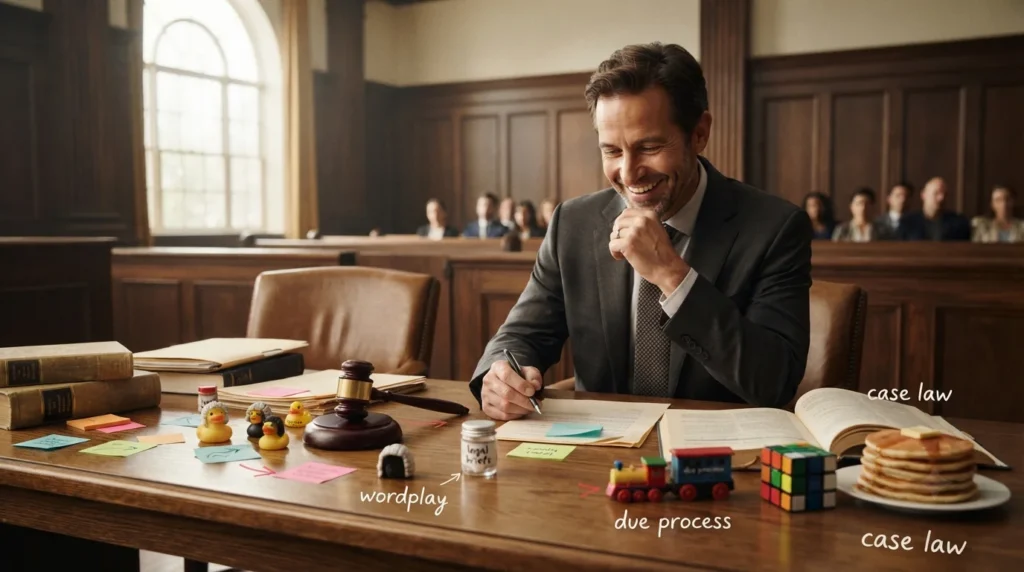
The Funniest Court Wordplay Terms Explained
Great court puns do not happen by accident. They work because the legal world is filled with words that already have hidden comedy potential.
Many courtroom terms have double meanings, everyday uses, or surprising connections outside the legal system. A “case” can be something a lawyer argues, but it can also be a situation someone deals with. A “sentence” can be handed down by a judge or written down in a notebook.
That overlap between serious legal language and normal conversation is where the humor begins.
Understanding these words also makes it easier to create your own jokes. Once you spot the double meaning, the punchline almost writes itself.
Legal Words With Built-In Comedy
| Legal Word | Court Meaning | Everyday Meaning | Pun Potential |
|---|---|---|---|
| Case | A legal matter being reviewed | A situation or example | “I have a strong case for eating dessert.” |
| Sentence | A court punishment | A group of words | “The sentence was too long and needed editing.” |
| Appeal | A request for a decision review | Attraction or interest | “The pizza made a strong appeal.” |
| Charge | An accusation | A price or energy boost | “My phone needed a charge before court.” |
| Trial | A legal process | A test or difficult experience | “Monday was a trial by itself.” |
| Brief | A legal document | Short information | “I gave a brief explanation… because nobody wanted the long version.” |
| Verdict | A legal decision | An opinion or conclusion | “The verdict: coffee wins.” |
These words are comedy gold because they already have two personalities. In court, they sound serious and official. Outside court, they can become completely ordinary.
That sudden shift creates the laugh.
Why Double Meanings Create Better Jokes
A strong pun usually has two layers. The first meaning leads the reader in one direction, and the second meaning surprises them.
For example:
A lawyer says, “I have a strong case.”
At first, you imagine legal confidence. But then the joke twists the meaning and suggests the lawyer is talking about a physical case, a suitcase, or even a personal situation.
That tiny mental switch is what makes wordplay satisfying.
This style of humor is common in dad jokes, advertising, movie titles, and everyday conversations. A simple phrase becomes memorable because your brain has to connect two ideas at once.
Courtroom Idioms That Make Great Puns
Legal language also appears in everyday expressions. These phrases are already familiar, which makes them easier to turn into jokes.
“Make a case”
Usually means explaining why something is true.
Funny twist:
“I made my case for a vacation. The jury approved immediately.”
“Case closed”
Usually means a decision is final.
Funny twist:
“The refrigerator door is closed. Case closed on who ate the leftovers.”
“Under oath”
A serious promise to tell the truth.
Funny twist:
“I swear under oath that I only bought one dessert.”
“Beyond a reasonable doubt”
A phrase connected with legal decisions.
Funny twist:
“Beyond reasonable doubt, Monday mornings need more coffee.”
The best humor does not force a joke into every word. It notices the funny possibilities already hiding in normal language.
Key Takeaway: Why Court Humor Works
- Legal words often have multiple meanings.
- Serious language becomes funny when placed in everyday situations.
- The strongest puns create a quick surprise.
- Familiar phrases make jokes easier to understand and share.
Courtroom comedy wins because it takes something formal and makes it feel human. After all, everyone has argued a point, defended an idea, or delivered a personal verdict — even without wearing a robe.
More Courtroom Humor Styles: One-Liners, Anti-Humor, and Unexpected Legal Laughs
Court humor is not limited to clever word swaps. Like any good comedy category, it has different personalities. Some jokes are quick and sharp. Some are intentionally ridiculous. Others are funny because they are so obvious that the silliness becomes the punchline.
The best humor collections mix styles because different readers laugh at different things. One person might enjoy a clever lawyer pun, while another might prefer a joke so corny it belongs in a courtroom evidence box labeled “dad humor.”
A great comedy trial needs more than one witness.
Courtroom One-Liners That Make Their Point Quickly
One-liners are the speedy attorneys of comedy. They do not waste time building a complicated argument. They walk in, deliver their statement, and leave the room.
- My lawyer told me to stop making jokes during the trial. I said, “That sounds like a serious objection.”
- The judge gave me a compliment, but I appealed because I wanted a second opinion.
- I wanted to sue my alarm clock, but I couldn’t prove it had a bad wake-up record.
- The courtroom was full of drama. Even the chairs looked like they were waiting for a verdict.
- My lawyer is great at saving money. He always gives me a discounted defense.
- The judge loved music because every decision needed a good final note.
- I lost my court case against the calendar. It had too many dates.
- The lawyer brought a notebook because every argument needed a written defense.
One-liners work because they respect the reader’s time. They create a quick mental picture and finish before the joke becomes predictable.
Anti-Humor Court Jokes That Are Funny Because They Are Not
Anti-humor takes a different approach. Instead of creating a clever twist, it gives you an answer that is strangely normal, unexpected, or completely unnecessary.
The joke is that your brain was preparing for something exciting, but the punchline calmly walks in wearing regular shoes.
- Why did the judge go to court?
Because it was his job. - Why did the lawyer bring a pen?
Because he needed to write. - What did the jury decide?
They decided something. - Why was the trial delayed?
Because it was delayed. - Why did the defendant sit down?
Because chairs exist.
These jokes sound almost too simple, but that is exactly why they work. The humor comes from the dramatic setup leading to a completely ordinary answer.
Observational Court Humor Everyone Recognizes
Sometimes the funniest courtroom jokes are not about lawyers or judges. They are about the little things people notice.
For example:
- Every courtroom drama has someone dramatically saying “I have new evidence,” like nobody expected the story to continue.
- Legal shows make every witness seem like they are one sentence away from changing everything.
- The phrase “final decision” sounds very serious until you remember people say it about choosing pizza toppings.
- Everyone wants justice until they are the person who forgot to read the instructions.
- A courtroom argument and a family debate have one thing in common: everyone arrives prepared with their own evidence.
Observational humor works because readers recognize themselves in the joke. It turns normal experiences into something worth laughing about.
How to Create Your Own Court Puns
Making a good court pun is easier when you know where to look. Start with familiar legal words, then connect them to everyday life.
Try this simple formula:
Legal term + unexpected situation = possible joke
Examples:
Appeal + food
“I made an appeal for another slice of cake. The judge approved.”
Trial + work
“My Monday morning was a trial, but I survived the evidence.”
Sentence + writing
“The judge gave me a sentence, but my English teacher wanted a better one.”
Charge + technology
“My phone had a strong case against me because I forgot to charge it.”
The secret is not using complicated legal vocabulary. The funniest jokes usually come from simple words everyone already knows.
A courtroom pun does not need a fancy argument. It just needs the right evidence and good timing.
Court Puns for Specific Situations: Lawyers, Students, Legal Fans, and Everyday Conversations
Not every joke belongs in the same courtroom. Some are perfect for a coworker who loves sarcasm, some fit a law student surviving exams, and others are made for anyone who enjoys a clever caption.
The best humor feels personal. A joke becomes funnier when it matches the person, moment, or conversation. A law student might laugh at a “case overload” joke, while someone texting a friend might prefer a quick “case closed” caption.
Courtroom comedy has plenty of room for different audiences, so here are jokes organized by the situations where they fit best.
Court Puns for Lawyers and Legal Professionals
Lawyers spend their days surrounded by arguments, documents, and dramatic moments. That makes their profession naturally suited for wordplay.
If you enjoy humor built around law, justice, and people who work on the right side of the rules, you may also enjoy our collection of cop jokes featuring police-themed wordplay and funny situations.
These jokes keep things light without making fun of the work itself.
- My lawyer does not lose arguments. They simply collect future appeals.
- A lawyer’s favorite type of music is anything with a good closing argument.
- The attorney opened a restaurant because they were already good at serving justice.
- Lawyers never get lost. They always know the right legal direction.
- The best lawyers don’t break under pressure. They just file another response.
- My attorney loves puzzles because every problem is just another case to solve.
- The lawyer brought a ladder because the argument needed a higher level of reasoning.
- A lawyer’s favorite exercise is the courtroom shuffle between opening and closing statements.
- The attorney started gardening because they enjoyed planting reasonable doubts.
Professional jokes work best when they celebrate the cleverness, confidence, and communication skills that come with legal work.
Court Puns for Law Students
Law school is known for long readings, intense studying, and enough paperwork to make anyone question their life choices. That pressure creates plenty of opportunities for humor.
- Law students don’t get tired. They just enter a temporary state of legal exhaustion.
- My textbook was so heavy, I considered filing a complaint against gravity.
- Law school taught me one thing: every answer needs evidence and probably more coffee.
- I studied for my exam so hard that my notes requested a break.
- Law students don’t procrastinate. They simply delay their legal preparation.
- My brain during finals was officially declared a complicated case.
- The exam asked for a short answer, but my legal instincts wanted a closing argument.
- I wanted to relax after studying, but my assignments filed an appeal.
Student humor works because it turns a shared struggle into something everyone can laugh about. Sometimes the best way to survive a stressful semester is finding the funny side of it.
Court Puns for Everyday Conversations
You don’t need to work in law to enjoy courtroom humor. Legal words appear everywhere, which means they can easily become casual jokes.
Try these when chatting with friends:
When someone proves their point:
“Your argument has been accepted by the imaginary court.”
When someone chooses dinner:
“The final verdict: tacos win the case.”
When someone keeps changing plans:
“I would like to file an appeal against this decision.”
When someone takes the last snack:
“The evidence clearly shows snack-related crimes.”
When someone tells a long story:
“That was a detailed opening statement.”
When someone wins a debate:
“The court recognizes your victory.”
Everyday humor works because it does not require a setup. A simple conversation can become funnier with one unexpected legal phrase.
Court Puns for Social Media Captions
Social media captions need to be short, memorable, and easy to understand. A tiny legal twist can make a normal post stand out.
- Current status: waiting for the final verdict.
- Official ruling: today deserves extra coffee.
- Case closed. The weekend wins.
- No objections to this moment.
- Evidence collected: good vibes only.
- Guilty of enjoying this too much.
- The court has decided: snacks are innocent.
- Appeal denied. I’m keeping my opinion.
- Final ruling: this picture deserves approval.
- I rest my case and continue my day.
Short captions work because they borrow the seriousness of courtroom language and apply it to simple moments. Suddenly, choosing an outfit or sharing a photo feels like a dramatic legal decision.
The Final Verdict on Court Humor
Court puns succeed because they bring together two things that seem opposite: seriousness and silliness.
A courtroom is supposed to be formal, but language itself is playful. Words can have hidden meanings, phrases can be twisted, and ordinary situations can become funny arguments waiting for a punchline.
From lawyers defending jokes to coworkers presenting snack-related evidence, legal humor proves one thing: almost anything can become comedy with the right wording.
The case for court puns has been presented. The jury has reviewed the evidence. The final verdict?
They deserve another laugh.
Conclusion
Court puns prove that even the most serious topics can have a playful side. Legal words are full of hidden humor because many of them already have everyday meanings beyond the courtroom. A case can be argued, a sentence can be written, and an appeal can happen in both court and daily conversations.
That natural wordplay makes courtroom humor easy to enjoy. Whether you are sharing a joke with coworkers, creating a clever caption, or simply looking for a laugh, legal humor offers plenty of ways to turn ordinary moments into something fun.
The best jokes are not always the loudest ones. Sometimes a small twist on a familiar phrase is enough to make someone smile. A well-timed pun can turn a regular conversation into a memorable one.
So the final ruling is clear: court puns are officially approved for laughs. No objections accepted.
Frequently Asked Questions
What are court puns?
Court puns are jokes that use legal terms, courtroom situations, and wordplay to create humor. They often rely on words with multiple meanings, such as “case,” “sentence,” “appeal,” and “charge,” to create unexpected and funny connections.
Why are legal words good for puns?
Legal words work well for jokes because many of them have meanings outside the courtroom. A sentence can be something a judge gives or something a person writes. An appeal can be a legal request or something attractive. These double meanings naturally create funny situations.
What are some funny court-related words for jokes?
Some popular words for court jokes include judge, jury, case, trial, verdict, appeal, charge, evidence, sentence, objection, and brief. These words are useful because they can be connected to everyday experiences.
Can court puns be used at work?
Yes. Court puns are usually clean and easy to adapt for workplace conversations. They can make team chats, presentations, emails, or office jokes more entertaining without becoming inappropriate.
Are court puns good for social media captions?
Yes. Short legal phrases like “case closed,” “no objections,” or “final verdict” work well as captions because they are familiar, quick to understand, and easy to customize.
What makes a good court pun?
A good court pun usually combines a familiar legal phrase with an unexpected idea. The best ones are simple, easy to understand, and create a quick surprise for the reader.
Are court puns considered dad jokes?
Many court puns fit into the dad joke category because they use simple wordplay and predictable twists. Their charm comes from being clever, harmless, and intentionally a little cheesy.
References
- Merriam-Webster
- Cambridge Dictionary
- Encyclopaedia Britannica
- Oxford English Dictionary
- Oxford Reference