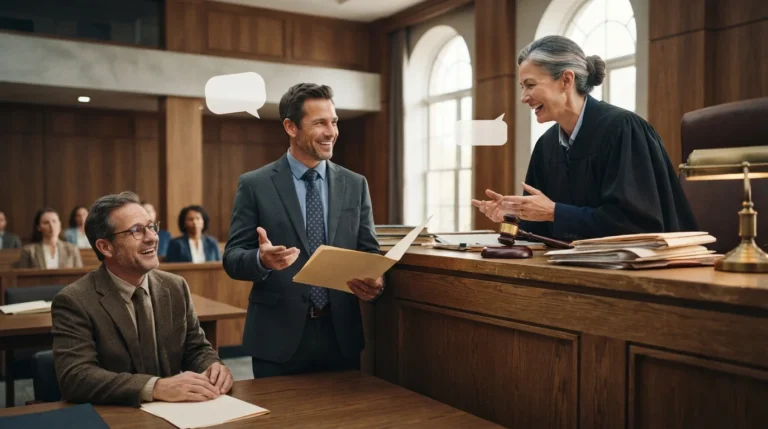
Cole’s Law Explained: The Office Pun Nobody Saw Coming

If you have ever heard someone say “Cole’s Law” and wondered if you missed a very important office policy, congratulations — you have walked straight into a pun. Cole’s Law is a silly wordplay joke that sounds like “coleslaw,” turning a serious-sounding phrase into a completely unexpected food reference.
It is exactly the kind of humor that belongs in the workplace: simple, harmless, and just confusing enough to make someone pause before laughing. A coworker might mention “following Cole’s Law” during a meeting, and for a split second, you may wonder if there is a new company rule you forgot to read. Then comes the realization: someone just served a salad joke disguised as professional advice.
This type of humor is part of the bigger world of best work puns — jokes that take ordinary office language and twist it into something memorable. The funniest workplace jokes do not always need a complicated setup. Sometimes, a single phrase with the right sound is enough to turn a boring Monday into a slightly better Monday.
Cole’s Law works because it plays with expectations. We hear “law” and expect something official, serious, or important. Instead, we get a reminder that lunch might be sitting in the fridge with someone’s name written on it.
From office conversations to dad humor collections, tiny word tricks like this prove that language itself can be funny. A good pun does not need a big performance. Sometimes, all it needs is one clever phrase, a confused expression, and someone saying, “Wait… did you really just say that?”
And yes, someone probably did. That is the law of laughter — or at least Cole’s Law.
What Is Cole’s Law? The Pun Behind the Phrase
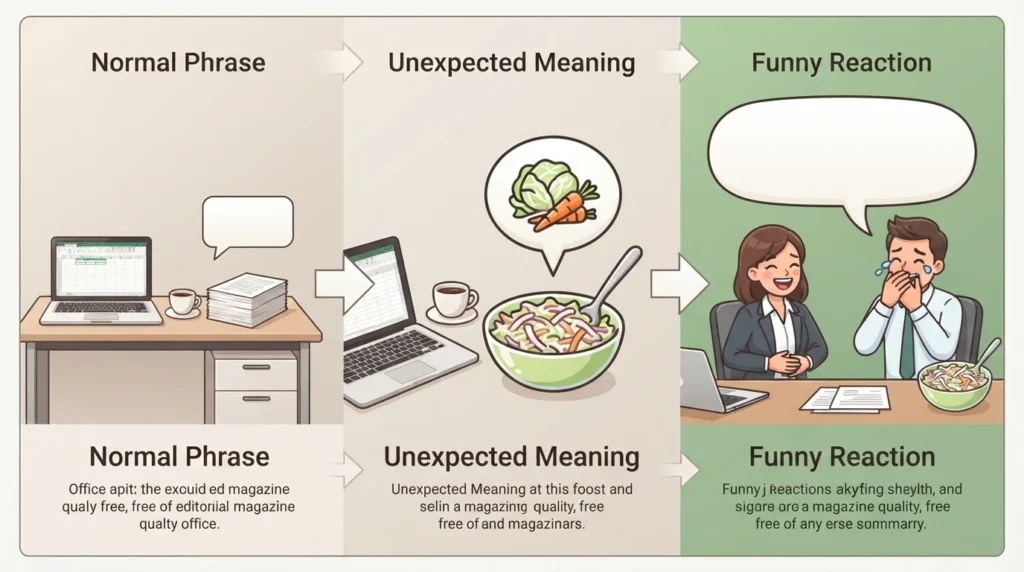
Cole’s Law is a playful pun that sounds like “coleslaw,” using a serious word (“law”) to create a funny and unexpected food-related twist. The joke works because it takes a phrase that sounds official and turns it into something completely ordinary — a salad.
At first glance, “Cole’s Law” sounds like something you would find in an employee handbook. It has the same serious rhythm as famous sayings like Murphy’s Law, where people expect a rule, principle, or life lesson to follow. Instead, the punchline takes a sharp turn toward the kitchen.
The humor comes from a simple language trick: the phrase sounds almost identical to “coleslaw.” Our brains naturally try to make sense of familiar sounds, so when we hear “Cole’s Law,” we prepare for an explanation about rules or consequences. The surprise comes when we realize the “law” is not about business, science, or society — it is about shredded cabbage.
That tiny moment of confusion is what makes the joke work.
Puns like this are built around homophones, which are words or phrases that sound alike but have different meanings. The best examples create a small mental detour. Your brain goes one direction, then quickly changes lanes when the joke reveals the real meaning.
For workplace humor, this style is especially effective because it is clean, quick, and easy to share. A manager can mention Cole’s Law during a meeting, a coworker can drop it into a group chat, and everyone gets the joke without needing a long explanation.
It is also a classic example of dad humor: the kind of joke that earns a laugh, a groan, or the famous “that was terrible” response — which usually means it worked perfectly.
After all, the strongest puns do not need complicated setups. They simply take an ordinary phrase, give it a tiny twist, and let the wordplay do the heavy lifting.
Why This Tiny Phrase Works So Well as a Pun
A great pun is like a tiny magic trick. It takes something familiar, hides the surprise in plain sight, and delivers a laugh in only a few words. Cole’s Law works because it uses one of the oldest tools in comedy: making our brains expect one meaning while delivering another.
The phrase sounds official. The word “law” carries weight. We associate it with rules, instructions, and serious ideas. When someone says “Cole’s Law,” your mind starts searching for a principle or explanation. Then the joke flips the script and reveals a much less serious answer: a bowl of shredded cabbage.
That unexpected switch is where the humor lives.
Good wordplay often follows a simple formula:
Familiar phrase + unexpected meaning = memorable joke
Cole’s Law checks every box. It is short, easy to repeat, and understandable within seconds. There is no long story, no complicated reference, and no special knowledge needed. You simply hear it, connect the sounds, and enjoy the silly surprise.
This is why similar jokes survive for years. A phrase like this can travel through offices, family dinners, and group chats because everyone can participate. You do not need to be a comedy expert to appreciate a clever sound twist.
The best workplace humor often works this way. Employees spend hours surrounded by serious words like deadlines, reports, schedules, and policies. A silly phrase that sounds like a company rule but turns out to be a food joke gives people a quick mental break.
That is the charm of clean humor. It does not need to shock people or create a complicated punchline. Sometimes the funniest moments come from taking normal language and bending it just enough to make someone smile.
Cole’s Law may not change the workplace, solve problems, or improve productivity. But it does something equally valuable: it gives everyone a reason to laugh at a phrase that has no business being taken seriously.
Why Cole’s Law Belongs in the Office Humor Hall of Fame
Workplaces are full of serious words. Deadlines. Strategies. Reports. Policies. Meetings that could have been emails. Then someone drops a phrase like Cole’s Law into the conversation, and suddenly a normal discussion gets a little more entertaining.
Cole’s Law belongs in office humor because it transforms everyday professional language into a harmless joke that coworkers can instantly understand. It combines workplace-style wording with simple wordplay, creating the kind of humor that works in meetings, chats, and casual conversations.
The beauty of this joke is that it feels like it should mean something important. Imagine a coworker saying, “Remember, we need to follow Cole’s Law before starting this project.” For a moment, you might wonder if there is a new company policy hidden somewhere in your inbox.
Then someone explains the punchline, and the serious atmosphere disappears.
That quick change from confusion to laughter is exactly why workplace puns are so popular. They take familiar office situations and add a small moment of surprise. A clever phrase can make a routine conversation feel less routine.
Unlike jokes that depend on current trends or complicated references, simple puns have staying power. They work because they are built around language itself. A new employee, a longtime manager, or someone working remotely can all understand the same joke.
Cole’s Law also fits perfectly with classic dad humor. It has the same ingredients people love about traditional dad jokes: a simple setup, an obvious connection, and a punchline that makes people smile while pretending to be annoyed.
The famous “dad joke reaction” is part of the fun. Someone might roll their eyes and say, “That was awful,” but they are usually laughing at the same time.
And that is the secret strength of workplace humor. The best jokes do not distract from the workday — they make the people around you feel a little more connected.
A tiny pun about cabbage may not become company policy, but it can become the joke everyone remembers from a boring Tuesday meeting.

The Science of a Good Dad Joke at Work
A good dad joke at work succeeds because it is simple, unexpected, and easy for everyone to understand. These jokes create a quick moment of surprise, making coworkers laugh without requiring complicated setups or inside knowledge.
The reason jokes like Cole’s Law stick around is that they use a basic part of human communication: pattern recognition. Our brains are constantly predicting what comes next. When we hear a phrase that sounds official, we automatically prepare for a serious explanation.
Then the joke changes direction.
That tiny surprise creates the laugh.
This is why a simple pun can sometimes beat a longer joke. A story might take several minutes to build, but a wordplay joke can create the same reaction in a few seconds. The setup is hidden inside the phrase itself.
Dad jokes are especially popular in workplaces because they are low-risk humor. They do not depend on sarcasm, personal jokes, or making someone the target. Everyone gets to enjoy the same silly moment.
A few examples of the classic dad joke formula:
- A normal phrase gets a funny twist.
- A serious idea gets an ordinary meaning.
- A familiar word gets interpreted in a completely different way.
That is why jokes like Cole’s Law feel timeless. The humor does not come from a trending topic or a specific workplace situation. It comes from the structure of the language.
This style also explains why coworkers often share the same jokes repeatedly. A good pun becomes a small tradition. Someone says a funny phrase during a meeting, another person remembers it weeks later, and suddenly the joke has its own workplace history.
According to the definition of a pun, this style of humor relies on using words with multiple meanings or similar sounds to create a humorous effect. Merriam-Webster Dictionary
So while Cole’s Law may look like a tiny joke about a vegetable dish, it represents something bigger: the simple joy of playing with words. Sometimes the smallest jokes create the biggest smiles — especially when everyone around the desk needs one.
Funny Cole’s Law Variations for Coworkers
A good workplace pun rarely stays in one form. Once a joke enters the office, people naturally start adding their own twists. That is the fun part of wordplay — the original idea becomes a starting point for new laughs.
Cole’s Law has the perfect structure for variations because it sounds like an important workplace principle. The trick is keeping the serious tone while replacing the “professional rule” with something completely unexpected.
Here are some original office-style twists inspired by the same playful energy:
The Meeting Version:
“According to Cole’s Law, every meeting must contain at least one person asking, ‘Can everyone see my screen?’”
The Lunchroom Version:
“Cole’s Law states that the person who brings lunch from home will always forget where they put their fork.”
The Remote Work Version:
“Cole’s Law: The closer you get to finishing your online meeting, the more likely someone says, ‘One last thing.’”
The Deadline Version:
“Cole’s Law says a project is never truly finished until someone sends a message saying, ‘Tiny adjustment.’”
These jokes work because they borrow the language of official rules and apply it to everyday workplace situations. Everyone recognizes the experience, which makes the punchline hit faster.
The best office humor often comes from shared moments. A joke about meetings, emails, coffee breaks, or deadlines feels personal because people have lived through those situations.
That is why simple workplace puns remain popular. They do not need a complicated story. They just need a familiar scene and a clever twist.
Cole’s Law also shows how flexible wordplay can be. The original joke may be about a food item, but the structure can be adapted to almost anything: meetings, technology, coworkers, or office habits.
A good pun is not just a punchline. It is a tiny invitation for people to add their own creativity.
And if your coworker responds with a terrible pun of their own? That is not a problem. That is simply another workplace law waiting to be named.
Office Meeting Versions: When Workplace Rules Get Ridiculous
Meetings are already filled with enough serious phrases: action items, deliverables, progress updates, and “quick discussions” that somehow last an hour. That makes them the perfect playground for silly workplace wordplay.
The funniest office puns take familiar meeting moments and exaggerate them just enough to make people laugh. Like Cole’s Law, they pretend to introduce an important rule but reveal something much more ordinary.
Here are a few meeting-inspired workplace puns with the same playful spirit:
The Agenda Rule:
“Every meeting has a secret law: if the agenda says 15 minutes, prepare for 45.”
The Presentation Principle:
“The slideshow law states that the person sharing their screen will always have the wrong tab open first.”
The Coffee Clause:
“According to office science, no meeting can officially begin until someone says, ‘I need more coffee.’”
The Question Rule:
“The final five minutes of every meeting contain 90% of the questions.”
These jokes work because they are based on everyday observations. Almost everyone has experienced a meeting where technology refuses to cooperate, someone arrives late, or a simple update becomes a full discussion.
This style of humor is called observational humor because it turns normal experiences into jokes. The comedian is not inventing a strange situation — they are simply pointing out something everyone recognizes.
That is why workplace jokes often feel personal. A coworker does not laugh because the joke is complicated. They laugh because they have lived the moment.
Cole’s Law follows the same idea. It takes a normal phrase pattern and creates a funny surprise. Office meeting jokes do the same thing with workplace habits instead of words.
The best meeting humor also creates connection. A shared laugh during a busy workday can make a team feel more relaxed. It reminds everyone that behind the emails, deadlines, and spreadsheets are actual people who all deal with the same little frustrations.
Sometimes the best office rule is simple: if everyone is laughing, the meeting probably could have been an email.
Remote Work Versions: When the Home Office Gets a Little Too Real
Remote work created an entirely new collection of workplace comedy moments. The office may have moved from cubicles to kitchen tables, but the awkward situations followed right along with it.
The funniest remote work jokes come from shared experiences: accidental microphone moments, unpredictable internet connections, and the classic struggle of looking professional while sitting three feet away from a pile of laundry.
Like Cole’s Law, remote work humor works because it takes something ordinary and gives it a ridiculous “official rule” treatment.
Here are some remote office laws that deserve a spot in the imaginary employee handbook:
The Camera Rule:
“Remote work law: The moment you forget your camera is on is the exact moment your pet decides to become the meeting host.”
The Internet Principle:
“Every video call follows one rule: your Wi-Fi waits until the most important sentence to disappear.”
The Background Law:
“Your virtual background will always look perfect until someone asks if that is a real beach behind you.”
The Mute Button Rule:
“Everyone learns the same lesson: talking for two minutes while muted builds character.”
Remote humor has become a modern form of observational comedy because it captures moments that millions of people experience. The jokes feel funny because they are familiar.
A person working from home might laugh at a meeting joke because they have watched a coworker freeze on a video call. Someone else might smile because their own internet connection has a habit of failing at the worst possible time.
That is the secret behind relatable humor: recognition.
Great workplace puns and one-liners do not simply make people laugh; they make people think, “That happened to me too.”
Even a silly phrase like Cole’s Law follows this pattern. It creates a shared reaction. One person makes the joke, another person understands the reference, and suddenly a small moment becomes a connection.
Remote work may have changed where people work, but it did not change the need for a little laughter during the day. In fact, when your coworker is a laptop screen and your office chair is also your dining chair, a good pun might be part of the productivity plan.
More Workplace Puns That Follow Cole’s Law Energy
Cole’s Law is a perfect example of how a small phrase can create a big reaction. It does not rely on a complicated story or a shocking punchline. It simply takes something familiar and gives it a playful disguise.
That same style appears throughout workplace humor. The best office puns often sound like they could be real business terms before revealing a silly twist.
Here are a few more examples of workplace wordplay that follow the same “serious name, silly meaning” formula:
The Break Room Agreement:
“Every office has an unwritten rule: the person who replaces the empty coffee pot deserves legendary status.”
The Spreadsheet Theory:
“Numbers are always organized until someone says, ‘I just made a small change.’”
The Email Equation:
“One email creates a question. One question creates five more emails. The math never fails.”
The Printer Principle:
“The printer knows exactly when you are in a hurry and chooses that moment to develop feelings.”
The Snack Policy:
“The unofficial office rule: if you label your food, someone will become curious about it.”
These jokes work because they combine wordplay with everyday workplace experiences. A good pun gives ordinary situations a funny identity.
This is also why office humor is so easy to share. A coworker does not need to know your personal story to understand a joke about meetings, coffee, deadlines, or office technology. The experience is already familiar.
For even more examples of this style, readers can also explore related humor from the chef puns collection for another example of how everyday words can become playful jokes.
The best workplace puns are not about making someone the joke. They are about finding the funny side of situations everyone recognizes.
A delayed project, a confusing email, or a stubborn printer can be frustrating in the moment. But once someone turns it into a clever phrase, the problem becomes a shared laugh.
That is the magic of simple humor. It takes the ordinary parts of work life and gives them a little personality. Sometimes a boring Tuesday only needs one good pun to feel slightly less like Tuesday.
Quick One-Liners for Your Next Slack Message
Work chats are full of short messages, quick updates, and moments where a little humor can make a conversation feel more human. A clever one-liner can turn a routine “good morning” message into something coworkers actually remember.
The trick with workplace one-liners is timing. A joke works best when it feels natural, not forced. The goal is not to become the office comedian who schedules humor between meetings — it is simply to add a small spark to everyday conversations.
Here are some clean workplace one-liners with a little Cole’s Law energy:
- “My productivity and my coffee have a strong professional partnership.”
- “I finished my task early, so naturally, I spent five minutes wondering what I forgot.”
- “My inbox and I have agreed to disagree.”
- “I would explain my schedule, but my calendar already looks confused.”
- “The printer and I are currently taking space from each other.”
- “My computer updated overnight, which means it had a more productive evening than I did.”
- “I came prepared for the meeting. My Wi-Fi had other plans.”
- “My to-do list keeps growing because apparently it enjoys attention.”
- “I love teamwork. Especially when someone else knows where the missing file is.”
- “I’m not saying my desk is messy, but I just found a document from a previous era.”
These jokes work because they are built around observational humor. They highlight small workplace truths that people experience every day.
A strong office joke usually has three ingredients:
- A familiar situation
- A small exaggeration
- A surprising ending
That formula explains why puns, dad jokes, and one-liners continue to survive in workplaces. They are quick enough for a chat message but memorable enough to become part of team culture.
Humor also helps conversations feel less mechanical. A message that says, “The report is finished” gives information. A message that says, “The report is finished, and my keyboard can finally rest” gives information with personality.
Cole’s Law may be a tiny joke, but it represents a bigger idea: language becomes more enjoyable when people are willing to play with it.
A workplace does not need a comedy show every afternoon. Sometimes, one well-timed line in a Slack channel is enough to remind everyone that work is still done by humans — not just calendars, spreadsheets, and notification alerts.
How to Create Your Own Silly Workplace Puns
Creating a workplace pun is easier than it looks. Start with a familiar office word, phrase, or situation, then look for a sound, meaning, or association that creates a funny twist. The best puns come from everyday language, not from forcing a joke into existence.
Cole’s Law works because it begins with something ordinary: a phrase that sounds like a rule. The humor appears when the meaning suddenly changes. You can use the same approach to create your own office-friendly jokes.
The first step is to pay attention to words people already use at work. Meetings, emails, deadlines, projects, and technology all provide endless material.
For example:
- “Deadline” sounds serious, but it can inspire jokes about things that refuse to end.
- “Break room” can become a joke about taking too many breaks.
- “Meeting” can inspire humor about discussions that never actually finish.
The secret is to find the hidden funny side of normal language.
Start With a Normal Phrase
The easiest workplace puns begin with common phrases because everyone already understands the setup.
Think about expressions you hear every day:
- “Team meeting”
- “Project update”
- “Final review”
- “Quick call”
- “Action item”
Now ask yourself:
“What else could this phrase mean?”
A “quick call” might become a joke about a meeting that lasts longer than expected. A “final review” might become a joke about something being reviewed five more times.
The phrase itself creates the foundation.
Twist the Meaning
Once you have your phrase, the next step is adding an unexpected meaning. This is where wordplay happens.
Try these techniques:
Use similar sounds:
Like Cole’s Law and coleslaw, two different ideas can become funny when they sound alike.
Take words literally:
Many workplace phrases are funny when you imagine them exactly as they sound.
Example:
“Team building” sounds less like a company activity and more like coworkers physically building a team.
Exaggerate normal problems:
A small office annoyance can become a fake “law” or “rule.”
Example:
“The Coffee Rule: No important decisions should happen before the first cup.”
The best puns feel natural because they come from things people already notice. You are not inventing a completely new world — you are simply looking at everyday work life from a slightly different angle.
That is why workplace wordplay remains popular. A good pun does not just create laughter; it helps people see ordinary moments in a new way.
And who knows? Your next silly office phrase might become the unofficial rule everyone remembers — even if nobody writes it in the employee handbook.
Creating Your Own Office Pun Rules
One reason jokes like Cole’s Law are so memorable is that they pretend to be something official. They sound like advice from a manager, a company policy, or a serious workplace principle — until the silly twist appears.
This “fake rule” format is one of the easiest ways to create original workplace humor. It gives ordinary office experiences a funny title and turns small frustrations into something everyone can laugh about.
Here are a few examples:
The Calendar Law:
Any meeting marked as “quick” will automatically require at least one person saying, “Before we wrap up…”
The Email Rule:
The longer an email takes to write, the more likely the reply will simply say, “Thanks!”
The Spreadsheet Law:
The person who understands the spreadsheet is always the person who created it three years ago.
The Office Snack Principle:
The food labeled “do not eat” will always become the most interesting item in the break room.
These jokes work because they copy the structure of real sayings. People recognize the format immediately, but the ending takes them somewhere unexpected.
This is a common feature of dad humor and clean comedy. The joke does not need a complicated setup or a shocking punchline. The fun comes from the clever connection between something familiar and something ridiculous.
The same method can be used outside the workplace too. A phrase about travel, food, technology, or family life can become a funny “law” with the right twist.
The recipe is simple:
Notice something common → Give it a serious name → Add an unexpected explanation
That is how tiny observations become shareable jokes.
The next time your team experiences a familiar office moment — a delayed email, a never-ending meeting, or a printer refusing to cooperate — do not just complain about it.
Give it a name.
You might discover the office has been following an unofficial law all along. It just needed someone clever enough to write it down.
The Final Rule of Cole’s Law: Why Simple Jokes Never Go Out of Style
The funniest workplace jokes are often the ones that require the least explanation. Cole’s Law does not need a long story, a complicated setup, or a perfect delivery. It works because it takes something ordinary and gives it a surprising little twist.
That is the lasting appeal of simple wordplay.
A phrase like Cole’s Law reminds us that humor can come from anywhere — even from a bowl of shredded cabbage hiding behind a serious-sounding name. The joke succeeds because it creates a tiny moment of discovery. First, you think you are hearing something official. Then, you realize you have been invited into a silly language trick.
That moment of surprise is what keeps puns alive.
Workplaces especially benefit from this type of humor because people spend so much time communicating through serious language. Reports, deadlines, meetings, and emails all have their own vocabulary. A clever joke breaks the routine without interrupting the day.
The best office humor is not about being the loudest person in the room. It is about noticing small, shared experiences and turning them into something people can enjoy.
A funny phrase can become part of a team’s culture. A joke from a meeting can become a running joke months later. A silly one-liner in a group chat can become the message everyone remembers.
Cole’s Law may never appear in a business textbook, and it probably will not improve your quarterly results. But it does something valuable: it creates a quick connection between people.
Because sometimes the best workplace rule is not about productivity, deadlines, or performance.
Sometimes it is simply this:
If a terrible pun makes someone smile, it was probably worth telling. And if someone groans at the joke, that is usually proof it worked.
That is the true spirit of Cole’s Law — a tiny piece of wordplay that proves even the simplest phrases can bring a little more laughter into the workday.
Conclusion
Cole’s Law may sound like an important workplace principle, but its real purpose is much simpler: making people laugh. This tiny phrase shows how powerful wordplay can be when a familiar sound leads to an unexpected meaning.
The best workplace humor does not need a complicated setup. A clever phrase, a shared experience, and a little imagination are often enough to create a memorable joke. That is why puns, dad jokes, and one-liners continue to find their place in offices, group chats, and everyday conversations.
From meetings that could have been emails to printers that seem to have their own personalities, workplace life is full of moments waiting to become jokes. Cole’s Law is a reminder to notice those moments and find the funny side.
So the next time someone mentions a “workplace law,” pay attention. It might be an important company rule — or it might just involve cabbage.
Either way, a little laughter is always a good policy.
FAQs
What does Cole’s Law mean?
Cole’s Law is a humorous pun that sounds like “coleslaw,” the popular cabbage-based dish. It is not a real law or official workplace rule. The joke comes from the similarity between the sounds of the two phrases.
Is Cole’s Law a real law?
No, Cole’s Law is not a legal rule, scientific principle, or business policy. It is a piece of wordplay designed to sound serious while delivering a silly punchline.
Why is Cole’s Law considered funny?
Cole’s Law is funny because it creates a surprise. The word “law” makes people expect a serious explanation, but the punchline changes the meaning into a simple food reference. The humor comes from that unexpected switch.
What type of joke is Cole’s Law?
Cole’s Law is a pun, specifically a sound-based wordplay joke. It uses a phrase that sounds like another word or expression to create humor. It also fits into the category of dad jokes because it is simple, clean, and intentionally corny.
Why do workplace puns work so well?
Workplace puns are effective because they use situations people already understand. Meetings, emails, deadlines, and office habits are shared experiences, so a clever joke about them feels relatable and easy to enjoy.
How can I create my own workplace puns?
Start with a common workplace phrase, then look for another meaning, similar sound, or funny interpretation. The best office puns usually come from everyday situations that everyone recognizes.
A simple formula:
Normal workplace phrase + unexpected twist = memorable pun
What are some similar workplace jokes?
Similar jokes include fake workplace “laws,” meeting jokes, coffee jokes, deadline jokes, and technology jokes. They all use familiar office experiences and add a playful twist through wordplay or exaggeration.
References
- Merriam-Webster Dictionary — Pun Definition and Wordplay Concepts
- Cambridge Dictionary — English Expressions and Language Usage
- Encyclopaedia Britannica — History and Development of Humor
- Oxford Reference — Language, Etymology, and Word Origins
- The Velvet Magazine — Best Work Puns
- The Velvet Magazine — Chef Puns